
No sponsorship, no freebies. Links here earn a small commission at no extra cost to you, which keeps the investigations independent. More info
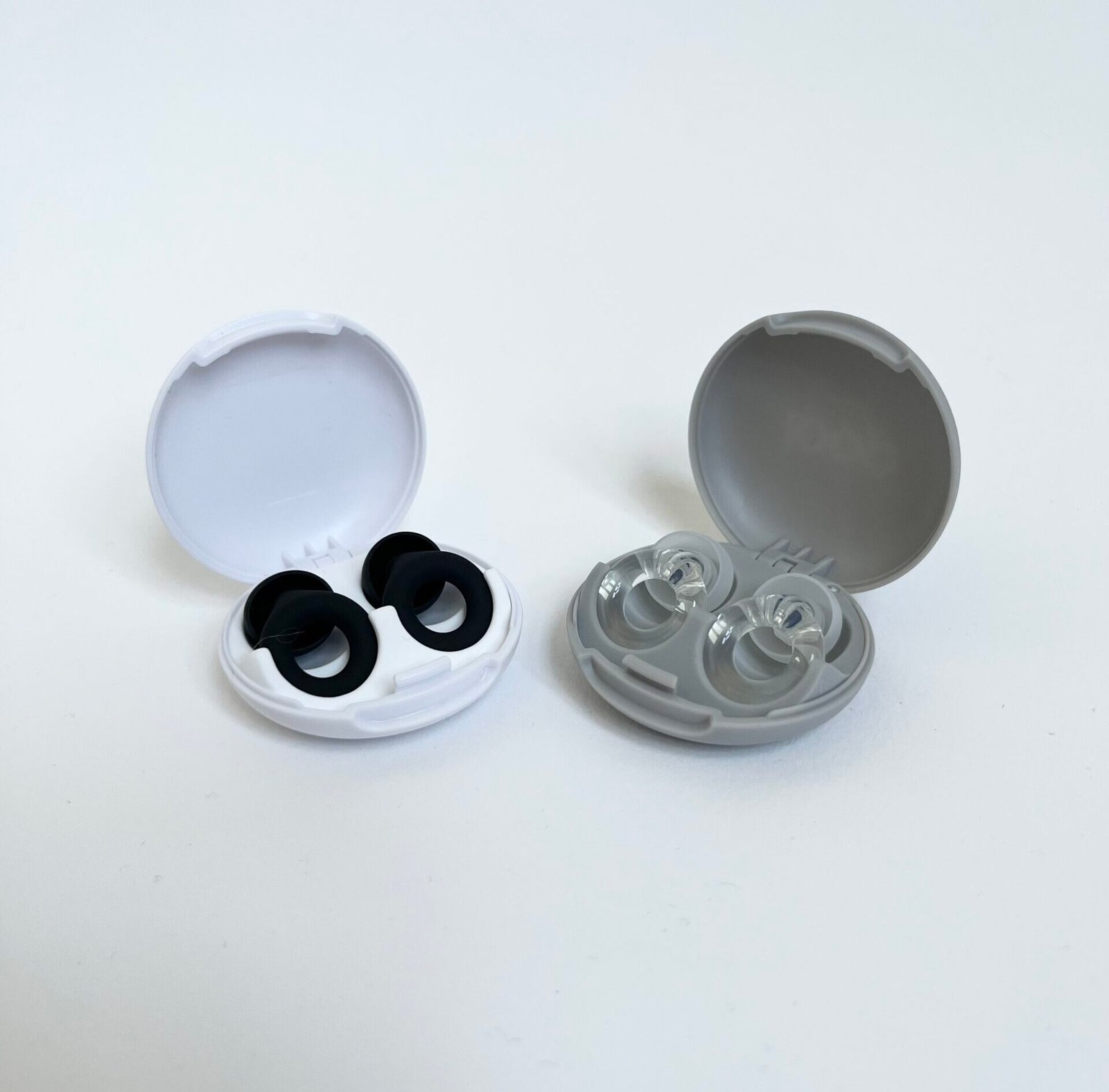
Loop Quiet 2 vs Loop Engage Comparison
Same brand, same price bracket, same silicone housing, but one hollow filter changes the pressure story entirely. The investigation tested both across seven environments to find where each earns its place and where both still fail.
A comparison within Investigation No. 2: Earplugs for Sensory-Sensitive Adults. Full findings live in each product's own case file.
You want the strongest volume reduction on offer and can tolerate a firmer seal.
Pressure or eardrum soreness has put you off silicone plugs before, or the job is staying present in a conversation.
Misophonia at the table, or a loud and chaotic room, is the actual problem you’re solving for.
Loop markets both for everyday life: the Quiet 2 for focus, travel and sleep, the Engage for social situations and conversation. Both claims are partly true. Neither tells you when the product turns on you, and for sensory-sensitive readers that’s the detail that matters.
Buy the Quiet 2 for quiet. Buy the Engage to stay present.
Buy the Quiet 2 for straightforward volume reduction. It blocks more, across more of the range, than the Engage does. No contest there. Reach for the Engage instead if pressure or ear discomfort has put you off silicone plugs before. Its hollow filter removes the piston effect the Quiet 2 still produces, a genuine difference the marketing never mentions. Or reach for it if the job is staying present in a conversation, not escaping one. Neither solves misophonia at the table; both leave your own chewing louder, not quieter. If that’s the actual problem, Ohropax Classic Wax or Mack’s Pillow Soft block more.
What you’re actually comparing
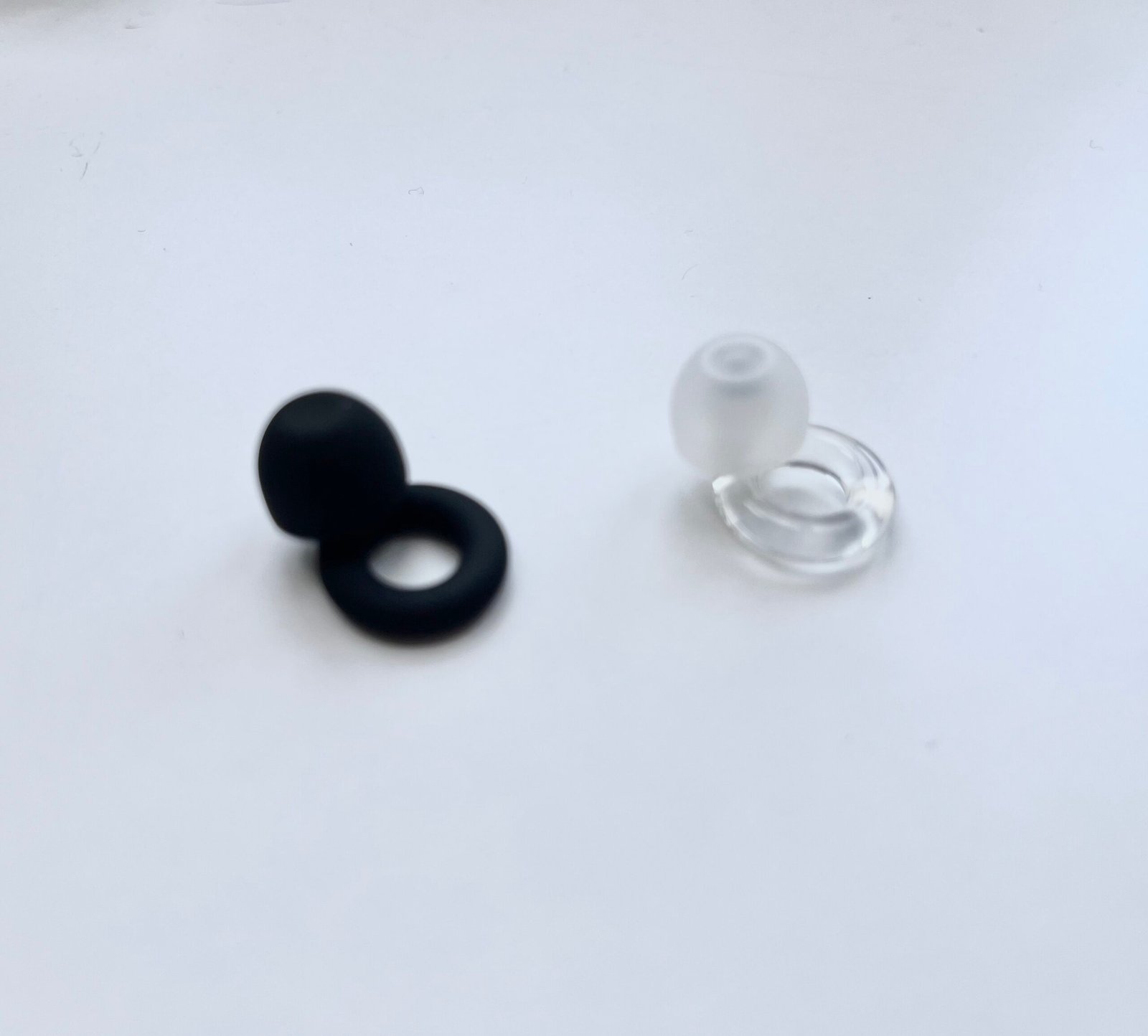
The housing is identical. The difference is entirely in the filter, and it’s worth understanding before the rest of this.
How much each blocks, and what each one costs you to get there
Two separate questions with two separate answers. First, the volume. Then, the price you pay for it.
| Frequency | Quiet 2 | Engage | Edge |
|---|---|---|---|
| 75Hz · traffic rumble, HVAC low end | 50% | 90% | Quiet 2 |
| 125Hz · traffic rumble, HVAC low end | 50% | 90% | Quiet 2 |
| 250Hz · bus engine, fridge hum | 50% | 85% | Quiet 2 |
| 500Hz · voice low end, chewing | 50% | 75% | Quiet 2 |
| 1kHz · speech clarity centre | 50% | 66% | Quiet 2 |
| 2kHz · checkout beeps | 33% | 50% | Quiet 2 |
| 4kHz · kettle hiss, cutlery | 20% | 50% | Quiet 2 |
| 8kHz · sibilance, sharpness | 75% | 50% | Engage |
| 15kHz · highest audible range | 1% | 33% | Quiet 2 |
Tone generator, 33% volume at 50cm; 15kHz via phone at 6 inches. Subjective perception, not laboratory measurement. Figures from each product’s own case file.
Quiet 2 blocks more at every frequency tested bar one: the Engage only pulls ahead at 8kHz, the sibilant range where the Quiet 2’s own case file admits it “lets through more than its rivals.” Everywhere else, the gap is wide, not marginal. That’s the short answer’s “no contest” made literal.
The Engage has a property Loop don’t advertise and no review has covered, though: it changes what happens to air pressure in a small or pressure-sensitive canal.
Flanged silicone plugs seal the canal before they reach their final seated position. The air trapped between the plug and the eardrum compresses as the plug pushes further in, acting like a piston. In a standard canal that’s a minor irritant. In a narrower one, the same movement compresses a smaller air volume, so the same insertion produces proportionally more pressure on the eardrum. That’s the source of the soreness many small-canal users report with the Quiet 2 and similar plugs. More on which tips actually seat well in a narrow canal in the small-canal comparison; both the piston and occlusion effects are documented in full in the BOST earplug methodology.
Functionally, the Engage is hollow. Its mesh filter creates a channel air can move through freely during insertion. Tested by blowing through it: no trapped air column, no piston effect. The pressure you feel with the Engage is canal-wall pressure from the silicone tip, not air pressure on the eardrum. Those feel different, and for anyone whose problem is specifically eardrum pressure, that distinction is the whole answer.
In practice: the Engage seated more easily and came out without a fight, no suction, no pop. The Quiet 2 needed a deliberate twist on removal to break the seal. At thirty minutes the Quiet 2 produced a noticeable pressure sensation, logged as “like mild altitude, wanting to yawn, which doesn’t really help.” The Engage at the same duration produced only surface pressure from the tip.
Both products still produce an occlusion effect: bone-conducted sound (your own voice, footsteps, chewing) reflects inside the sealed canal regardless of the filter. The Engage reduces this against the Quiet 2 but doesn’t eliminate it. Footstep thud was noticeable with the Quiet 2, only faint with the Engage. Own-voice boominess was present in both, less pronounced in the Engage. Nobody should expect a plug that disappears in the ear here. The Flare Calmer sits at the low end of the occlusion scale because it never seals the canal, though even that left the tester’s own voice slightly altered.
Where each one works, and where it doesn’t
Both products tested in the same conditions, same order. “Moderately noisy” is the operative phrase throughout: neither is built for a loud or raucous room.
| Environment | Quiet 2 | Engage | Finding |
|---|---|---|---|
| Quiet room / desk | Occlusion noticeable | Occlusion reduced | Engage slightly better. Neither disappears. |
| Kitchen appliances | Strong, ≈80% reduction | Good, ≈70% reduction | Both effective. Quiet 2 stronger, both usable. Edge: Quiet 2 |
| Bus / commute | Good overall reduction | Partial, speech stays | Quiet 2 if attenuation is the priority; Engage if you need to hear announcements. Edge: Quiet 2 |
| Supermarket | Uneven, high-freq leak | Balanced reduction | Engage clearly better in a moderately busy store. See below. Edge: Engage |
| Open-plan office | Occlusion disrupts at desk | Removes hum, amplifies voices | Neither works in a talking office. Engage actively counterproductive. See below. |
| Café / restaurant | Modest relief only | Modest relief, social use only | Neither adequate for recovery or misophonia. Engage marginally better if you’re there to socialise, not work. |
| Conference / lecture | Over-attenuates speech | Strong fit, listen only | Engage’s best environment: built to let speech through at reduced volume while cutting background. Edge: Engage |
The Engage produced the opposite effect in the same store. Its filter is tuned to preserve the mid-range, so crinkling and beeping were softened along with everything else. The environment felt genuinely quieter rather than rearranged. In a moderately busy store, that’s a meaningful result; it doesn’t hold if the store is raucous.
Its whole design idea, speech through, background gone, becomes a liability in an open-plan office. The HVAC hum that masked nearby conversation disappears. Voices come through more prominently, and desk-eating sounds, still fully audible, isolate against the quieter room.
Engage in a talking office: counterproductive. The background noise that made nearby conversation tolerable as ambient wash gets filtered out, so conversations sharpen. If misophonia is an office problem, the Engage doesn’t help and may worsen it by removing the ambient cover. It’s doing exactly what its filter promises. Here, that’s the problem.
What the packaging says, against what testing found
| Claim | Verdict | Finding |
|---|---|---|
| Quiet 2: 24dB SNR noise reduction | ✓ | Holds. The gap to real-world use is standard HSE 4dB derating, roughly 20dB, not a packaging exaggeration. |
| Engage: marketed for social situations and everyday conversation | – | Partial. True in structured listening (a lecture, a moderately busy shop) and false in a talking office, where it sharpens the conversation it’s meant to soften. |
| Both: everyday use for sleep, focus, travel and social settings | – | Partial for each. The Quiet 2 covers the first half of that list, the Engage the second. Neither covers all of it, and the packaging doesn’t say which half is which. |
If eating sounds are the problem, read this first
Neither product is a misophonia solution, worth stating directly since both are marketed in ways that imply they might be.
The Quiet 2 reduces external eating sounds while amplifying your own chewing through occlusion, bone-conducted vibration reflecting inside the sealed canal. At a meal table: other people’s chewing goes quieter, yours gets louder. Whether that trade works depends on your specific triggers.
Engage performs similarly: cutlery and chewing softer in character and roughly halved in volume, but still clearly audible. The occlusion effect on your own chewing remains, and conversation while wearing it comes out boomy and distracted. It’s not practical for a long meal with people.
If eating sounds are the primary trigger: the Engage takes the sharp attack off cutlery and softens nearby chewing, which may be enough for a family dinner. It won’t make a busy restaurant comfortable, and it isn’t a tool for anyone speaking at length. For deeper misophonia relief, Ohropax Classic Wax or Mack’s Pillow Soft block substantially more. See those case files, or the fuller data in best earplugs for misophonia.
Where Loop genuinely leads
Both products beat almost everything else in this investigation on hygiene, and the Engage is the stronger of the two: the best hygiene performer of any earplug tested, per its own case file. After five or more uses on either, no visible wax, no discolouration, no degradation of the tip. Cleaning is a wipe. The black Quiet 2 hides earwax; the clear Engage’s matte silicone doesn’t retain it either. Both feel fine to reinsert without hesitation.
The case design helps too: round, matte, satisfying to snap open, tip slots that hold the plugs securely. Both ended up carried habitually during testing, not just in formal sessions, because the case fits a pocket and the plugs look like earbuds in public. That matters in the daily cost-benefit of whether you actually reach for something.
Who should buy which
Both carry a Caution verdict in their own case files. Neither wins outright. The question is which trade-off fits your day.
Both earplugs tested across seven environments over three to four weeks, April to July 2026, by an autistic tester with a smaller-than-average ear canal. Attenuation rated by perceived character in context, not SPL meter. Full earplug testing methodology →