
Flare Calmer — Sensory Review (Mini + Filter Pack Tested)
A genuine piece of acoustic science with an unusual aim: not to lower the volume of a room but to take the edge off it. Calmer doesn't try to reduce noise, so this investigation judged it on the relief it promises, not the decibels it removes. The science is real. The relief, on test, mostly wasn't.
Case report within Investigation No. 2. Six test environments. One reviewer with a smaller-than-average ear canal. Filter pack tested alongside the base product. Filter attenuation figures are Flare's own claims, with no independent certification found. Subjective sensory impressions, not laboratory measurement.
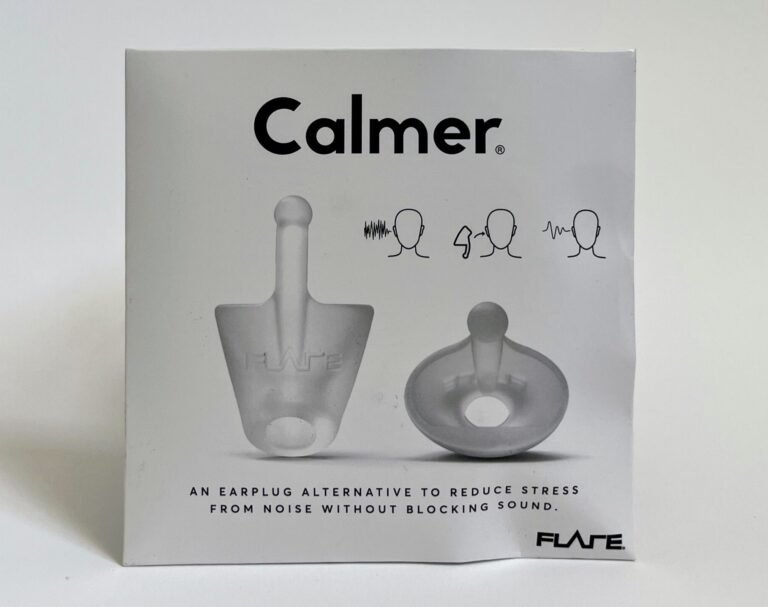
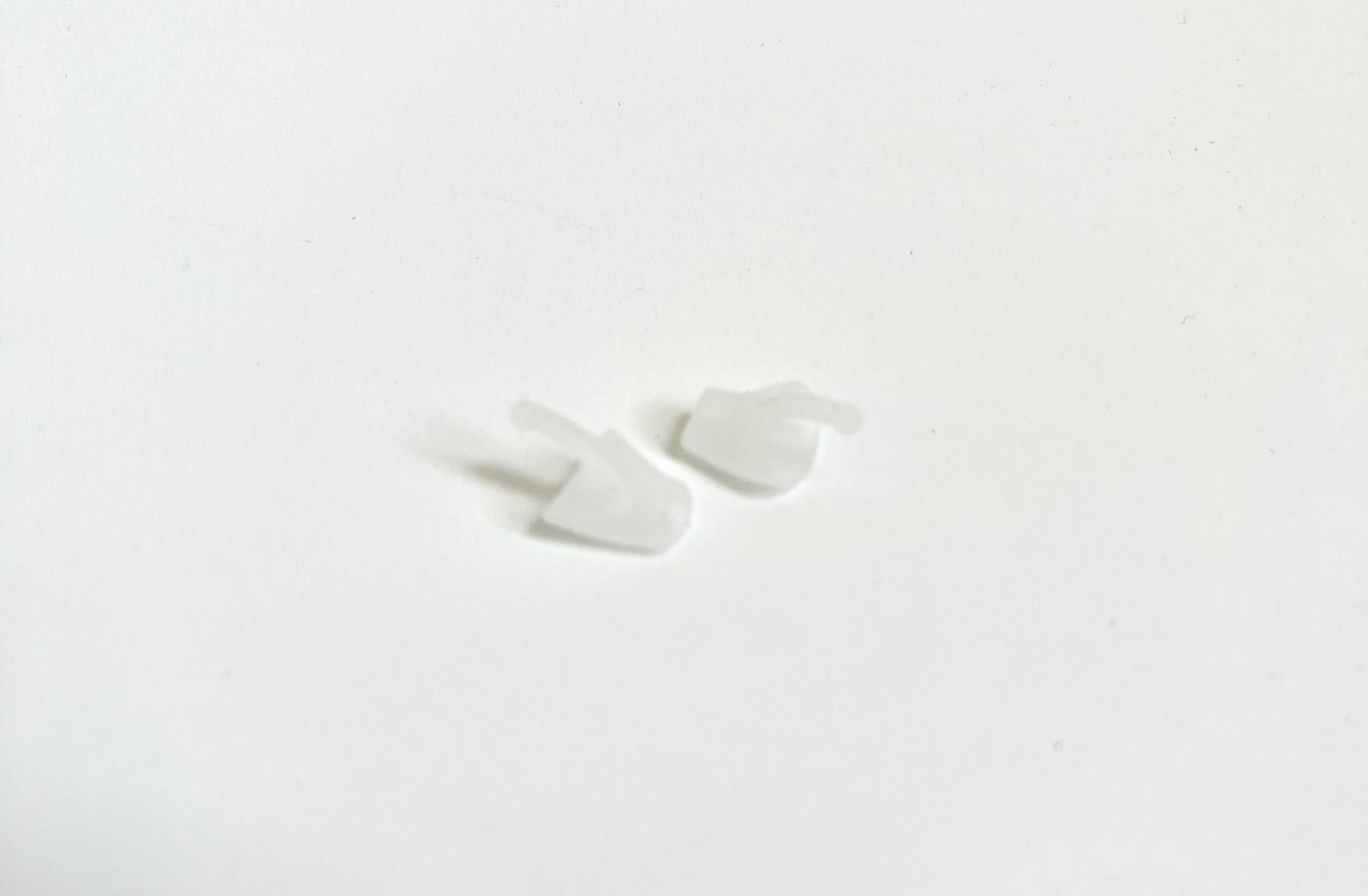
Fig. 1 – Exhibit A. The Mini, with the optional press-in filters. Tiny, hollow, and unlike anything else in the investigation.
You put them in and wait. The website says give it five or ten minutes for the effect to arrive, so you do. The supermarket is still loud. The kettle is still sharp. At thirty minutes you’re still waiting for the thing the box promised, and you start to wonder whether you’ve fitted them wrong, or whether there was less to feel than you hoped. Later, you catch one of them hanging half out of your ear, and you realise you never noticed it move. That, in the end, told the clearest story.
Sensory Scorecard

What these eight axes mean
- Noise
- External sound, unpredictable or unfiltered. Includes misophonia triggers.
- Scent
- Smell that registers as invasive. Lingers and transfers.
- Tactile
- Surface contact on skin and in the ear: texture, friction, residue.
- Proprioceptive
- Physical pressure and the sense of something seated in the ear.
- Interoception
- Internal body signals the seal amplifies: heartbeat, breathing, pulse.
- Visual
- How the product looks; light, pattern, or appearance factors.
- Hygiene
- Contamination sensitivity: cleanliness, residue, the look of the product.
- Social
- Other people as a sensory source, plus the social cost of wearing it.
✗ Noise
A real but narrow high-band effect that, on test, left the bulk of daily noise coming through unchanged.
What Flare makes is a resonance modifier, not a noise blocker, and that distinction is the whole review. Flare’s own ISVR test (University of Southampton, 2020) found an average 7.9dB reduction across 2 to 8kHz from an external source, and that effect is real. The trouble, on this investigation’s test, is the reach: below 2kHz the base Mini let through essentially everything, and that range is where the traffic, the HVAC hum, the bus engine, and the voice fundamentals live. A useful image is a knight going into battle in armour that covers only the feet: the protection is genuine, it just isn’t where the blows land. The filters extend the coverage a little, but on the nine-tone test the strongest still passed about half the signal at 4kHz. The method behind these figures is set out in how these earplugs were tested for sensory sensitivity, and the own-voice effect is explained in the occlusion effect explained. For comparison, Loop Quiet 2 passed only 20% at 4kHz on the same test.
✓ Scent
A faint plastic smell on the device; packaging unscented.
– Tactile
The most comfortable product tested without filters; the filters change that, turning soft and adaptive into hard and resistant.
Without filters, this is the most comfortable thing in the investigation to wear: the soft silicone adapts rather than presses, there’s no sealed-air pressure, and insertion becomes routine quickly. Put the filters in and the experience changes. The hard plastic resists the canal in a way the bare silicone doesn’t, and surface pressure becomes noticeable within fifteen minutes and stays. Whether the modest filter benefit justifies that trade-off is the central question for anyone buying the filter pack, and on this investigation’s test the answer was no. One unexpected note, recorded because it wasn’t anticipated and isn’t documented elsewhere: wearing the Mini produced a consistent mild sense of being slightly off-course when walking, across several sessions, neither worsened nor caused by the filters.
✓ Hygiene
Cleans easily and stays clean, with one small wax-in-the-channel chore.
No discolouration or degradation after five or more sessions, and the silicone cleans with a tissue wipe. The filters stay clean too. One specific note: earwax collects inside the hollow channel and has to be cleaned out before reinserting, which isn’t pleasant but is manageable. Wouldn’t be passed to another person without sterilising. On balance, a strong hygiene performer.
– Proprioceptive
A presence in the canal rather than a seal, with a mild balance effect worth flagging for sensitive wearers.
The proprioceptive experience is unlike anything else tested. There’s no seal to settle into and no pressure to habituate, just a small object felt in the canal. The mild sense of being slightly off-balance when walking, noted in the feel section, belongs here too, and is worth keeping in mind for anyone whose proprioceptive sensitivity is already heightened. With the filters in, the harder body makes the presence more pronounced over time rather than less.
✓ Interoception
Low internal-body intrusion: heartbeat absent, breathing only slightly raised.
Because nothing seals, the inward amplification that troubles sealed plugs is gentle here. The heartbeat stays absent, breathing is only slightly raised without filters and a little more with them, and footsteps are absent. Own chewing is slightly louder than normal. For someone whose main aversion is to body-noise amplification, this is a comfortable profile; the context is on the occlusion effect explained.
✓ Social
Effectively invisible and fully conversational, since it barely changes what you or others sound like.
On appearance and on talking, this is the most socially frictionless product tested. It passes as nothing at all in a shop, on the bus, or at a desk, and there’s no self-consciousness wearing it. Speech stays clear, so you stay in the conversation rather than stepping out of it. The one social cost is logistical, not acoustic: the original carry bags are insecure and the filter pack’s hard case means rummaging, so loading the right pieces in public is fiddlier than with the Loop or Alpine cases. The honest social verdict is that it’s easy to be around people in, the open question is only whether it’s doing anything for the noise while you are.
Frequency Perception
% = signal allowed through. Lower = stronger attenuation. Tone generator (NAD C320 / B&W S601, 33% volume, 50cm). 15kHz via iPhone at 6 inches. Subjective perception, not laboratory measurement.
What the Testing Showed

Flare’s Calmer is a hollow silicone device that modifies the resonance of sound in the 2 to 8kHz range rather than blocking it, and the science behind that is genuine: Flare’s own ISVR laboratory test (University of Southampton, 2020) recorded an average 7.9dB reduction across the band from an external source. That figure is real and worth crediting, since most rivals have no independent test at all. The problem this investigation kept meeting is one of scope. On the nine-tone test the base Mini passed essentially all of the signal below 2kHz, which is exactly where the dominant daily noise sits, with only a dip to 75% at 4kHz. The press-in filters, whose 10 and 15dB figures are Flare’s own claims with no independent certification found, shifted the numbers without, on test, crossing into useful territory in a live room.
In use the pattern held. Across the bus, the supermarket, the office, and the restaurant, the soundscape arrived largely intact for this reviewer, even with the strongest filters in, and several of the brand’s specific claims didn’t match what was felt: there was mild own-voice and breathing amplification despite the no-occlusion claim, the filters turned a soft adaptive body into a harder one that built canal pressure, and a residual ear-sensitivity rebound followed longer sessions. One earpiece even worked its way half out in a supermarket without being noticed, which, on reflection, was the clearest indicator of how little it was doing. Retention in a narrow canal is its own test, set out in earplugs for small ear canals. The single exception was a quiet kitchen, already low in noise, where the filters took the high machine-hiss down enough to perceive a small lift in focus.
So, on the terms tested, the verdict is flagged, and it’s worth being precise about why. This isn’t a claim that the device does nothing for everyone; it’s that across six everyday environments it produced no relief this reviewer could rely on, against a marketing promise that it would. Why some long-term users describe Calmer as life-changing while others feel nothing is a genuine open question, and expectation may be part of the answer. For the aluminium-core version, tested identically and reaching the same place, see the Flare Calmer Pro review; for the comfort-without-a-seal that this product hints at but with real daily attenuation, the Alpine PartyPlug is the one to read next.
What this product is
- Hollow silicone body — soft matte silicone throughout, with an open waveguide channel and no sealed tip; adapts to the canal shape gradually, and its softness is what removes the piston effect, the one comfort property no other product here shares
- Press-in filters (10dB, 15dB) — hard resinous plastic that push into the open end and change the character from soft-adaptive to rigid-against-canal; the dB figures are Flare's own claims with no independent certification found
- The mechanism — resonance modification by waveguide geometry, designed to reduce natural ear-canal resonance at 2 to 8kHz without blocking air; the ISVR report (Southampton, 2020) is the only independent test and covers the base device, not the filters
- Carry case — small fabric bags (insecure) for the base, a small hard case for the filter pack (more secure but fiddly to rummage); both less convenient than the Loop or Alpine cases
The Investigation

First Impressions
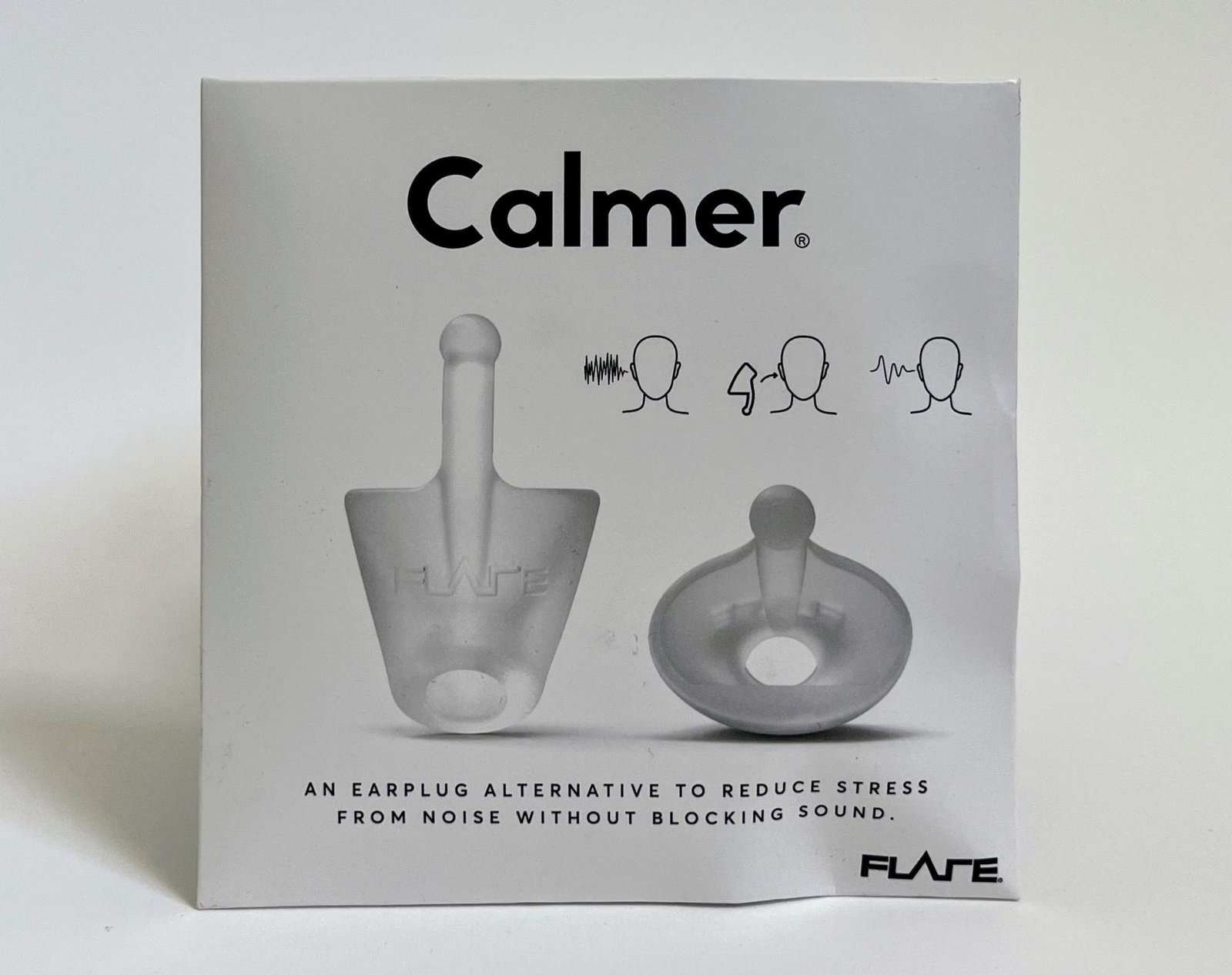
The parcel is a plain white envelope, a bit crumpled in transit, no-frills next to the brands chasing the Apple-unboxing look, but very well sealed, which reassures. The glued flap is fiddly to open.
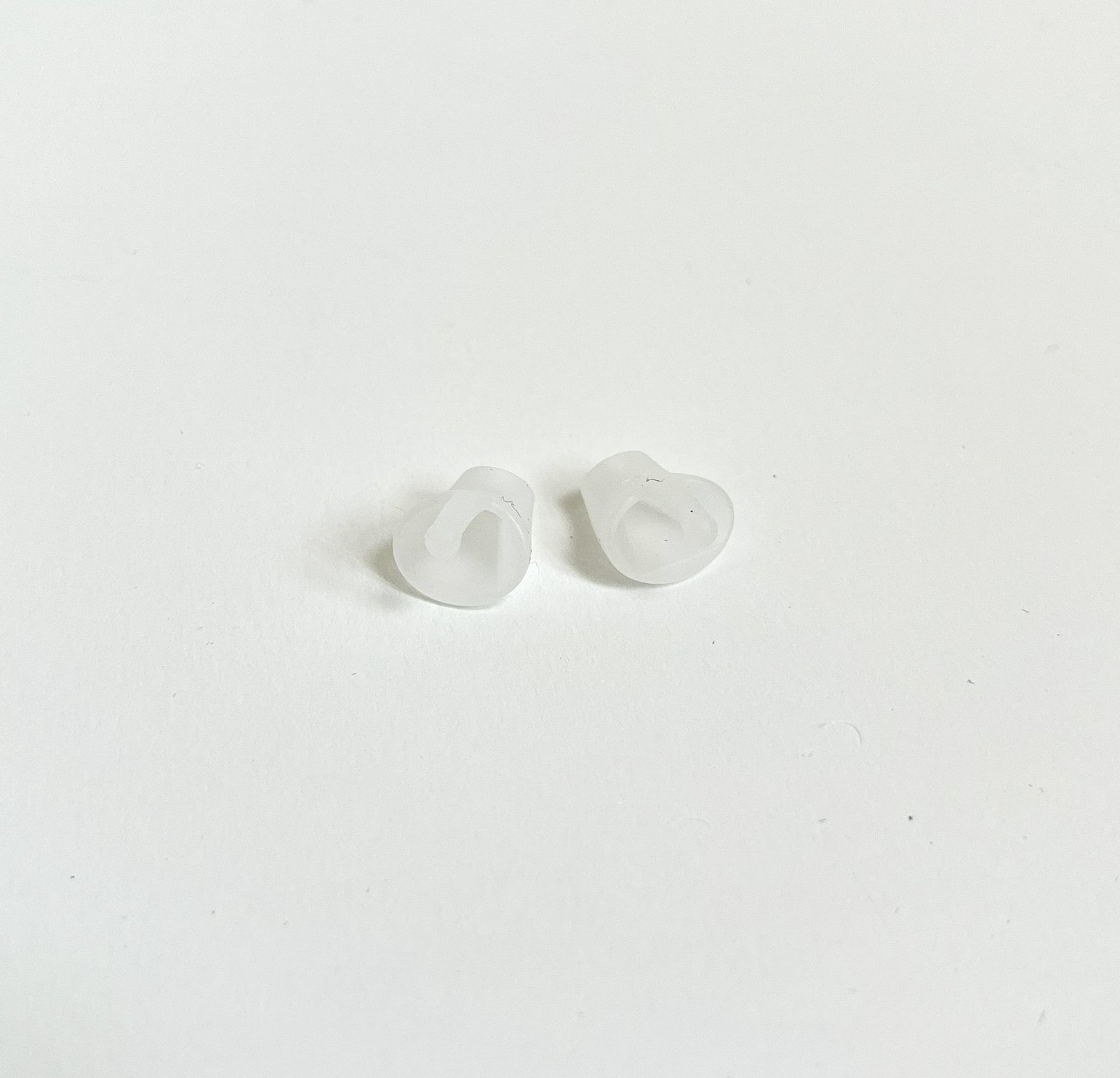
The pieces are small and easy to drop, a matte smooth silicone, with the optional filters like oddly shaped hard plastic Lego. A faint plastic smell on the earpieces, none on the pouch. The tiny size of the Mini does make you pause before putting it in, and the carry bag doesn’t cinch shut well, so there’s an ongoing sense one could fall out.
✗ Quiet Room All the presence of an earplug with almost none of the benefit
The Mini goes in easily and deep, with no piston effect and no sealed-air pressure, though you check a few times it isn’t too far in. Without filters this is the most comfortable product tested, the soft silicone adapting like foam. Own voice came back about 10% boomier, a quarter more with filters, breathing slightly raised, heartbeat absent. The ambient room stayed fully present, so no isolation. Surface pressure against the canal built over time, more with the filters. Removal was effortless, no pop. A small amount of wax in the hollow channel needed cleaning before reinserting.
– Home Office The only use case that improved: specific high appliance hiss cut back
The one environment where a benefit showed, and a narrow one. Without filters there was no real change; with the 15dB filters in, the kettle’s hiss softened slightly and the extractor’s upper whistle was trimmed, while the low hum, the washing machine, and the bulk of the noise were unchanged. In a space already quiet, that small high-frequency trim was just enough to perceive a little more focus. Speech at a metre stayed fully intelligible. This is the use case the investigation found for the product, and it’s a specific one.
✗ Commute Engine and voices came through unchanged, filters or not
Little to report, which is itself the finding. The engine and road noise came through unchanged, with or without the 15dB filter; passenger voices stayed fully present, softened maybe a quarter with the strongest filter; a phone’s tinny top end eased a little but its main noise remained. A PA announcement was fully clear. Sudden events kept their startle. Conversation was easy, with own voice a little boomier on the filter. For this reviewer the bus was no more manageable with these in than without.
✗ Supermarket No noticeable help; one piece fell half out unnoticed
No noticeable improvement, even with the 15dB filters. The PA, the checkout beeps, the refrigeration hum, the trolley impacts, and the background music all came through essentially as normal, with only a slight taming of children’s voices. Speaking to staff was normal. This was the stage where one earpiece worked its way half out without being noticed, which says plainly how little it was adding. A difficult, high-input environment that the product, on test, did not make easier.
✗ Open Plan Office Touches high hiss, not the office's real problem
Not enough to help, even filtered. Keyboard noise stayed fully audible, softened into a gentler flicking with the 15dB filters; a neighbour’s phone call stayed clear; the HVAC hiss became a slightly softer woosh, but the main hum held. Desk-eating sounds, the misophonia trigger, were still very present. A colleague speaking directly was clear, though with filters in the own-voice boom meant you’d remove them for a real conversation. The one band it touches, high hiss, isn’t the office’s main problem, so it wasn’t useful here.
✗ Restaurant / Cafe A hard room that stayed hard, even with the strongest filters
A hard environment that stayed hard. Without filters the experience was about 90% of normal; with the 15dB filters chewing eased a little and cutlery improved by perhaps a third, but both were still clearly audible and disturbing, and background music, while softened, stayed an irritant. A companion was intelligible without filters and muffled with them, while your own voice boomed enough to lose your thread. Not a setting the product helped with, on test, for a solo visit or in sensory distress, and the filter in-and-out during a meal is awkward.
What the packaging says — what was found

What the packaging says — what was found

| The claim | Finding | Note |
|---|---|---|
| "No muffling: does not block or muffle sound" Holds | ✓ | True of the base Mini; with filters in there was a little muffling of some bands, but broadly this holds. |
| "Does not cause the occlusion effect" Partial | – | On test there was mild amplification of own voice and breathing, more so with filters in. |
| "Reduces ear resonance at 2 to 8kHz" Partial | – | The nine-tone test showed a modest reduction in the upper part of this band, backed by Flare's own ISVR figure, but the effect did not translate into noticeable relief in most live environments for this reviewer. |
| "All other earplugs increase ear sensitivity over time; Calmer does not" Partial | – | On test there was a residual sensitivity and a sense of louder sound after longer sessions. |
| "Allows you to communicate perfectly" Partial | – | Others were very clear to hear, the best in the set, but own-voice occlusion was present, so "perfectly" overstates it. |
| "Minimise your stress response to noise" Partial | – | This reviewer did not experience that benefit at any stage; with so much of the soundscape coming through, the stressors remained. |
| "Wear for long periods without discomfort" Partial | – | The base Mini was comfortable, but very present, and less so with filters; an unexpected mild balance effect was also noted. |
| "Filter figures of 10dB and 15dB" Partial | – | These are Flare's own claims; no independent NRR, SNR, or ISO certification was found, and BOST searched for one. |
Who this suits — and who it doesn’t

- The most physically comfortable product in the investigation without filters: soft silicone that adapts to the canal like foam
- No piston effect at all, since the hollow design traps no air against the eardrum
- The best speech intelligibility of any product tested: the one marketing claim that clearly held
- No isolating over-attenuation, since the full soundscape stays present by design
- Genuinely backed by an independent lab figure (Flare's ISVR test) for its narrow band, which most rivals can't claim
- Top marks for hygiene: cleans with a wipe and stays clean
- The Mini size fit a smaller canal easily where the standard size wouldn't seat
- By design it lets through almost all sound below 2kHz, so anyone wanting the traffic, HVAC, engine or voice noise of daily life actually reduced should look elsewhere: this isn't that tool, and doesn't claim to be
- Did not, on test, make the bus, supermarket, office, or restaurant noticeably more manageable, even with the strongest filters
- The press-in filters turn the soft adaptive body into a harder one that resists the canal and builds surface pressure
- Some own-voice and breathing amplification, contrary to the no-occlusion claim, more so with filters in
- One earpiece worked its way half out unnoticed during a live test, a side effect of providing little to register
- A mild sense of being slightly off-balance when walking, noted consistently and not expected
- Filter dB figures are Flare's own claims with no independent certification found
- A residual ear-sensitivity rebound after longer sessions, against the claim that Calmer avoids this
Flare’s Calmer is the odd one out in this investigation, and the most interesting to test. It isn’t an earplug at all but a hollow silicone device that reshapes the resonance of sound in a narrow high band rather than blocking anything, on the theory that taking the edge off 2 to 8kHz is enough to calm a sensory-sensitive nervous system. Flare’s own ISVR laboratory test, the only independent acoustic test of any Calmer product, found an average 7.9dB reduction across that band from an external source. The point of that reduction isn’t quieter surroundings; it’s a calmer response to the sound that remains, which is the claim this investigation set out to feel for rather than measure. That effect is real, and worth saying plainly.
The difficulty this investigation kept running into is that the band is narrow and the daily noise that overwhelms isn’t. On the nine-tone test the base Mini let through essentially all of the signal below 2kHz, the traffic, the HVAC, the bus engine, the voice fundamentals, with only a slight dip at 4kHz. The press-in filters shift those numbers a little but, on test, not to a level that changed any live environment except one. In a quiet kitchen, already low in noise, the Mini with filters did take the high machine-hiss down enough to perceive a small lift in focus. This use case found, is a narrow one.
So the verdict is flagged, judged on its own promise rather than on noise reduction: across the bus, the supermarket, the office, and the restaurant, the calming effect Calmer is built to deliver didn’t arrive for this reviewer, even with the strongest filters in, and the specific claims about occlusion, comfort, and stress reduction didn’t hold up against what was felt. Why some long-term users describe it as transformative while others notice nothing is a question this investigation can’t resolve, and expectation may be part of the answer. That’s worth knowing before you spend. For the aluminium-core variant tested the same way, see the Flare Calmer Pro review. For products that did reduce daily noise on test, see Loop Quiet 2 or, for the comfort without a seal, the Alpine PartyPlug. For all ten, see Earplugs for Sensory-Sensitive Adults.