
No sponsorship, no freebies. Links here earn a small commission at no extra cost to you, which keeps the investigations independent. More info
The Occlusion Effect: Why Earplugs Make Your Own Voice, Heartbeat and Chewing Louder
Occlusion means sealing the ear: traps the low-frequency sounds your own body makes, so they grow louder as the outside world grows quieter.
Field Report. Findings observed from testing 10 earplug type devices and experiencing varying levels of occlusion.
For a lot of autistic, SPD and highly sensitive adults, the reason an earplug fails isn't that it does too little. It's that it suddenly makes your own body loud: your voice booms, your heartbeat arrives, your chewing turns enormous. That's the occlusion effect, and it's one of the most common reasons sensory-sensitive people give up on a product that's otherwise doing its job. For an interoception-sensitive listener, that internal loudness can be harder to bear than the noise you put the earplug in to escape.
What the occlusion effect is
The occlusion effect is the boost to low-frequency sound that happens when something seals your ear canal. With the canal open, the low-frequency vibrations your own body makes (your voice, your pulse, your footsteps, your chewing) escape freely out of the ear.
Seal the canal and those vibrations are trapped against the eardrum, where they’re heard as a louder, boomier version of sounds you normally ignore. The outside world gets quieter while your inside world gets louder. A strange, sometimes unsettling combination.
Why it hits autistic, SPD and HSP listeners harder
If you’re autistic, have sensory processing differences, or identify as a highly sensitive person, you may already notice internal signals more keenly than most. Interoception, the sense of what’s happening inside your own body, runs louder for many of us to begin with. The occlusion effect turns that dial up further, so a sealed earplug can amplify the exact channel you’re most sensitive on.
That’s why an earplug can leave you calmer about the room and more distressed about yourself. The point of wearing one is usually to regain a feeling of control, and a sudden, inescapable awareness of your own heartbeat or a booming voice can undo that completely. It isn’t a fault in you, and it isn’t imagined. A strong low-frequency seal is exactly what drives it, and you can see what each design blocks by frequency.
Which earplugs make it better or worse
The tidy version of this story is “the deeper the seal, the worse the occlusion.” The investigation found that’s too simple. What actually predicts how loud your own body gets is the type of seal, not just how deep it sits. Three things turned out to matter: how firmly the plug grips the canal wall, whether the material damps vibration or reflects it, and how large the trapped cavity is between the plug and the eardrum. A narrower canal changes both pressure and seal, which is its own problem in earplugs for small ear canals.
Deep foam booms your voice but spares the rest. The 3M 1100 sits deep and seals completely, so your voice still sounds hollow. But the soft, slow-recovery foam absorbs the higher body sounds as it occludes, so breathing and heartbeat came through fainter than with the flanged plugs. A strong voice effect, a gentler everything-else. Not the worst, despite the deepest seal.
Entrance-seal wax stays mild by keeping the cavity large. Mack’s Pillow Soft and Ohropax seal at the mouth of the ear, leaving the whole canal open behind the seal. A bigger trapped cavity means a gentler low-frequency boom. The voice stayed muffled rather than hollow, the heartbeat faint or absent.
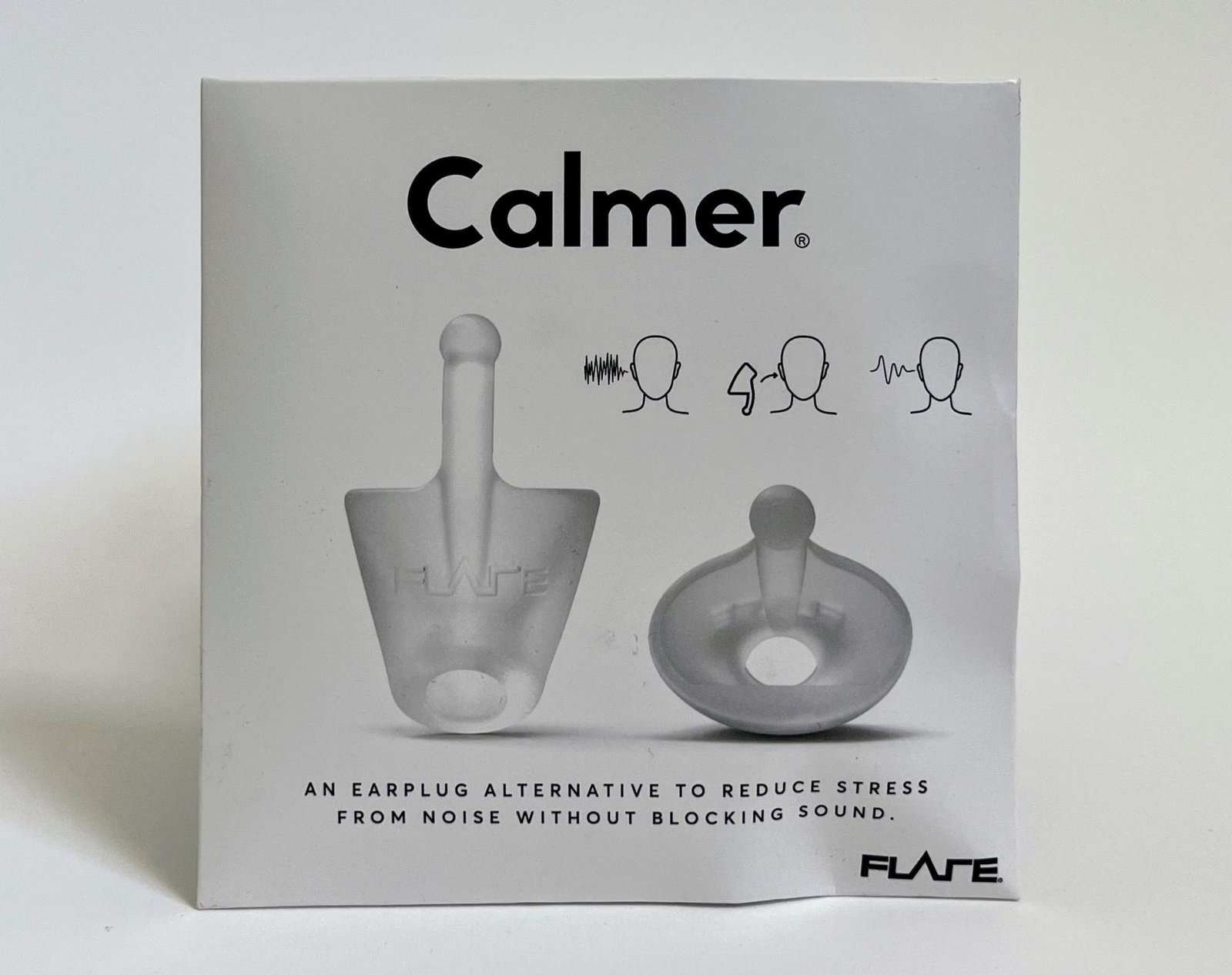
Open and vented designs largely sidestep it. The Flare Calmer doesn’t seal the canal at all, so there’s almost no trapped cavity to amplify; in my testing the own voice came through only slightly altered. The cost is that very little outside noise is blocked either, which is the trade-off in plain sight.
The through-line: occlusion and noise-blocking pull against each other. The plugs that shut the world out most firmly tend to bring your own body in most loudly, and the quietest plug for your own voice is usually the one letting the most outside noise through.
What each plug does to the sound of your own body
Seal a canal and the outside world gets quieter, but the inside world gets louder. Your voice booms, your breathing surfaces, your own chewing turns intrusive. The investigation rated that effect for all ten plugs, using the same prompts and the same scales each time, in one set of small ears. Here’s where each one lands. The dot carries the verdict; the colour just repeats it, so it survives in greyscale.
| Product | Own voice NOISE | Breathing INTERO | Heartbeat INTERO | Own chewing INTERO | Footsteps PROP | Occlusion |
|---|---|---|---|---|---|---|
| Loop Quiet 2 | Hollow, boomy | Intrusive | Absent | Intrusive | Strong, soft thunder | ✗ Strong |
| Alpine Silence | Hollow, boomy | Noticeable | Absent | Intrusive | Felt, low frequency | ✗ Strong |
| 3M 1100 | Hollow, boomy | Faint | Faint | Noticeable | Present, hard floors | – Mod–strong |
| Loop Engage | Hollow, less boomy | Intrusive | Absent | Intrusive | Strong, soft thunder | – Mod–strong |
| Alpine PartyPlug | Hollow, boomy | Noticeable | Absent | Noticeable | Mild when moving | – Moderate |
| Mack’s Pillow Soft | Muffled, not boomy | Noticeable | Faint | Noticeable | Very present | – Moderate |
| Ohropax Classic Wax | Muffled, not boomy | Faint to noticeable | Absent | Noticeable | Mostly masked | – Moderate |
| EarPlanes Small | Slightly altered | Faint | Absent | Faint | Minimal | ✓ Low |
| Flare Calmer | Slightly altered | Faint | Absent | Faint | Minimal | ✓ Low |
| Flare Calmer Pro | Slightly altered | Faint | Absent | Faint | Minimal | ✓ Low |
Footsteps shown in grey: observed across the seven test environments rather than scored as a separate line. Don’t read a row as a running total. The voice column and the body-sound columns use different scales, so a row is a pattern to read, not a sum to add. Findings: BOST Lab.
The trade-off worth seeing
Read this table against the attenuation data and a pattern jumps out. The plugs that occlude worst, Loop Quiet 2 and Alpine Silence, are flanged silicone that seals firmly inside the canal. The plugs that occlude least, the two Flares, barely seal at all, which is exactly why so little outside noise gets blocked either. Quiet on the outside and quiet on the inside pull against each other.
The deep-seal heavyweights complicate it. Ohropax wax and the 3M foam attenuate more than anything else in the set, yet they sit mid-band for occlusion rather than worst. Wax seals at the canal mouth, so the trapped cavity is large and the low-frequency boom is gentler. The 3M’s slow-recovery foam damps as it occludes, which is why your voice booms but your breathing and heartbeat stay faint. Occlusion and attenuation are independent properties. A plug can be hard to hear past and pleasant to hear through at the same time.
How the investigation rated this
One tester, one pair of smaller-than-average ears, the same scripted prompts every time. Own voice was judged by speaking a fixed phrase on insertion. Breathing, heartbeat and own chewing were rated on a five-point audibility scale from absent to overwhelming, sitting still for the interoceptive ones. The occlusion band is a stated rule, not a hidden score: strong means a hollow, boomy voice plus at least one intrusive internal sound; moderate means an altered voice with noticeable internal sound; low means barely altered with faint or absent internal sound. Full method is linked below.
What to do about it
If the occlusion effect is your dealbreaker, and for many sensory-sensitive people it is the dealbreaker, look toward entrance-seal or vented designs and away from deep-insertion foam. There’s a genuine trade-off here: the more completely an earplug shuts the world out, the more it tends to bring your own body in.
KEEP READING
 CASE FILE – FLAGGED
Flare Calmer
The lowest occlusion tested, because it barely seals. The trade-off in a single product.
CASE FILE – FLAGGED
Flare Calmer
The lowest occlusion tested, because it barely seals. The trade-off in a single product.
 FIELD REPORT
What frequencies each plug blocks
The tone-by-tone data behind the occlusion trade-off, 75 Hz to 15 kHz.
FIELD REPORT
What frequencies each plug blocks
The tone-by-tone data behind the occlusion trade-off, 75 Hz to 15 kHz.
 INVESTIGATION HUB
Earplugs for sensory-sensitive adults
All ten case files, the method, and every comparison in one place.
INVESTIGATION HUB
Earplugs for sensory-sensitive adults
All ten case files, the method, and every comparison in one place.