
No sponsorship, no freebies. Links here earn a small commission at no extra cost to you, which keeps the investigations independent. More info
How to deal with Misophonia: what the testing actually shows
Help and relief from misophonia. No silver bullet but some viable options backed by data and real world testing
Over 100 hours of testing across lab and real world environments. Every product bought, none gifted. Not medical treatment advice.
Misophonia is the unexpected tormentor, in my experience. There you are, minding your business, attempting to work through a sandwich when someone sits down near by and starts slurping their soup. Presto, like magic, lunch is ruined. As an autistic and sensory sensitive person this is something I've struggled with, to varying degrees, most of my life. Consider my misophonia pages as a side quest. But very important ones.
An earplug blocks more of a trigger sound. A headphone masks better and covers more situations. Neither cures anything. The right answer depends on whether you want the sound gone or replaced.
I’m autistic and sound-sensitive, and misophonia has shaped my days for most of my life. Over a hundred hours went into these two investigations: tone tests on a calibrated rig, then the same products taken into cafés, offices, supermarkets and buses. A reviewer who isn’t troubled by lip-smacking can’t tell you whether a device removes it. They were never listening for it.
BOST takes no sponsorship and runs no ads. If you buy through the links here, a small commission comes back to the site at no extra cost to you. That’s what keeps these investigations independent.
Two tools, two different jobs
Misophonia isn’t a volume problem. The brain flags a specific sound as a threat regardless of how loud it is, which is why turning the world down by a few decibels so often fails to bring relief. That single fact reorganises the entire buying decision, and it splits every device on this page into two jobs.
Blocking is the physical wall. Push something into the ear canal and the trigger physically cannot reach the eardrum at full strength. Earplugs win this outright, and it isn’t close.
Masking is replacement. Play a neutral sound over the top and the trigger stops being findable in the mix. Headphones win this, and the surprise from the testing is that masking, not the noise cancellation everybody pays for, is what actually removes mouth sounds.
Noise cancelling headphones: the strongest all-rounder
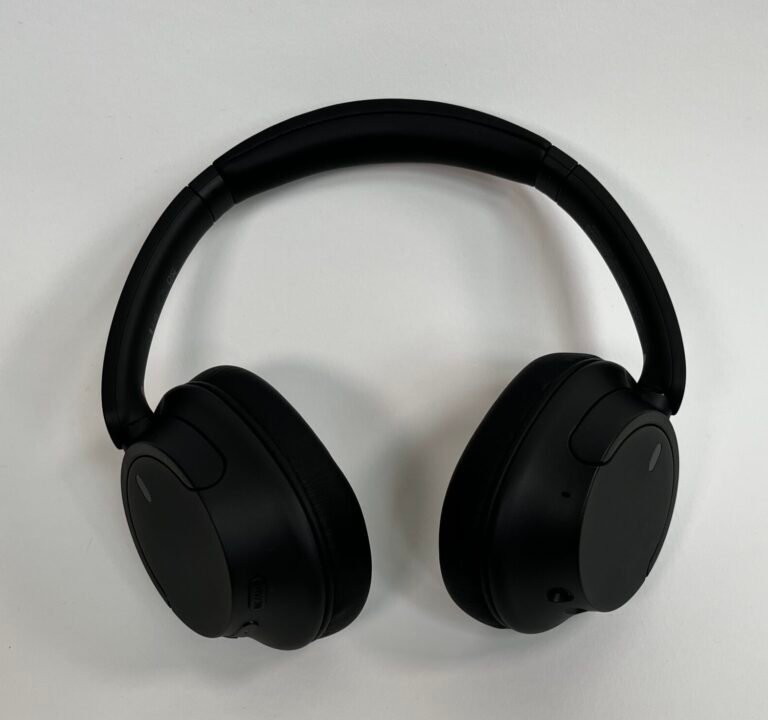
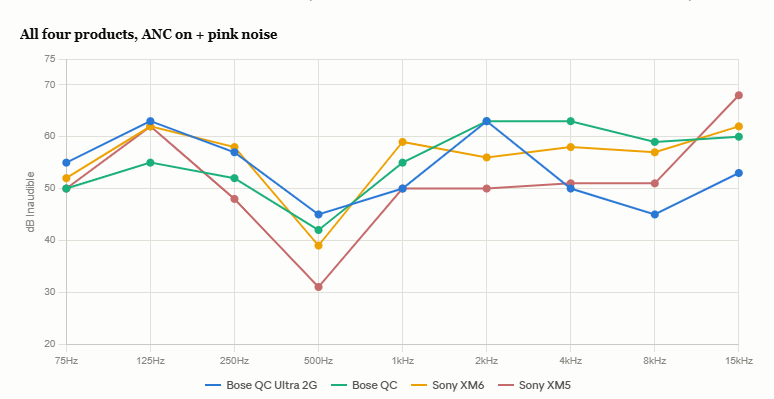
Across every Sony and Bose pair tested, one came out ahead on the sounds that matter here. The Sony WH-1000XM6 cut objectively more trigger noise than any other flagship in the batch: it halved nearby chewing and slurping where rivals managed a third, took three quarters off lip-smacking, and removed 80 to 90% of keyboard clatter. No other pair did useful work across all three trigger groups.
It is also the pair I would put in front of anyone who dislikes things going inside their ears, which includes a great many autistic adults and most children. Nothing enters the ear canal, so the pressure-in-the-canal sensation that makes earplugs intolerable for some people simply doesn’t arise, and your own chewing comes back far less loudly than it does under a plug.
Sony WH-1000XM6
Strongest measured cancellation of the batch, and the only pair with no audible hiss in a silent room. Under the electronics sits a genuinely good passive seal, so even switched off it muffles more than most. Play anything through it at a third volume and every trigger tested vanished. Folds into a proper rigid carry case, which matters if it lives in a bag. The tradeoff: it charges the eardrums harder than the Bose pairs, so if that pressure sensation is what ends your sessions, the QuietComfort is the gentler route.
Which pair suits which triggers, room by room, with the per-trigger frequency grids and the pressure and hiss tradeoffs, sits in the headphone findings for misophonia. If the wider question is sensory comfort rather than triggers specifically, the autism and noise cancelling headphones investigation covers all eight pairs.
Earplugs: the strongest blocker
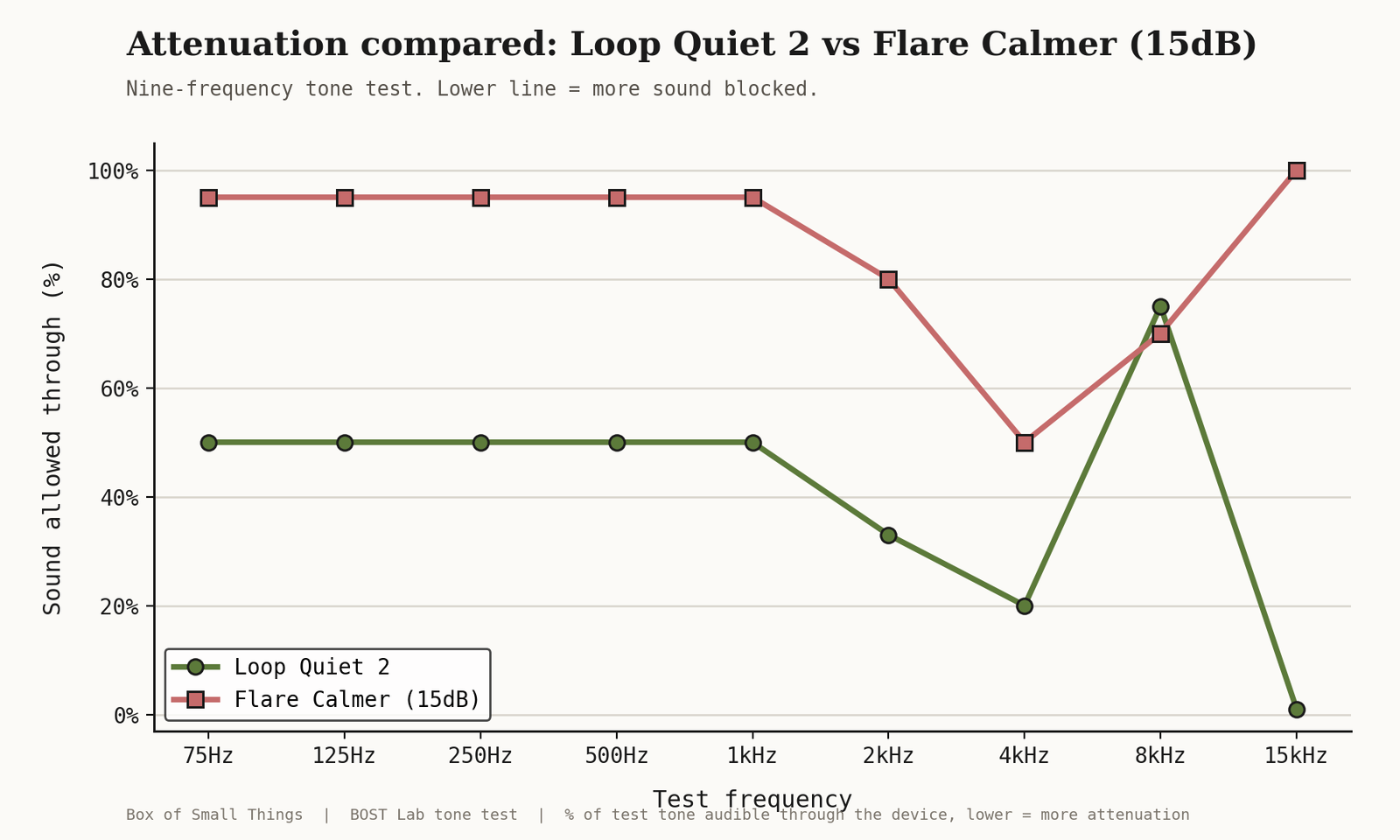
Put the two categories on one scale and the plug wins the blocking contest by a distance. Same nine tones, same room, same measure: the percentage of each trigger frequency that still came through. Lower and greener is better.
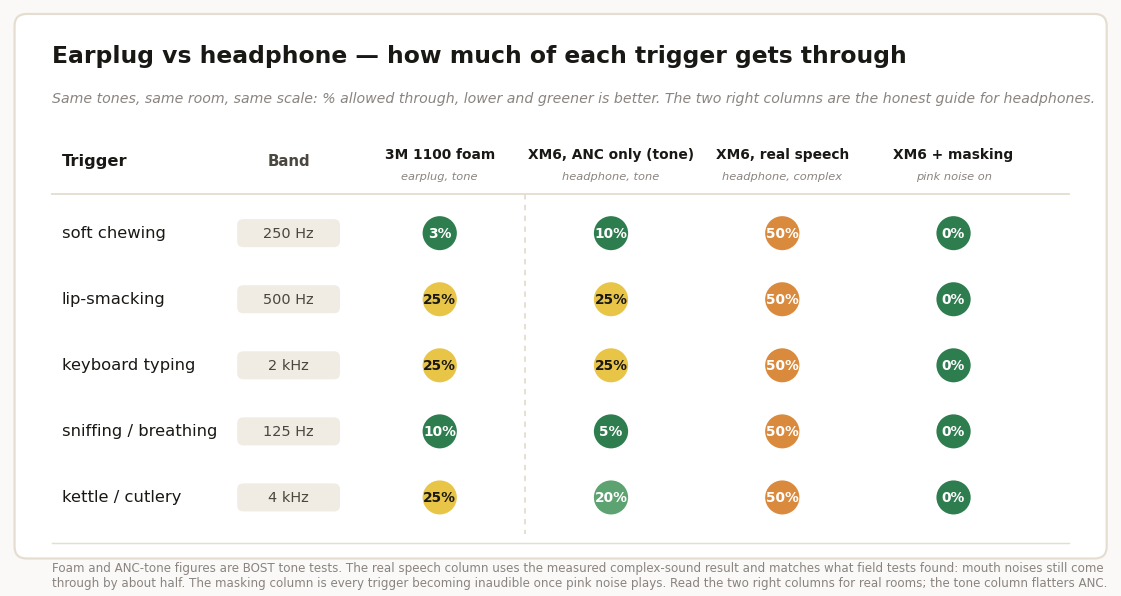
On pure tones the headphone looks the plug’s equal, letting 10% of the 250 Hz tone through against foam’s 3%. Stop there and you’d buy the headphone. But chewing isn’t a 250 Hz tone. It’s a messy spread of frequencies much closer to speech, and the same headphone let about half of a real voice through. Foam doesn’t care whether a sound is simple or complex, because it’s a wall. Cancellation is a prediction, and complex sounds resist prediction. A filing on misophonia devices makes the same point in engineering language: cancellation handles low frequencies with predictable patterns, while many triggers arrive higher and unorganised, which is precisely where the technology underperforms.
Pure blocking strength belongs to 3M 1100 foam, which measured 97% blocking at the chewing band and silenced a café outright. It is the best blocker tested and it costs almost nothing. It is not, however, what I actually carry.
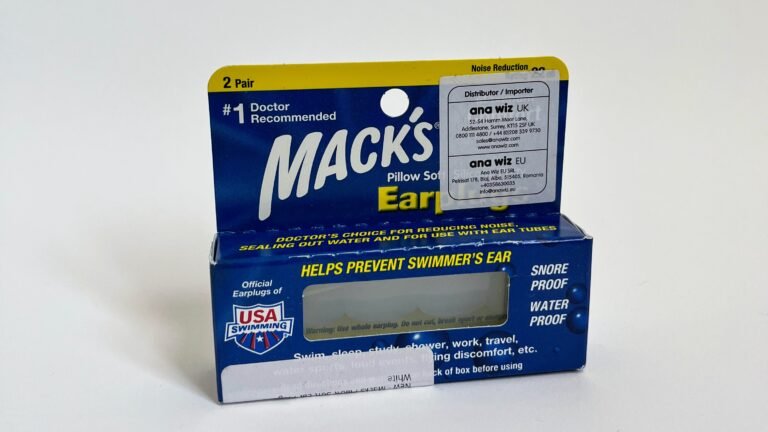
Mack’s Pillow Soft silicone putty
Blocking within a whisker of foam, and better in every way that governs whether a plug actually gets used. Silicone putty caps the canal rather than expanding inside it, so nothing is pushed into the ear and there’s no slow outward creep. It comes in a hard case, survives being carried loose in a bag, and can be reused rather than discarded after each wear, which makes it far more hygienic than a porous foam plug repeatedly pressed between fingers and reinserted. If you’re going to carry one thing, carry this.
Full case file →Ten earplugs went through this investigation, ranked by trigger and by environment, including the concert plug that quietly outperformed the one marketed at sensory sensitivity. The full picture is in earplugs for misophonia.
Are Loop earplugs any good for misophonia?
Loop dominates this conversation. They’re well designed, they look like jewellery rather than medical equipment, and they’ve become the default recommendation in autism and sensory communities. Both models went through the same tone tests as everything else, and for mouth and body triggers specifically, neither one impressed: Loop Quiet 2 let roughly half the trigger signal through, and Loop Engage let considerably more, by design, since it exists to keep speech audible and speech shares a band with chewing.
The full breakdown, including why Engage’s own design works against it here, sits in the earplug findings for misophonia, alongside the one open-fit plug that did better.
How to deal with misophonia at work
The open-plan office is where this condition does its quiet career damage, and it’s the environment where the headphone genuinely earns its price. Keyboard clatter is repetitive and mid-frequency, which is the one trigger profile cancellation handles well: 80 to 90% of it disappeared on the XM6, two thirds on everything else. Pen clicking fared worse, halved at best, because a click is a sudden transient and sudden is exactly what a predictive system cannot catch in time.
Testing at a shared desk turned up something the spec sheets never mention. Strip out the steady background hum and the intermittent sounds it was covering step forward instead. The office ventilation had been doing useful masking work all along, and cancelling it made a colleague’s occasional throat clearing more noticeable, not less. If your office has a constant mechanical hum, that hum may be helping you.
Worth highlighting: none of these let you hold a conversation with cancellation running, and every transparency mode tested was more irritating than useful. For a real exchange you take them off.
There’s a setting worth knowing about that nobody markets. Turn the cancellation off entirely and wear the XM6 as passive ear protection. The seal underneath the electronics is genuinely good, and in a quiet office the hiss and pressure sensation both disappear along with the processing. You lose the engine-drone cancellation you’d want on a train, but at a desk there’s no engine drone to cancel. What’s left is a clean muffle, no battery drain, and none of the low-level pressure that makes some people take these off after an hour.
Sony WH-1000XM6, cancellation off
The office pick, used passively. Strongest passive seal of the four flagships, no hiss, no eardrum pressure, and it takes the room down to a level where a keyboard two desks away stops registering. Switch the cancellation back on for the commute. If a colleague’s specific trigger sound still cuts through, add something quiet playing and it goes entirely.
How to deal with misophonia at home
Home is the hardest case and the one with the least equipment-shaped answer, because the trigger is usually someone you love and the sound is usually unavoidable. A partner eating crisps on the sofa is not a problem a purchase solves cleanly.
What the testing does support at home is the masking route rather than the blocking one. A plug removes the room, which works but isolates you from a family you’re trying to sit with. A headphone playing something quiet leaves you present in a way silence doesn’t.
One honest limit, because it’s the question I’m asked most and I don’t yet have data for it: recovering from full sensory overload at home was not tested on any of these products. That’s a gap, not a recommendation, and it’s on the list.
Sony WH-1000XM6, with music playing
At home the combination that worked across every test was this pair with something playing quietly through it. Cancellation lowers the floor, the music covers what’s left, and because the floor is already lower you can play the music quieter than you otherwise would, which matters over a long evening. It leaves you in the room with people rather than sealed away from them, and nothing goes inside your ears, so it stays comfortable for hours.
One caution about masking. A masking signal is itself a sound. On a day when your capacity is already spent it becomes one more input rather than a relief, and in a supermarket test that exact thing happened: the pink noise turned into an irritant of its own and the session ended in overload. If you’re already past your limit, silence and a plug will serve you better than anything played through headphones.
Eating out, shared tables and the family meal
Here is the honest position, and it isn’t the one a product page normally offers. If you are sitting at a table and want to take part in the conversation, there is no device that removes mouth sounds. None. The frequencies that carry chewing, slurping and lip-smacking are the same ones that carry the voices you’re trying to hear, and nothing yet made can separate them. Any product that leaves speech intact leaves your triggers intact with it.
That rules out the whole open-earplug category for this particular job. Loop Engage and Alpine PartyPlug do take the general background down, and in a loud restaurant that’s a real benefit for overall sensory load. But they pass the mid frequencies on purpose, so the chewing next to you comes through more or less untouched. They are good products being recommended for the wrong problem.
The good news is for the other kind of meal: the one you’re getting through alone, surrounded by other people eating. A canteen, a train, a food court, a work lunch you didn’t want. There you don’t need to hear anyone, and the double solution genuinely works. A putty plug caps what it can physically block, over-ear headphones add the masking layer on top, and between them the table next to you disappears.
The two products for a solo meal. Mack’s Pillow Soft underneath, Sony WH-1000XM6 over the top with something playing. Buy links for both are in the sections above and below.
Testing bears the difference out. In a café at a real table, nearby chewing came back halved on the XM6 and the XM5, two thirds gone on the Bose Ultra, halved on the standard QuietComfort. Halved is not gone. The same café with foam in, the din dropped by a third more than the best headphone managed alone.
Sniffing, breathing and throat clearing
These are the relational triggers, usually one known person at close range, and acoustically the most stubborn. Sniffing and breathing sit around 125 Hz, tangled up with traffic and ventilation rumble, which is where a small seal and a bit of cancellation help least. Across all four flagship headphones the reduction landed at about a third: meaningful, not transformative.
There’s a limit here no device crosses, and pretending otherwise would be dishonest. When the trigger is a specific person a metre away, the response is bound up with who is making the sound, not only how loud it is. Attenuation lowers the volume; it doesn’t always interrupt the reflex. This is exactly why masking tends to outperform cancellation for body sounds, because replacing a sound removes the pattern your brain is hunting for, while merely quietening it leaves the pattern intact.
Practically, this is the trigger group where the two recommendations on this page do best. A putty or foam plug blocks a good proportion of sniffing and breathing outright, because those sounds sit low and a physical seal handles low frequencies well: Mack’s held 125 Hz down to 10% getting through. Masking handles the rest. If body sounds are your main trigger, either route works, and the choice comes down to whether you need to stay in the conversation.
Your own sounds under the seal
Every sealing product changes what you hear from the inside as well as the outside. Block the canal and your own chewing, breathing, footsteps and voice come back through bone conduction, louder and stranger than usual. For anyone triggered by their own sounds as much as by other people’s, this can decide the purchase entirely.
Earplugs are the worse offender by a wide margin, and the deeper and tighter the seal the stronger the effect. Under foam, your own chewing becomes genuinely loud. Headphones sit outside the canal and produce far less of it: the Bose QuietComfort standard was the mildest of everything tested, with own chewing barely louder than normal, while both Sonys conducted crisp chewing through the skull noticeably. The full mechanism, and which products handle it best, is in the occlusion effect explainer.
Carry both, and treat the plugs as a life jacket
The two recommendations above aren’t rivals, and the strongest position is to own both. Headphones are the daily tool: they cover the office, they let you stay in a room with people, they mask what they can’t cancel. But they’re bulky, they’re conspicuous, they run out of battery, and there are places you simply won’t wear them.
Which is the argument for keeping a pair of Mack’s in your bag permanently. They weigh nothing, the case survives a rucksack, and they’re there for the meal you didn’t expect to be difficult, the train that turns out to be full, the waiting room. A life jacket, not a coat. You don’t wear it all day, you just never travel without it.
There is also a documented technique for the worst situations: wear a plug underneath over-ear headphones playing a masking sound. The plug takes out what it physically can, the headphone supplies the neutral signal that covers the rest, and you avoid the heightened sensitivity that total silence can bring. The Misophonia Institute lists this combination directly. BOST has not yet measured it as its own configuration, so treat it as a sound idea from the clinical literature rather than a verdict from this bench.
Mack’s Pillow Soft, the everyday carry
Reusable, hygienic in its case, near-foam blocking, and small enough that there’s no reason not to have a pair with you. The cheapest insurance on this page.
How this was tested
Two investigations feed this page, each running a fixed methodology before a single verdict is written. Every product gets a minimum of ten hours: first on the bench with test tones across nine frequencies, clamp force measured by balloon proxy, and eardrum pressure timed at intervals across a session. Then the same product goes out into the world, because a device that behaves on a bench can fall apart in a supermarket.
The real-world circuit is the same for everything: at home, an open plan office, a café, a supermarket, and commuting by bus. Findings from those environments are first person and reported as such, because how a product feels after forty minutes is not something you can measure with a meter. The lab results are a different matter. Those are replicable, the equipment and settings are published, and anyone with the same amp and speakers can run them again and check my work.
Both methodologies are published in full, including the parts that didn’t work: how the earplugs are tested and how the headphones are tested. Every product receives one of three verdicts, Cleared, Caution or Flagged. No stars, no scores, no rankings. No animals were harmed in the making of these investigations, though Watson did have to tolerate a certain amount of nonsense.
Common questions about managing misophonia
What is misophonia, exactly?
A reduced tolerance to specific sounds, where particular triggers provoke a strong emotional and physical response well beyond ordinary annoyance. It’s the sound plus the pattern, not the volume. Research suggests a meaningful proportion of adults experience it to some degree, and it frequently sits alongside autism, ADHD and sensory processing differences.
What are the most common misophonia triggers?
Mouth sounds lead by a distance: chewing, slurping, swallowing, lip-smacking. Then breathing sounds, sniffing and throat clearing. Then repetitive ones, keyboard typing, pen clicking, foot tapping. Triggers are often specific to a person as well as a sound, which is why a stranger’s chewing can be tolerable when a family member’s isn’t.
Do noise cancelling headphones help with misophonia?
Partly, and not for the reason most people buy them. Cancellation alone halved mouth sounds at best and did nothing at all to some triggers on some pairs. What removed triggers reliably was playing something through them: with pink noise at a third volume, every trigger tested disappeared on every pair. Buy them for masking, not for the cancellation figure on the box.
Do Loop earplugs help with misophonia?
Less than their popularity suggests, on the evidence from this investigation. In BOST testing Loop Quiet 2 let around half the signal through in the trigger bands, and Loop Engage passed considerably more, which follows from its design intent of keeping speech audible. Those are findings from one reviewer’s test rig and ears rather than an established fact about the products, and Loop’s own position differs. For general volume reduction and sleep both models did reasonable work.
Are earplugs or headphones better for misophonia?
Earplugs block more; headphones cover more situations and mask better. If you want the sound gone and don’t need to hear anything else, take the plug. If you need to stay in the room, at a desk or in a conversation, take the headphone and play something quiet through it.
Is there a treatment for misophonia?
There’s no cure, and no device reviewed here is a treatment. Clinical management usually centres on therapeutic approaches such as CBT, sometimes alongside sound-based tools. For most people finding what reduces their triggers is trial and error, which is part of why comparative data helps: it narrows the trials.
For clinical guidance rather than product data, the Misophonia Institute and Harvard Health are better starting points than this site, and a clinician who knows your history is better than either.
Can I wear earplugs all day for relief?
Better not to. Prolonged reduction of everyday sound is associated with increased sensitivity over time, which risks making the underlying problem worse rather than better. Clinical sources make the same point: the Misophonia Institute frames sound-based tools as appropriate for specific, limited situations rather than daily use.
Use them for the meal, the commute or the meeting, then take them out. Comfort points the same way: several plugs tested became genuinely uncomfortable somewhere between 30 and 90 minutes.
Why do my own chewing and breathing get louder with earplugs in?
That’s the occlusion effect. Sealing the canal traps sound conducted through your skull, so your own body gets louder while the outside world gets quieter. It’s worst with deep-fitting foam and mildest with over-ear headphones, which never enter the canal. If your own sounds are part of what triggers you, favour headphones.
The mechanism, and which products produce least of it, is covered in the occlusion effect explainer.
What helps a child with misophonia?
On the product side, over-ear headphones usually. Children often refuse anything inserted into the ear, and smaller canals make a poor seal likelier anyway, which is where plugs stop working. Headphones also let an adult see at a glance whether they’re being worn.
Beyond the equipment, this site is the wrong place to look. BOST exists to help you make better informed product decisions by providing data, and it is no substitute for meeting a professional face to face. For a child, start with the Misophonia Institute or your GP or paediatrician.
Does white noise or pink noise work better?
In testing, pink noise suited focused verbal work and music suited situations carrying visual and social load as well, such as supermarkets. Both removed the triggers. The more useful caution is that a masking signal is another sound, and on a day when you’re already overwhelmed it becomes a burden rather than relief.