
No sponsorship, no freebies. Links here earn a small commission at no extra cost to you, which keeps the investigations independent. More info
Earplugs for Autistic Adults: Wax vs Silicone, Tested
Three earplug designs, tested in the same rooms by an autistic reviewer. Not ranked by a winner, sorted by the sensory problem you're actually trying to solve.
A Field Report within the Earplug Investigation. Wax and seven silicone plugs, sorted by problem, not ranked by winner.
It was the removal that gave the game away. One plug drawn straight out, and the eardrum answered with a small, indignant pop, then two days of pressure that no amount of jaw-stretching would shift. A lesser reviewer might have blamed the ear. The investigation blamed the design, and went looking for proof. What followed was a question worth chasing: why does one earplug punish a sensitive ear while another, costing a fifth as much, slips in and does the job without complaint? Three designs. Nine plugs. The same rooms, the same scrutiny, until each gave up what it was hiding.
If a busy room turns voices into mush, you already know the problem
For a lot of autistic and sensory-sensitive adults, noise doesn’t just get loud. It jumbles voices, drowns the one you’re trying to follow, and leaves you drained from the effort of listening.
The thing that helps most isn’t silence. It’s control: turning the room down to a level you can manage without cutting yourself off entirely.
Some plugs press painfully. Some make your own voice boom. Some take so much you feel unmoored. Different designs fail in different ways.
Sorts wax and seven silicone plugs by the problem you’re actually solving, so you can find your match without discovering the wrong one the hard way.
Research with autistic adults describes exactly this: background noise that jumbles speech, and how much it helps to feel in control of the input. See the Manchester listening study, linked below.
Three earplug designs, and what each one does to a sensitive ear
Most advice pits wax against silicone, as if silicone were one thing. It isn’t. The silicone plugs in this investigation behaved in two completely different ways depending on how they seal the ear. Counting wax, that’s three designs to choose between, and each design solves a different problem and fails a different way. Get the design right and the brand barely matters.
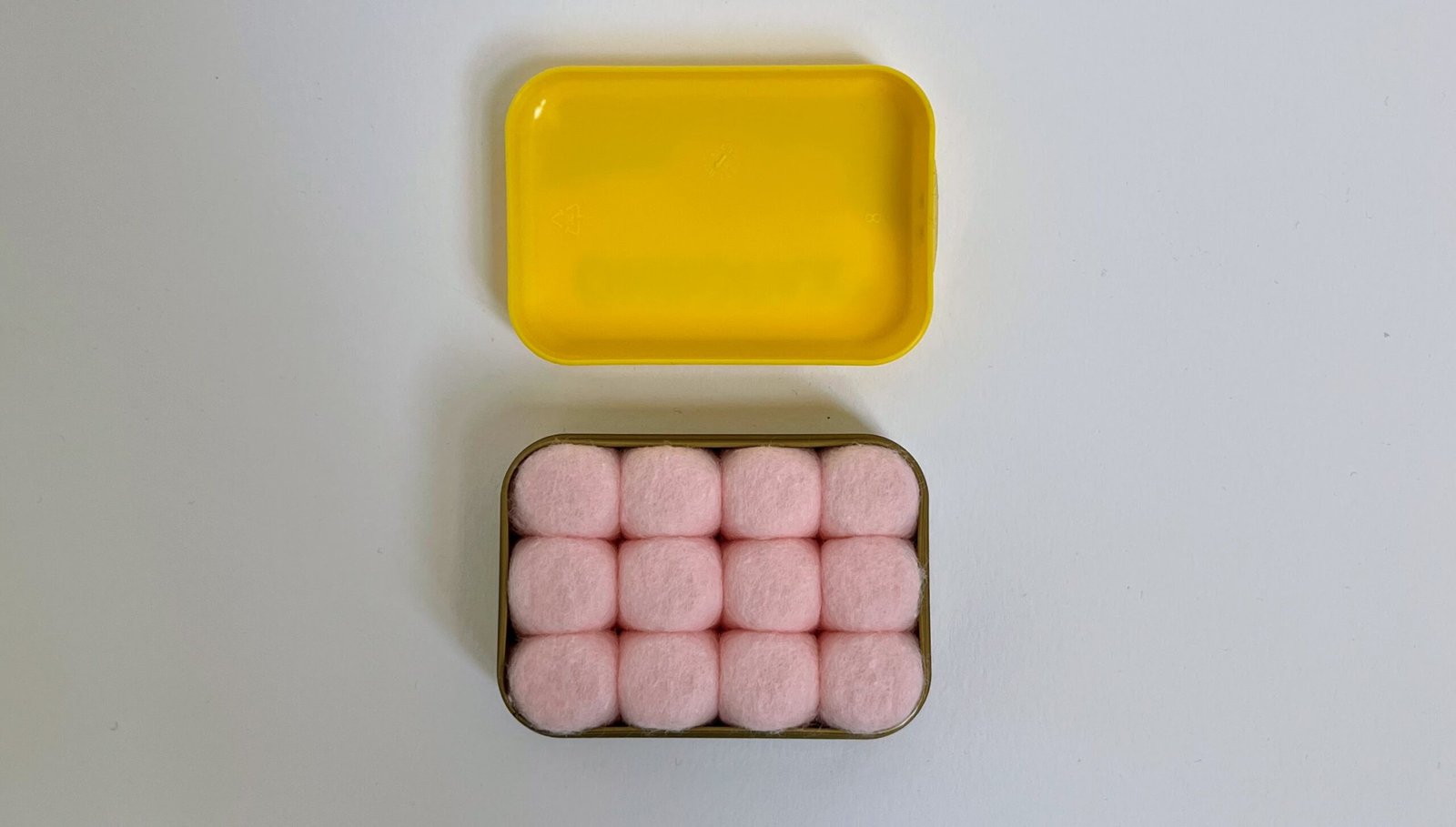
Wax and putty that seal at the entrance
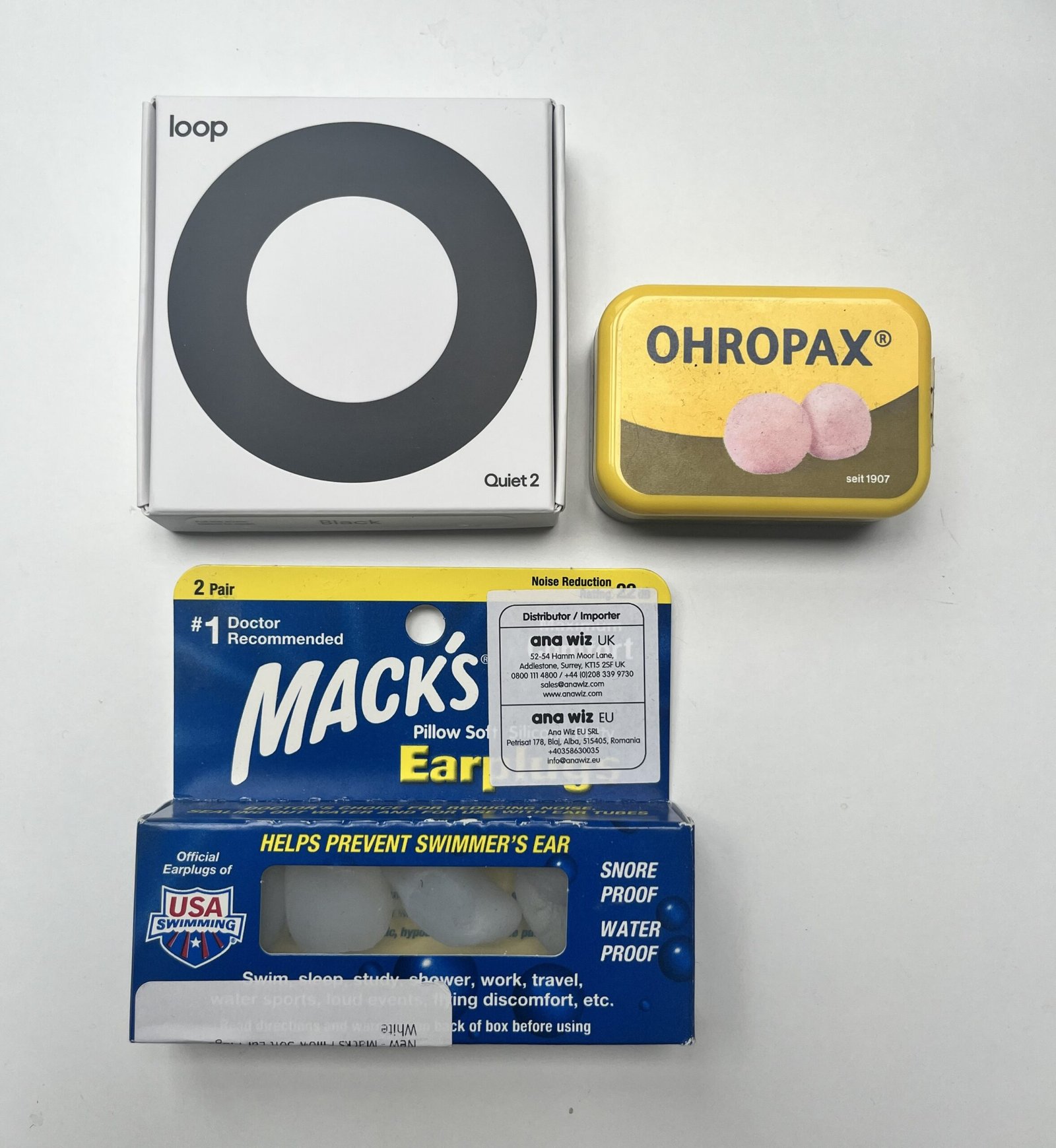
Ohropax (a wax) and Mack’s (a silicone putty). You press soft mouldable material against the opening of the ear, sealing from outside rather than pushing anything into the canal. Strong, steady quiet and very little of the own-voice booming that bothers sensitive ears. The trade is speech: in anything but a calm room, conversation gets hard.
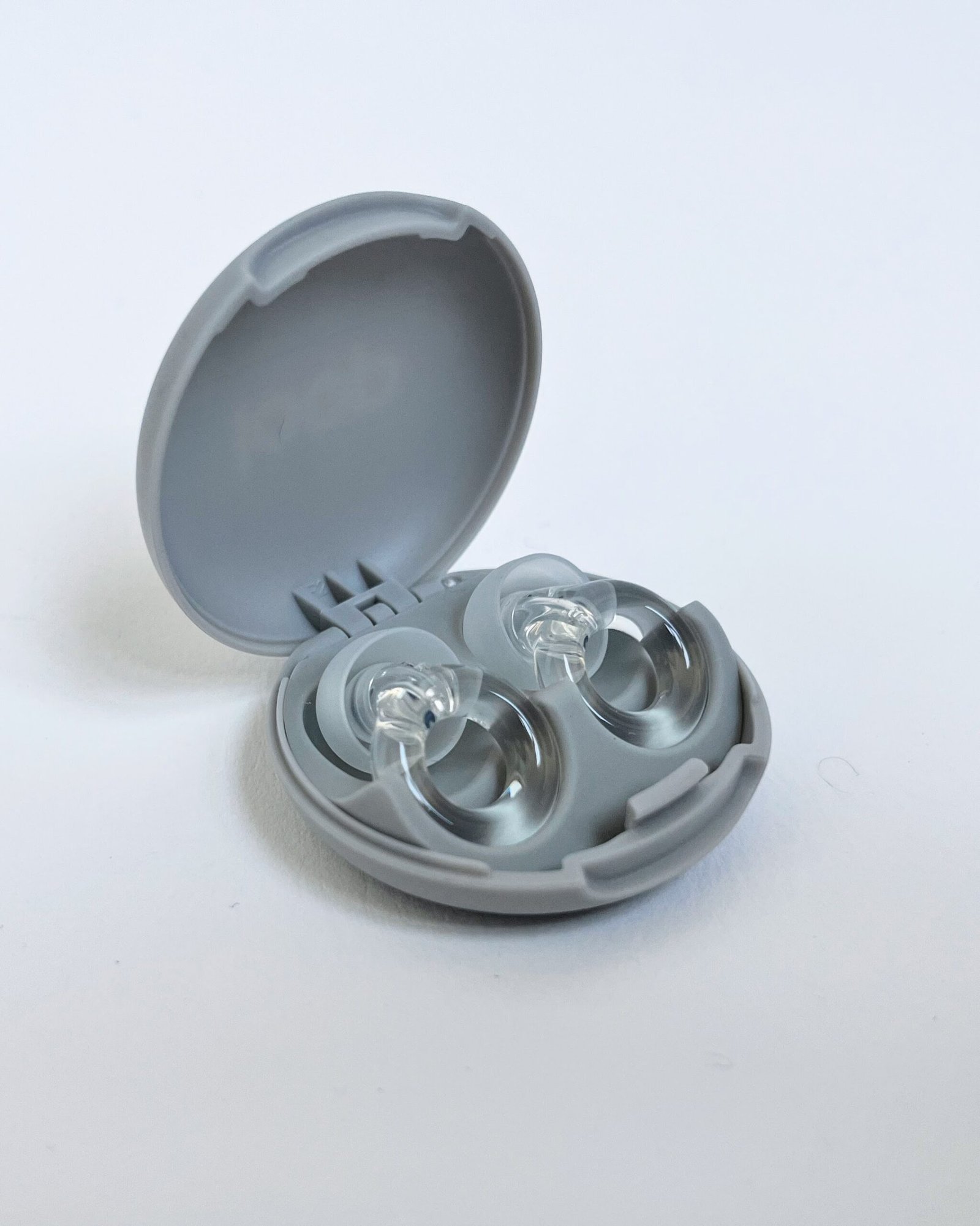
Silicone with a hollow core
Loop Engage, Alpine PartyPlug, EarPlanes, and both Flare Calmer models. An opening runs down the middle, so air moves through instead of getting trapped. No air pressure building against the eardrum, and you can still follow a conversation. The trade is that less noise is blocked overall, and a hollow core is no comfort guarantee: the EarPlanes’ solid flanges still built unpleasant canal pressure in testing.
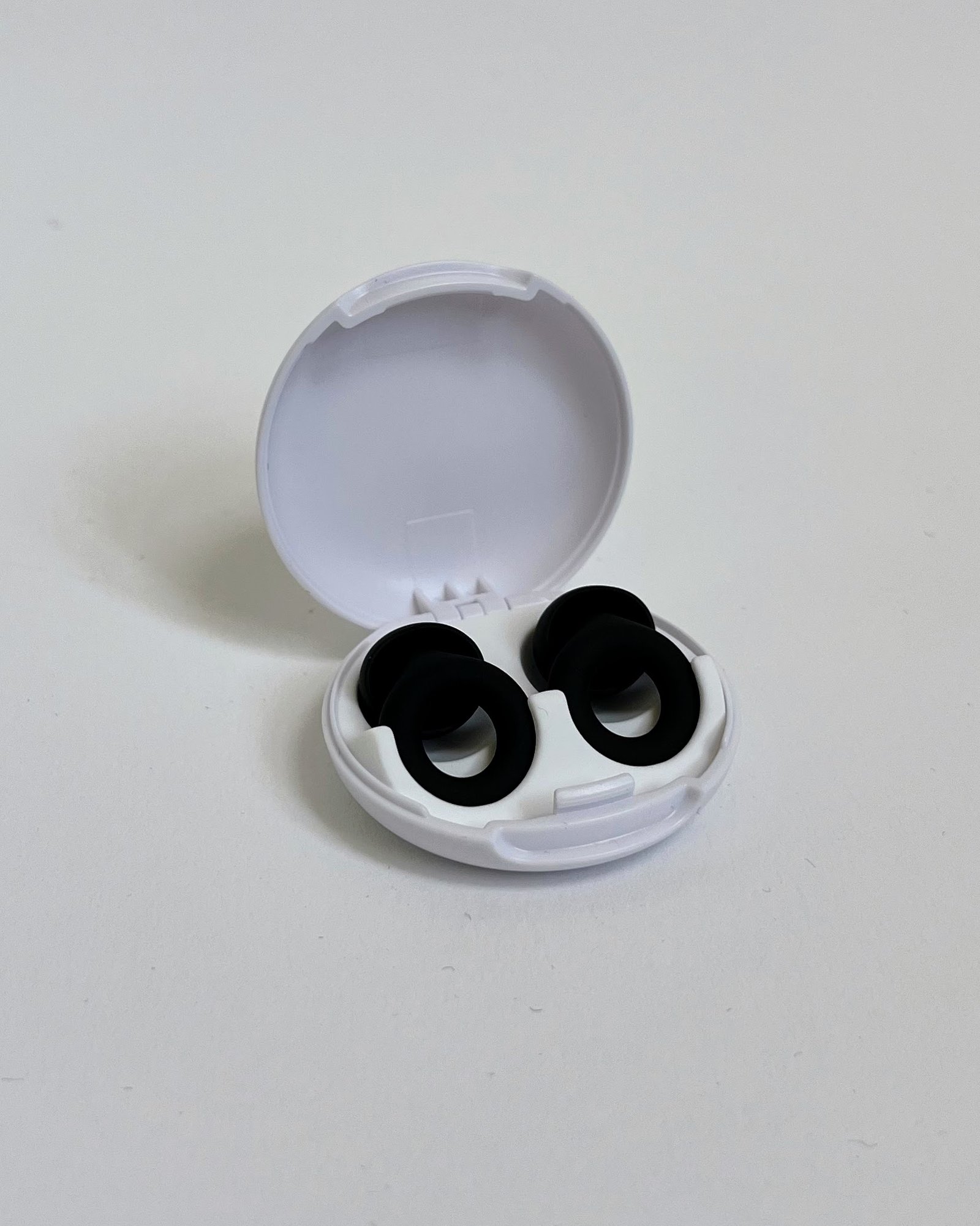
Solid silicone with flanges
Loop Quiet 2 and Alpine Silence. Concentric rings seal the canal firmly. This blocks the most of the three silicone-and-wax options, but it carries a real pressure cost on the way in and out, and it makes your own voice boom the most.
The plug that hurts going in, and why
If you’ve ever pushed an earplug in and felt a building pressure, a slightly seasick moment, then a pop coming out, you’ve met the piston effect. A solid flanged plug seals the canal before it’s fully in, trapping a column of air that gets squeezed against the eardrum with every further millimetre. Removing it the wrong way pulls a small vacuum the other direction.
In testing, Loop Quiet 2 did exactly this. Insertion was a fiddle, the pressure stayed noticeable across half an hour, and it needed a careful twist to come out. Alpine Silence behaved the same way.
Smaller canals feel it more. A narrower ear canal traps a smaller pocket of air, and squeezing a smaller pocket produces proportionally more pressure. Same push, more discomfort. It’s the kind of detail packaging never mentions, and it matters a great deal if standard plugs have always felt too intense for you. Canal width changes which of these seals even works, covered in the small-canal testing.
The hollow design sidesteps the whole thing. Loop Engage went in and out with no suction. Alpine PartyPlug was the most comfortable silicone plug in the set, its open core letting air escape rather than build. Wax avoids it differently, by never entering the canal, though pressing wax back to re-seal as it warms can cause piston pressure too.
If pressure is what put you off earplugs: the honest answer is hollow silicone or foam, not wax. Wax is gentler than flanged silicone, but it can still create entrance pressure when you adjust it, so it isn’t the safe bet for genuinely pressure-sensitive ears. A hollow plug, or a soft foam plug, is the more reliable escape.
When the plug quiets the room but amplifies you
Seal a canal and the sounds your own body makes, your voice, your breathing, your chewing, get trapped and amplified. Your voice booms, your footsteps thud inside your head. It’s called the occlusion effect, and if you already notice your own body more than most people do, it can be more distressing than the noise you put the plugs in to escape.
Cavity size is what governs it. The bigger the trapped space, the gentler the boom. Wax seals at the entrance and leaves the whole canal open behind it, so it booms least of the plugs that actually block sound. Flanged silicone seals tight against a hard surface and booms most. Hollow silicone sits in between.
If your own voice booming is the thing you can’t tolerate, the full breakdown of every plug tested, foam included, lives on the guide to the occlusion effect for sensitive ears.
What the frequency tests showed
Tones played at fixed volume and distance, recorded as the percentage of each sound still getting through. Lower means more is blocked.
| Sound | Wax (Ohropax) | Loop Quiet 2 | Why it matters |
|---|---|---|---|
| Low rumble (75 to 250Hz) | 3 to 10% | 50% | Traffic, HVAC, bus engines, fridge hum |
| Speech range (500Hz to 1kHz) | 25 to 50% | 50 to 66% | The voices you want to follow |
| Mid alerts (2kHz) | 33% | 33% | Checkout beeps, alarms |
| High hiss (4 to 8kHz) | 10 to 25% | 20 to 50% | Kettle hiss, cutlery, sibilance |
Wax flattens the low rumble that drives a lot of sensory distress, far more than the flanged silicone does. The cost is that it also takes a chunk of the speech range, which is what makes conversation hard. Hollow silicone makes the opposite trade, keeping speech clearer while letting more of the rumble through. The wax and silicone seals diverge sharply across the range, set out in the tone-by-tone comparison.
Worth correcting a common belief. The strongest overall reduction in this investigation didn’t come from the expensive silicone. It came from wax and from foam. Maximum quiet and maximum price don’t go together here, which is worth knowing before you spend.
Which design fits your situation
Start from the problem you actually have, not the brand everyone names.
Pressure has made earplugs unbearable for you
Go hollow, or go foam. The open core means no air trapped against the eardrum, and you keep enough hearing to stay in a conversation. Wax is gentler than flanged silicone but isn’t a safe bet here, since adjusting it can bring pressure back.
Your daily noise is low rumble and high hiss, not speech
Wax, decisively. It crushes the low frequencies the others leave half-open, and the speech cost doesn’t matter if you weren’t planning to talk. Solo work, a bus, a quiet supermarket run.
You need to block noise and still follow conversation
Hollow silicone is the only design that does both. Speech stays intelligible, the pressure stays away, and you accept that less overall noise is blocked.
Your own voice booming is the dealbreaker
Avoid flanged silicone, which booms worst. Wax keeps it mild while still blocking strongly. The hollow EarPlanes and Flares amplify your voice least of all, though they also block the least noise.
You have smaller-than-average canals
Flanged plugs press disproportionately, so approach them with most caution. Wax never enters the canal, and the softer hollow plugs were the more forgiving fits in testing.
You want the maximum possible quiet
The strongest reduction came from wax and foam, not the costly silicone. If deep quiet is the goal and conversation isn’t, those are the picks, with the pressure and own-voice trade-offs noted above.
On price. Ohropax runs about £5 for 12, Mack’s about £9, the silicone plugs £20 to £30. The cheapest options block the most and treat sensitive ears gently. Price tracks neither comfort nor performance here, so the design that fits your situation is the one worth your money.
The research behind the listening problem
For those, who like the investigator, share a special interest in earplugs and sound-sensitivity. There is further reading at the NIHR Manchester Biomedical Research Centre. They interviewed autistic adults about listening and noise. This study found background sound jumbles and drowns the voices people are trying to follow, that it affects social life, work and wellbeing, and that being misunderstood about it makes everything harder (as described above). You can read the Manchester listening difficulties study in plain English. It’s the clearest account of why the right tool, matched to the right problem, is worth the trouble of finding.
Frequency tones played at fixed volume and distance across seven environments. Own-voice and body-sound effects rated by fixed spoken and seated prompts. Recorded from first-person testing by an autistic reviewer, not from packaging figures. → How we tested earplugs →