
No sponsorship, no freebies. Links here earn a small commission at no extra cost to you, which keeps the investigations independent. More info
Sony XM6 vs XM5: Which Hurts Less After an Hour?
Every other comparison of these two asks which cancels more. For a sensory-sensitive buyer it's often only one consideration.
Independent testing · Both units purchased, not gifted · One reviewer, glasses on
Like many autistic people, noise sensitivity is a big deal. I’ve worn ANC headphones for over 20 years. During the Covid 19 lockdowns, spending long days as a laptop jockey, I found the ambient sounds of appliances and the outside world harder and harder to tune out on calls. I bought the Sony XM3 with high hopes, having owned cheaper cancelling headphones before. I lasted three days. Halfway through hour-long meetings a pressure would build behind the eardrums, with a high ringing sitting on top of it, and by the third afternoon I’d stopped hearing the meeting at all and started hearing only that. They went back, returned with a heavy heart.
Two generations on, this investigation put both current Sony flagships through the same ninety minutes I couldn’t survive in 2021. The question wasn’t which one cancels more. That’s settled, and it’s the less useful half of the answer. The question was what each one does to the inside of your head while it’s doing it.
Sony XM5 vs XM6, in one paragraph
Buy the XM6 for maximum quiet. It cut more sound in every environment tested, shrugged off both glasses and bus bumps, and did to lip smacking what the XM5 cannot do at all. Buy the XM5 if pressure or heat has ever made you take headphones off. It held at 2 of 5 eardrum pressure for a full hour where the XM6 reached 4 by minute ninety, squeezed a larger head a third as hard, and costs sixty pounds less. With pink noise playing, both silence every misophonia trigger tested. That sixty pounds buys silence. It doesn’t buy trigger relief.
Mainstream reviews rank these two on cancellation and stop. On this bench the cancellation ranking and the comfort ranking point in opposite directions, and which one matters more depends entirely on why you’re wearing headphones in the first place.
The two units, side by side
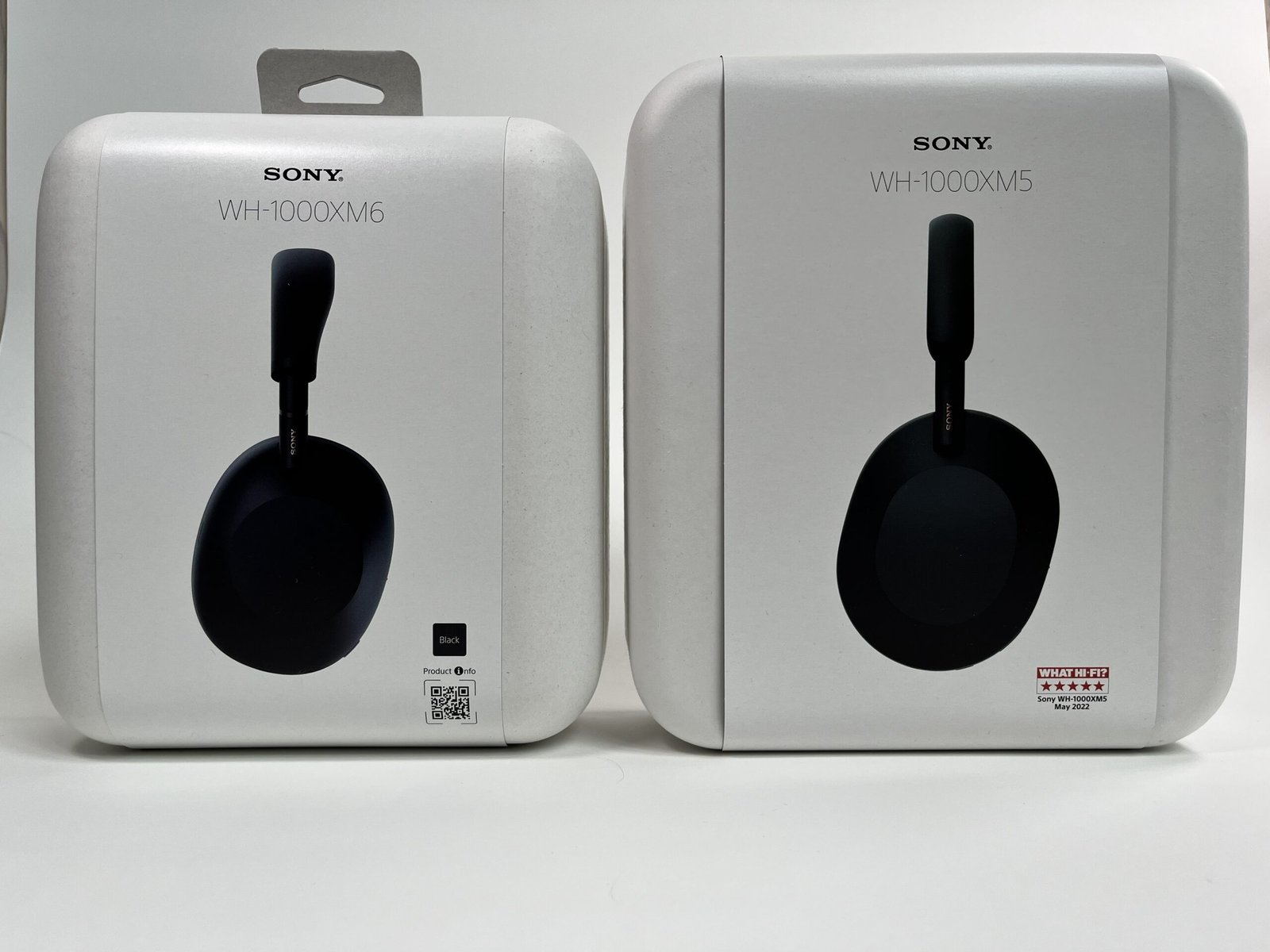
Front of box. Both sold new, both current, sixty pounds apart.
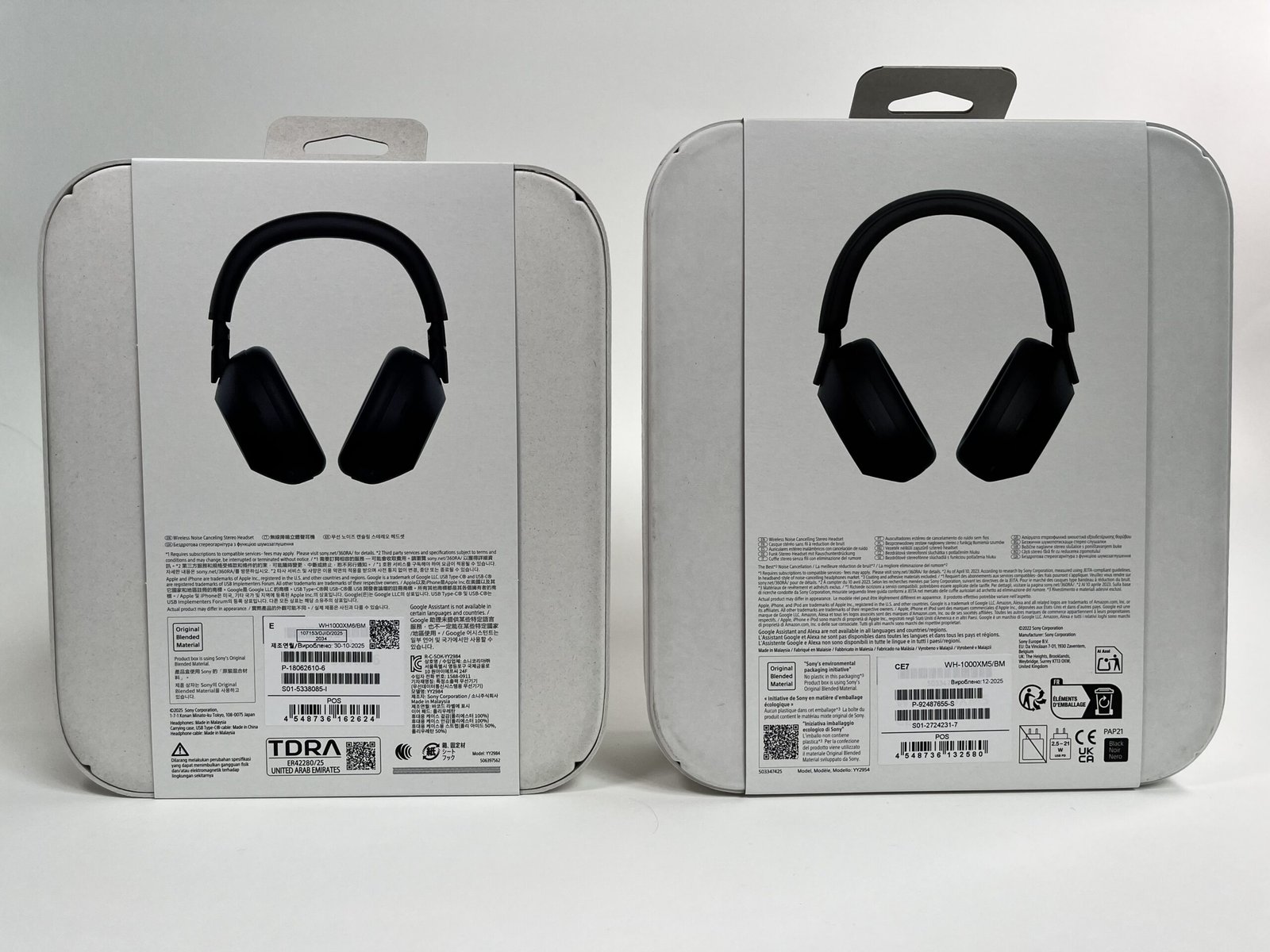
Back of box. The XM6 sells mastering-studio sound and industry-leading cancellation. The XM5 sells long hours commuting, working remotely, and on calls. Only one of those claims survived the bench intact, and it isn’t the newer one.
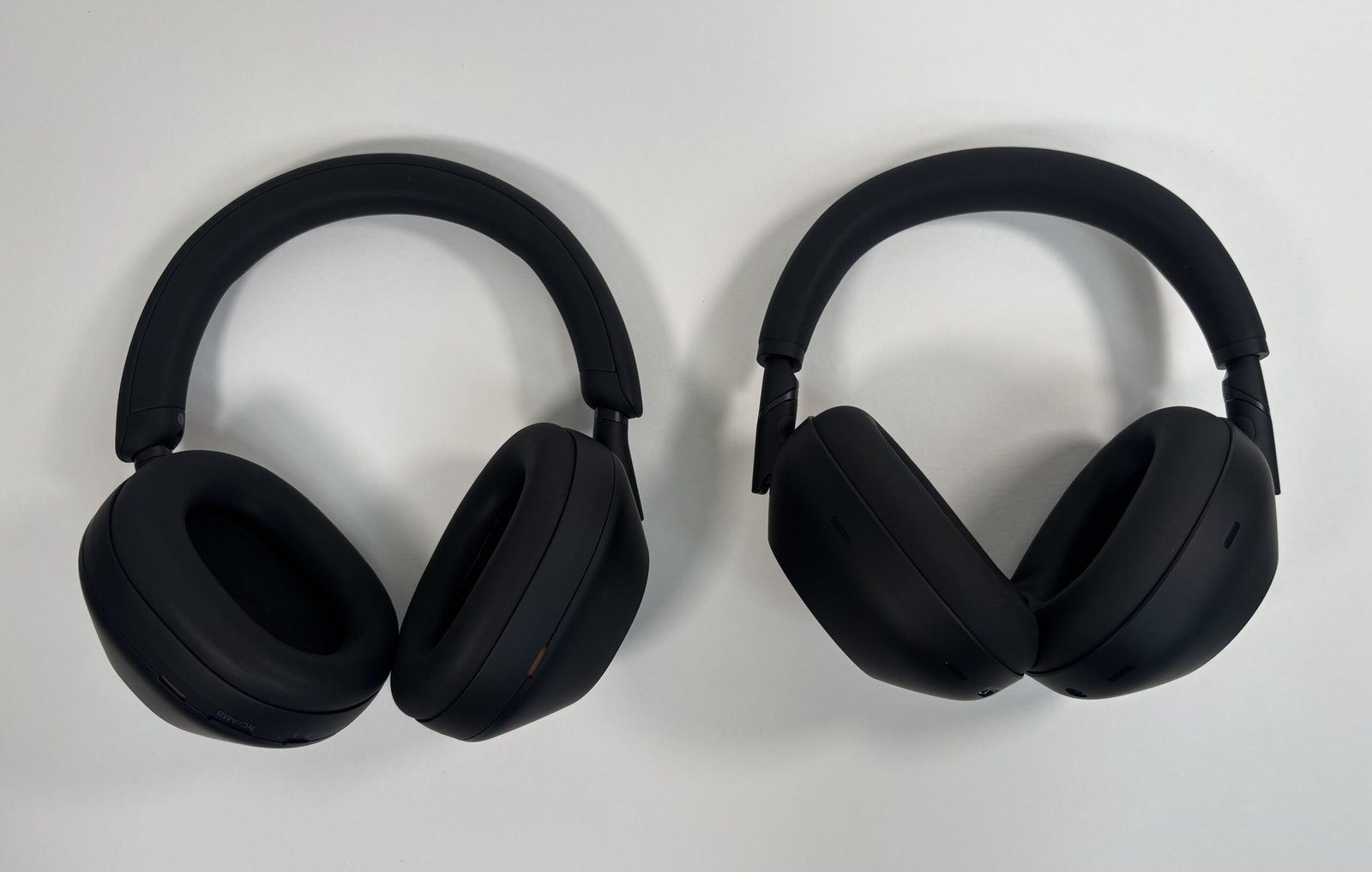
Cups in profile. The XM6 pads are firmer, a stiffer surface over denser foam. The XM5 pads feel part-inflated by comparison, softer interior foam, a gentler first touch.
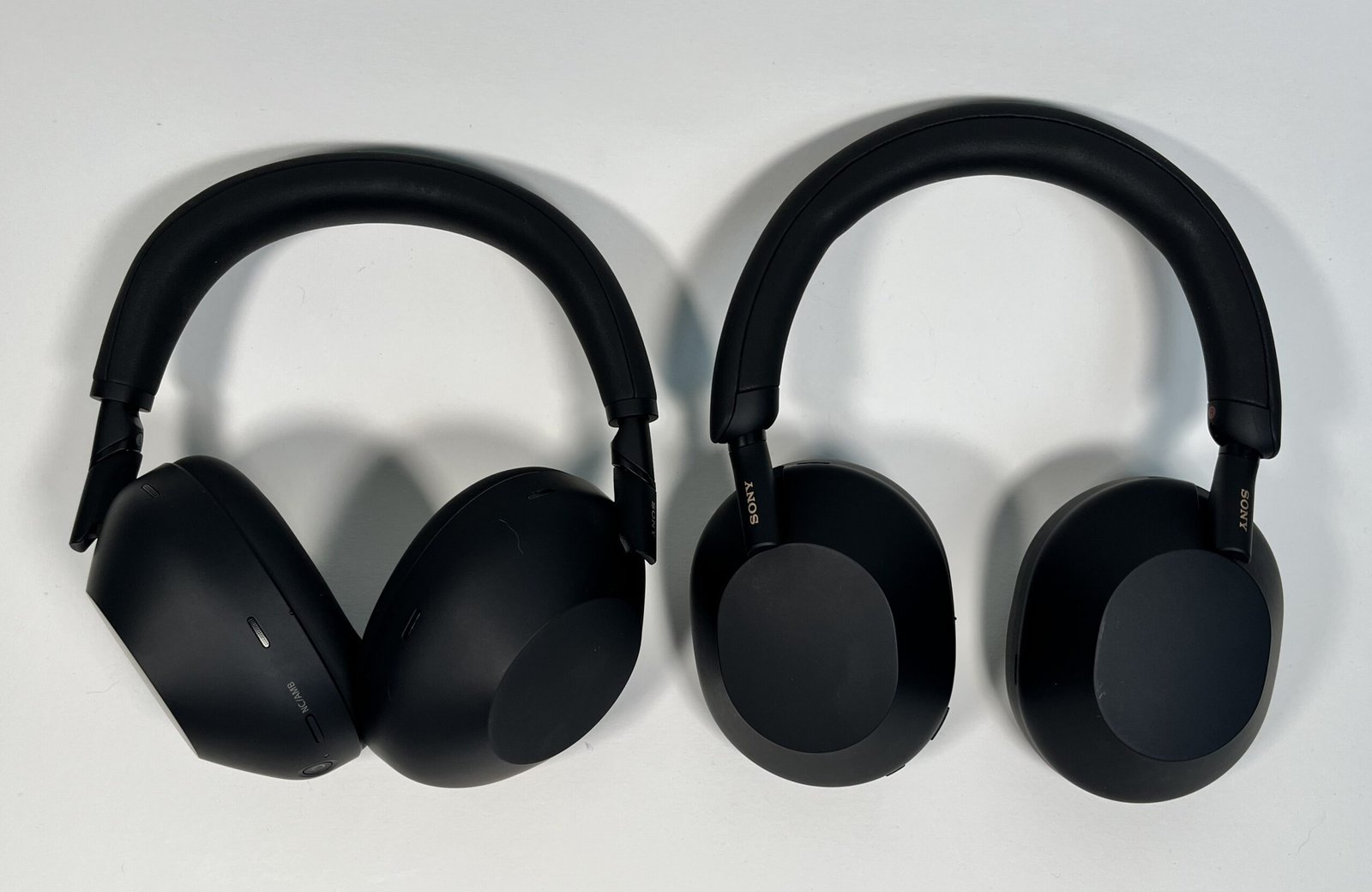
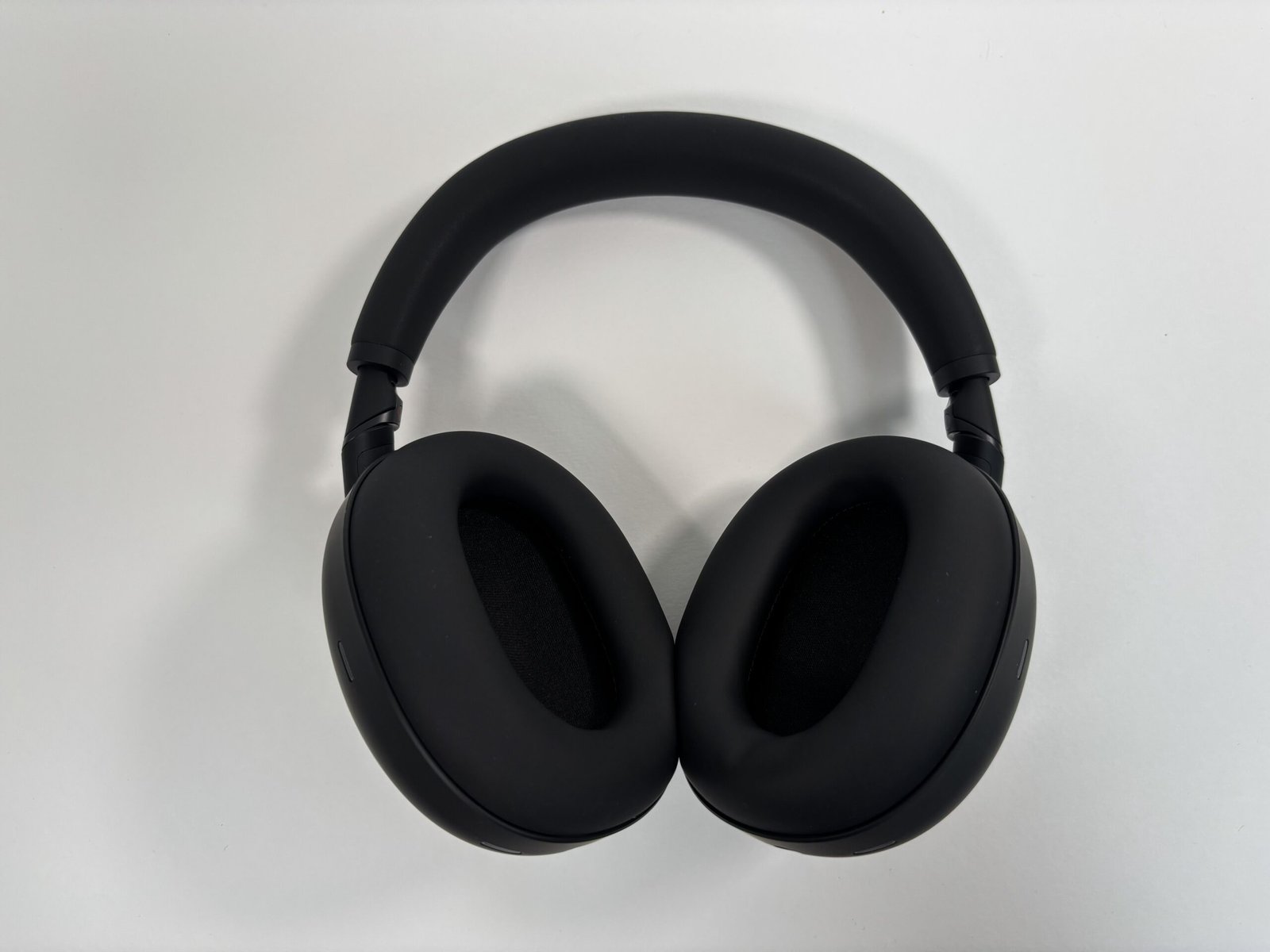
Cups facing down. Note the shape difference: the XM6 sits more curved, the XM5 wider and squarer. That geometry shows up later in the clamp data.
Head to head, measured
 XM6 XM6 | 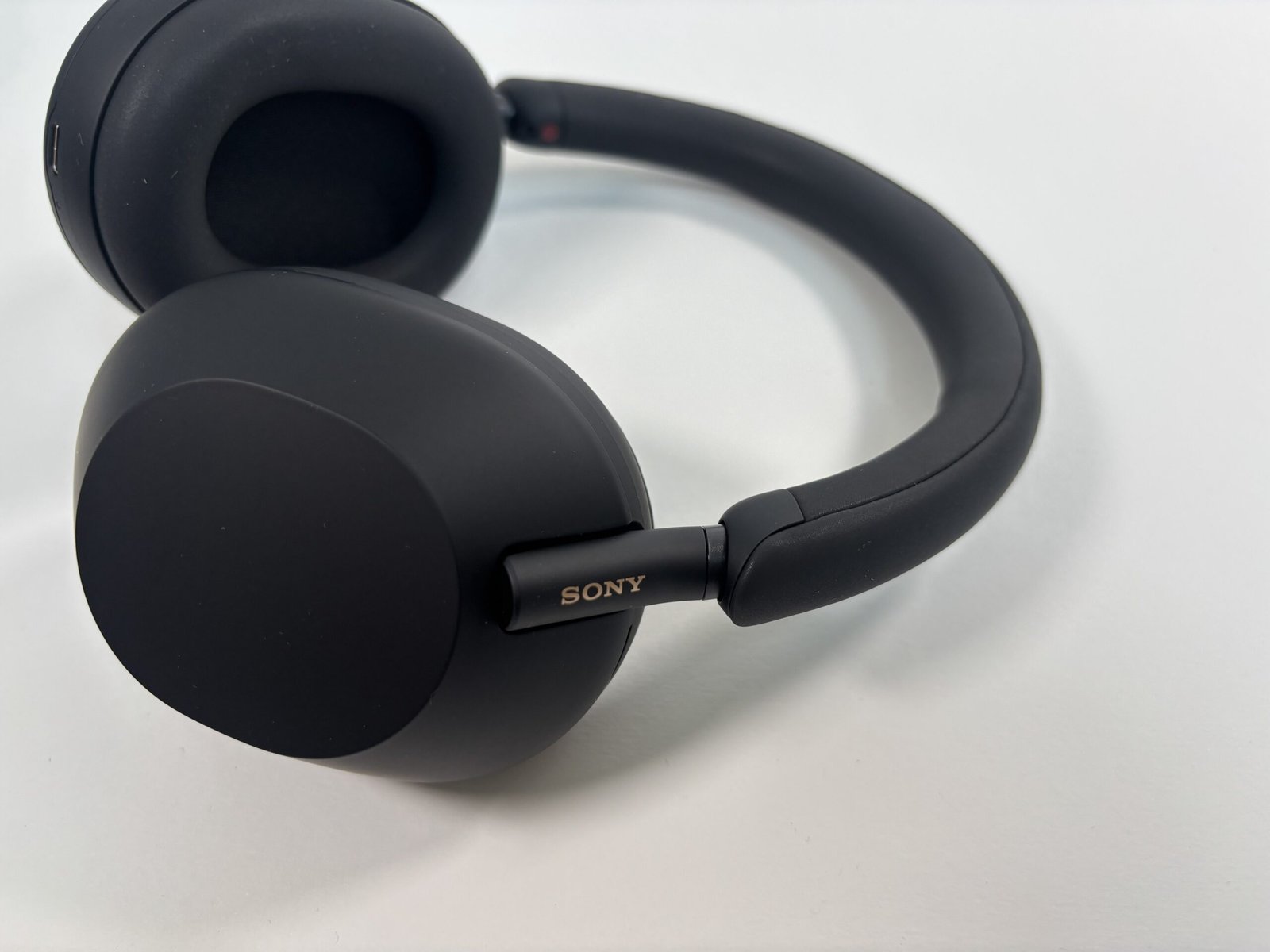 XM5 XM5 | |
|---|---|---|
| Price tested | £289 / $398 | £229 / $313.95 |
| Weight, measured | 255 g | 247 g |
| Cancellation rank, of four tested | 1st | 4th |
| Eardrum pressure at 15 min | 2 of 5 | 2 of 5 |
| Eardrum pressure at 90 min | 4 of 5 | 3 of 5 |
| Clamp on a larger head | 7.4% compression, steepest of four | 2.3% compression, flattest of four |
| Felt squeeze, 1 to 5 | 4 | 2 |
| Self-noise in a silent room | Faint transformer hum; whistle in the office | 15 kHz hiss, clear from minute 5 |
| Bus bumps | No glitch | Brief interruption, a pressure bubble |
| Sudden bangs and clatter | No pressure click | Pressure click in both ears |
| Glasses in a 68 dB café | No detectable loss | No detectable loss |
| Lip smacking, cancellation alone | Cut by three quarters | Unchanged |
| Every trigger, with pink noise | Full cut | Full cut |
| Chemical smell at day 7 | Faded on the case, noticeable on pads | Strongest tested, still moderately strong |
| Folds into its case | Yes | No |
| Battery, rated with cancellation on | 30 hours | 30 hours |
How much quieter is the XM6, really?
Anyone comparing these two will typically read that the XM6 is a “bit better”. Side-by-side tone testing puts numbers on that, and the gap isn’t even across the range. At 75 Hz the two matched exactly. From 125 Hz upward the XM6 pulled away and kept pulling: through the engine and fridge band it took tones out fifteen decibels earlier than the XM5 managed, and its lead widened again at 8 kHz.
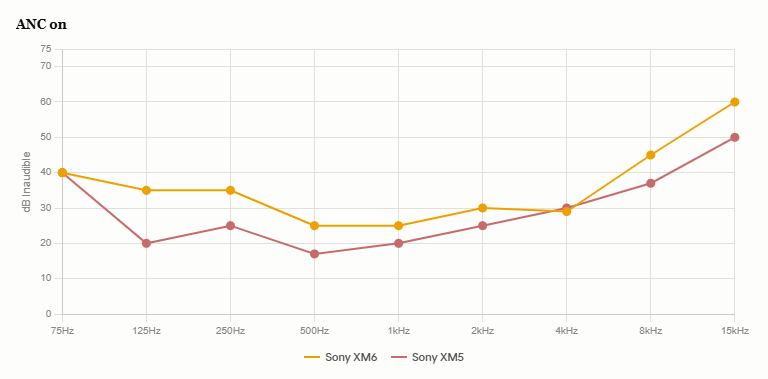
With cancellation on and nothing playing. Higher means the tone stayed audible to a louder level, so a lower line is the better silencer.
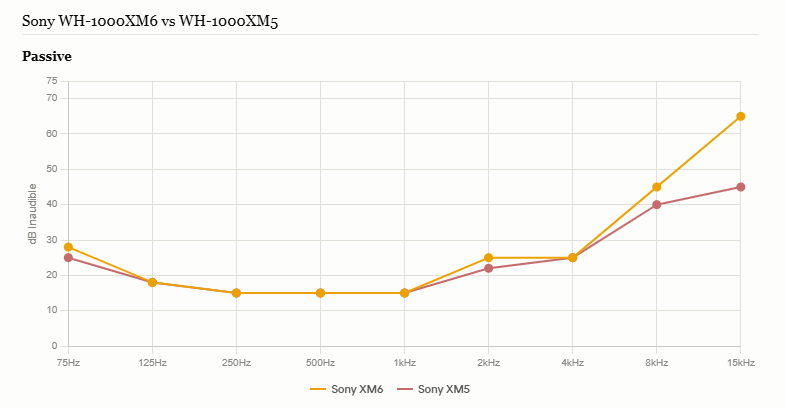
Seal only, electronics off. The two are near-identical below 2 kHz: the physical seals are comparable, and almost the entire gap between these headphones comes from the electronics rather than the pads.
Real rooms said it more plainly than the tones did. A kettle at one metre kept a tenth of its voice through the XM6 and three quarters of it through the XM5. Office chatter dropped by eighty percent against fifty. Washing machine, air-con, supermarket fridges: same direction every time, no exceptions. The generational gap is real and it is not marketing.
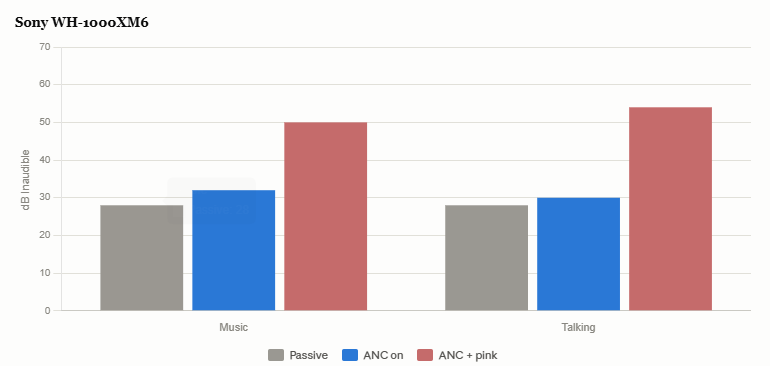
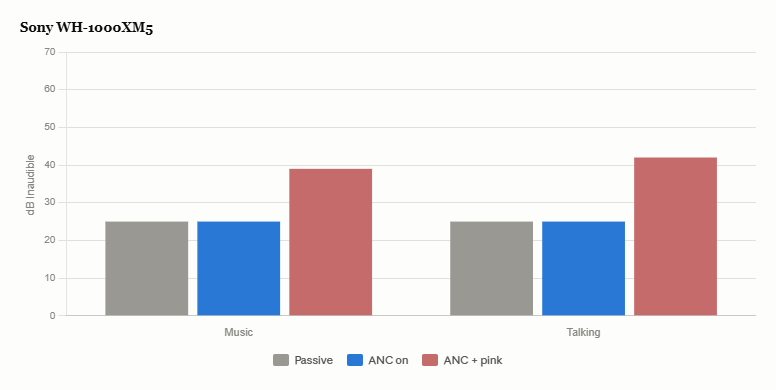
Music and speech, the two signals most likely to be the thing you’re trying to escape. XM6 left, XM5 right. The XM5 posted the weakest readings of all four flagships tested here.
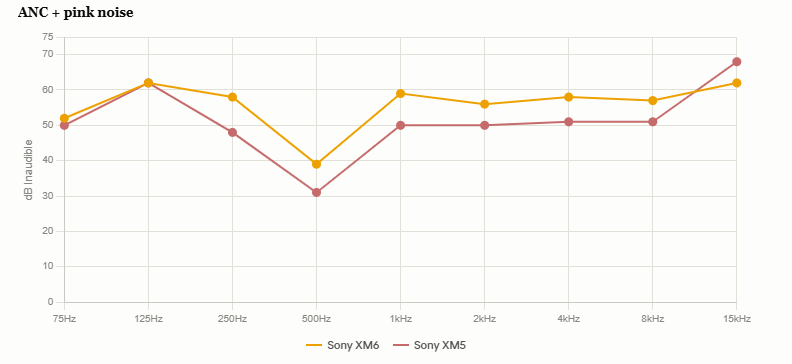
With pink noise playing at a third volume, both lines lift out of reach and the difference between the two headphones stops mattering. This chart decides more sensory purchases than the cancellation figures do.
The pressure curve: what ninety minutes actually costs
Cancellation figures are half a purchase decision. For an autistic or sensory-sensitive wearer the other half is what the electronics do to the inside of your head over an hour, and here the ranking inverts.
Both units were worn for ninety minutes in the same quiet room, with a pressure score recorded every fifteen minutes on a one-to-five scale. The XM5 held at 2, present but not distracting, for a full hour, and reached only 3 by minute ninety. The XM6 was at 3 by minute thirty, a mild plane-descent sensation with a low whoosh under it, 3.5 by the hour, and 4 by minute ninety: distracting, though not enough to force removal in a silent room. In the hardest café tested it verged on slightly painful after half an hour.
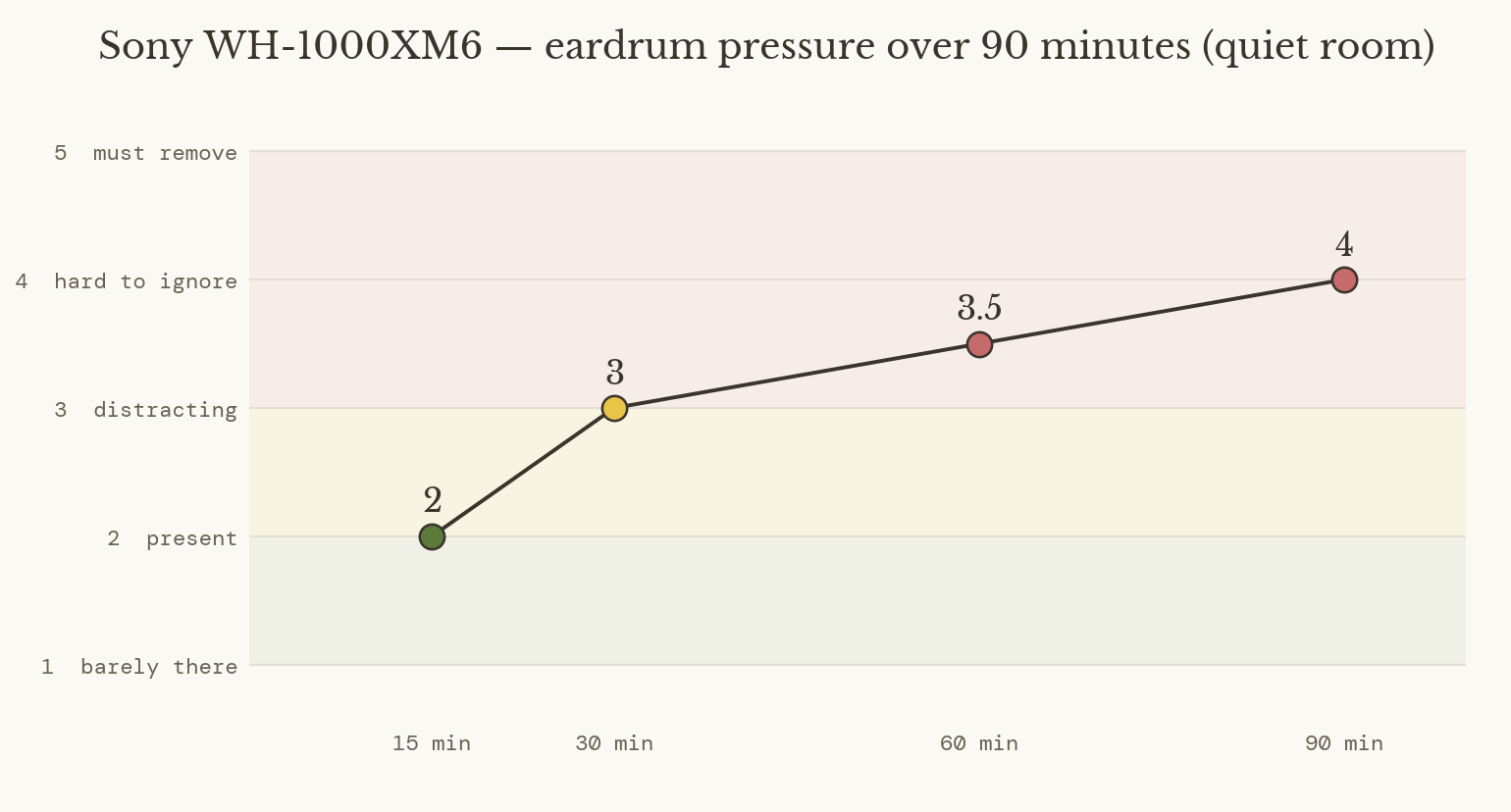
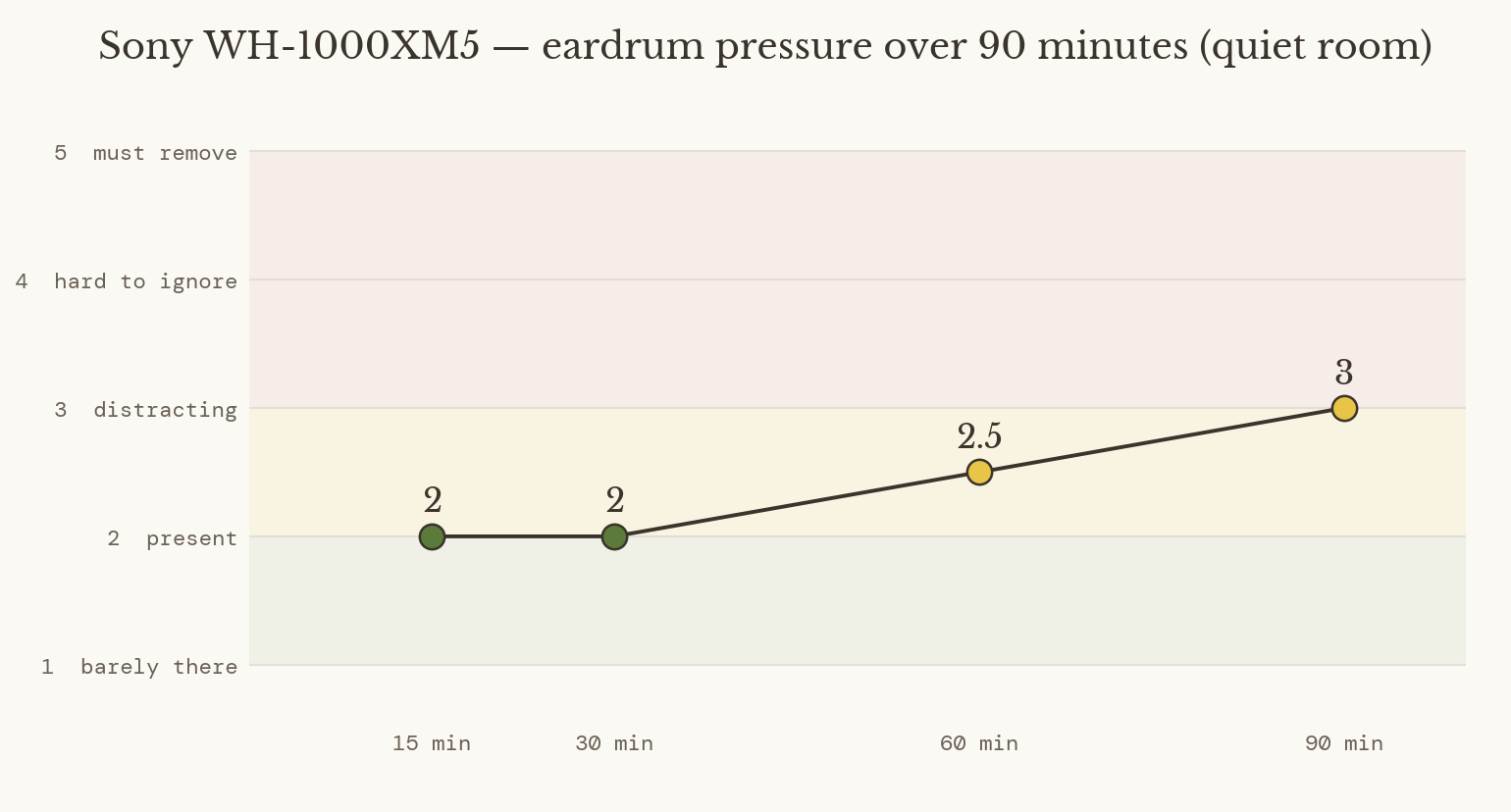
Ninety minutes, same room, same ears. XM6 left, XM5 right. The XM5’s line stays in the amber band throughout. The XM6’s climbs into red by the hour.
Pressure scales with how hard the electronics are working. The louder the room, the stronger the cancellation has to be, and the more pressure it generates. That’s why the XM6 costs more pressure than the XM5 in every environment: it’s cancelling more. The two findings aren’t independent. They’re the same finding seen from two sides.
Under a controlled 75 dB noise floor, the same recording at the same volume through all four flagships in one sitting, the XM5 produced the lightest pressure in the batch at ten minutes. Still below distracting, where the XM6 sat at a solid 3 and stayed there. On a seventy-four decibel bus the same pattern held, and after one forty-five-minute ride in the XM6 the investigation logged a headache located around the ears that outlasted removal. The transport notes reach a conclusion that surprised the bench: for a long commute the XM5 is the better choice, weaker silencing and all.
If you’ve searched whether noise cancelling headphones hurt your ears, or whether you can wear them all day, this curve is the answer for these two products. On the XM6, heat and pressure together set a ceiling somewhere around the hour for this reviewer. On the XM5, heat arrives first and pressure never quite catches up.
Clamp: the balloon test
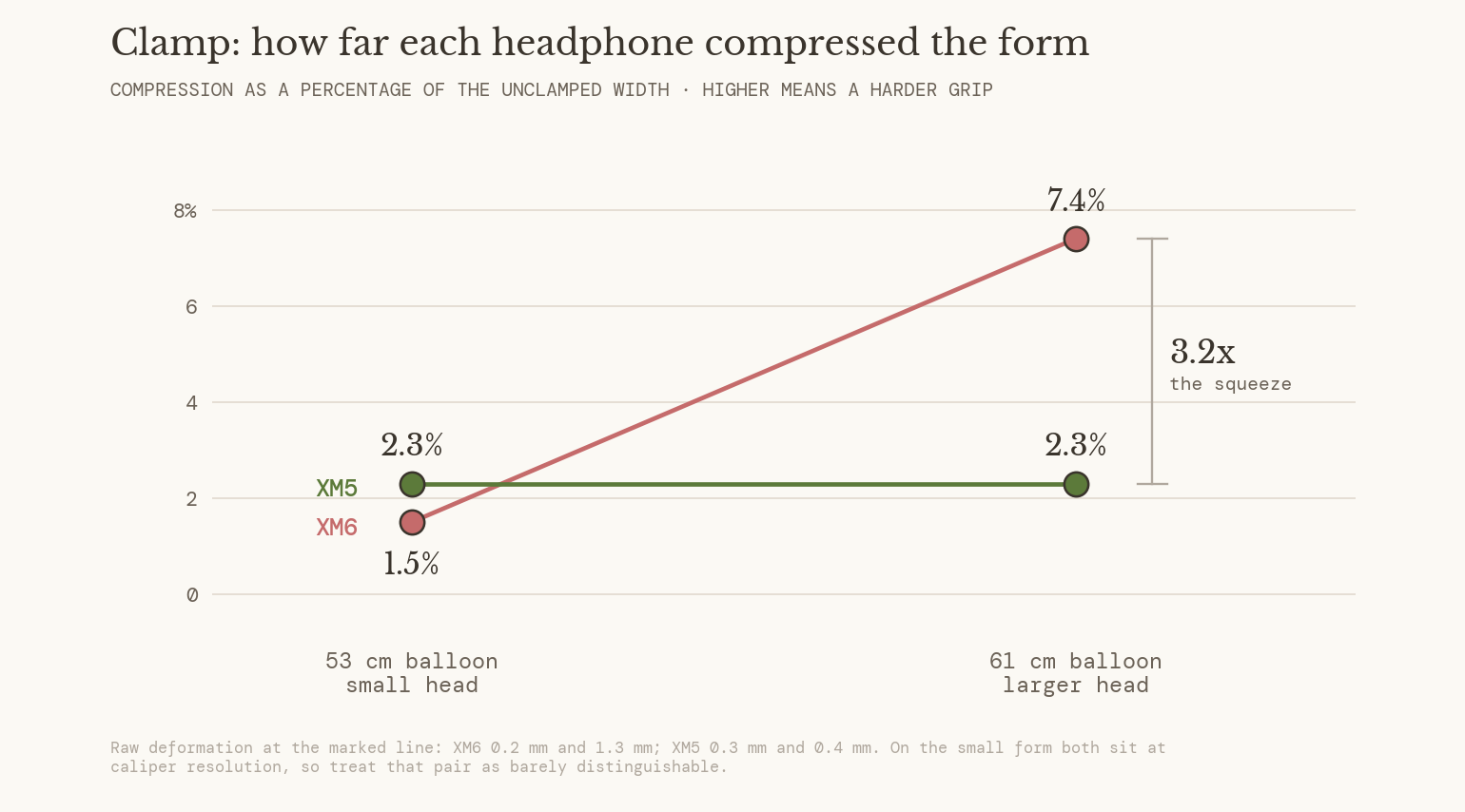
Felt squeeze is easy to report and impossible to compare, so the investigation measured it. Two balloons, one inflated to 53 cm circumference to stand in for a small average head and one to 61 cm for a larger one, each marked at the height where the top of the earcups sits. Calipers measure the width between marks unclamped, then again with each headphone in place. Expressing the difference as a percentage of the unclamped width gives a figure that compares fairly across both form sizes.
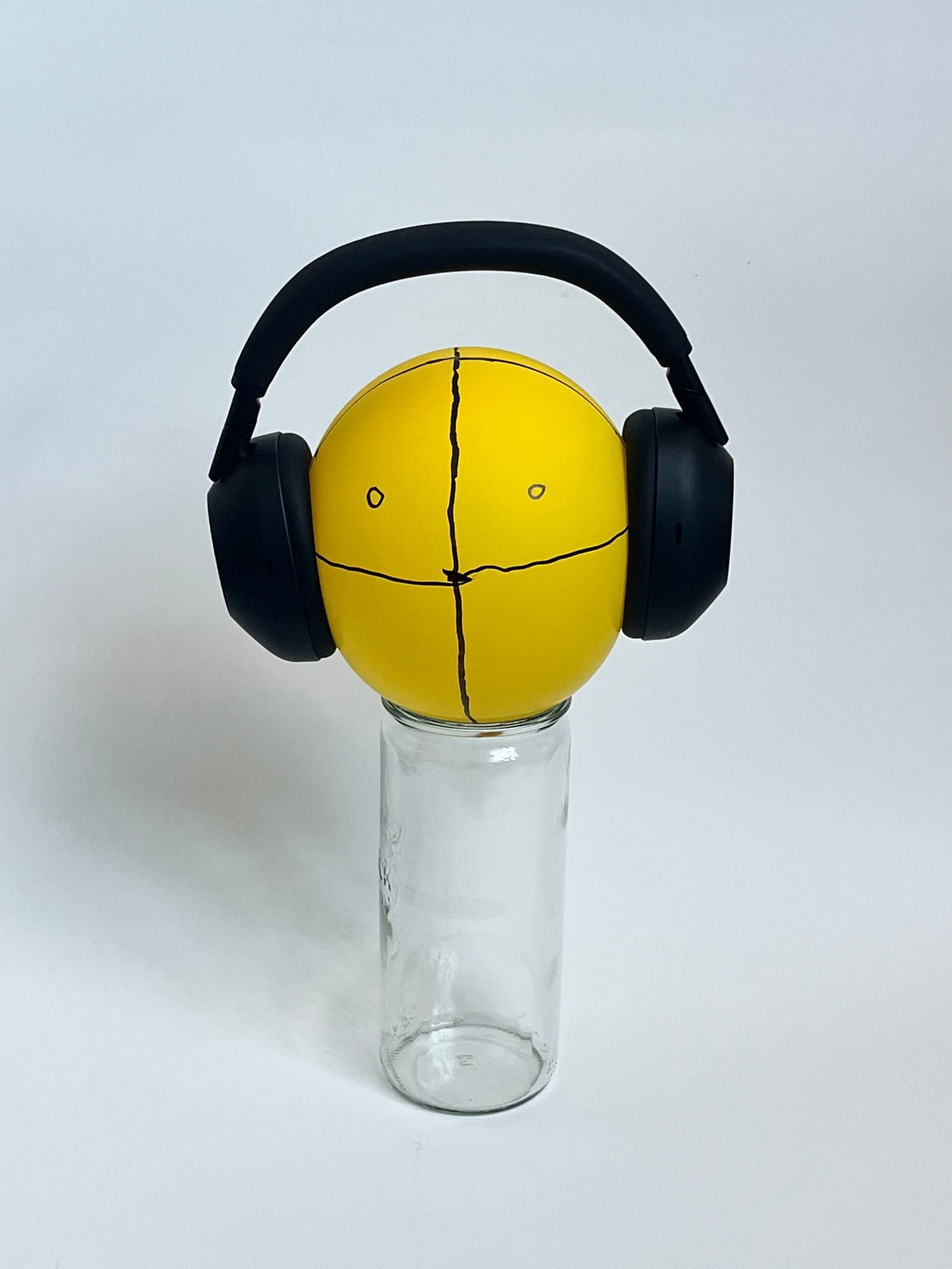
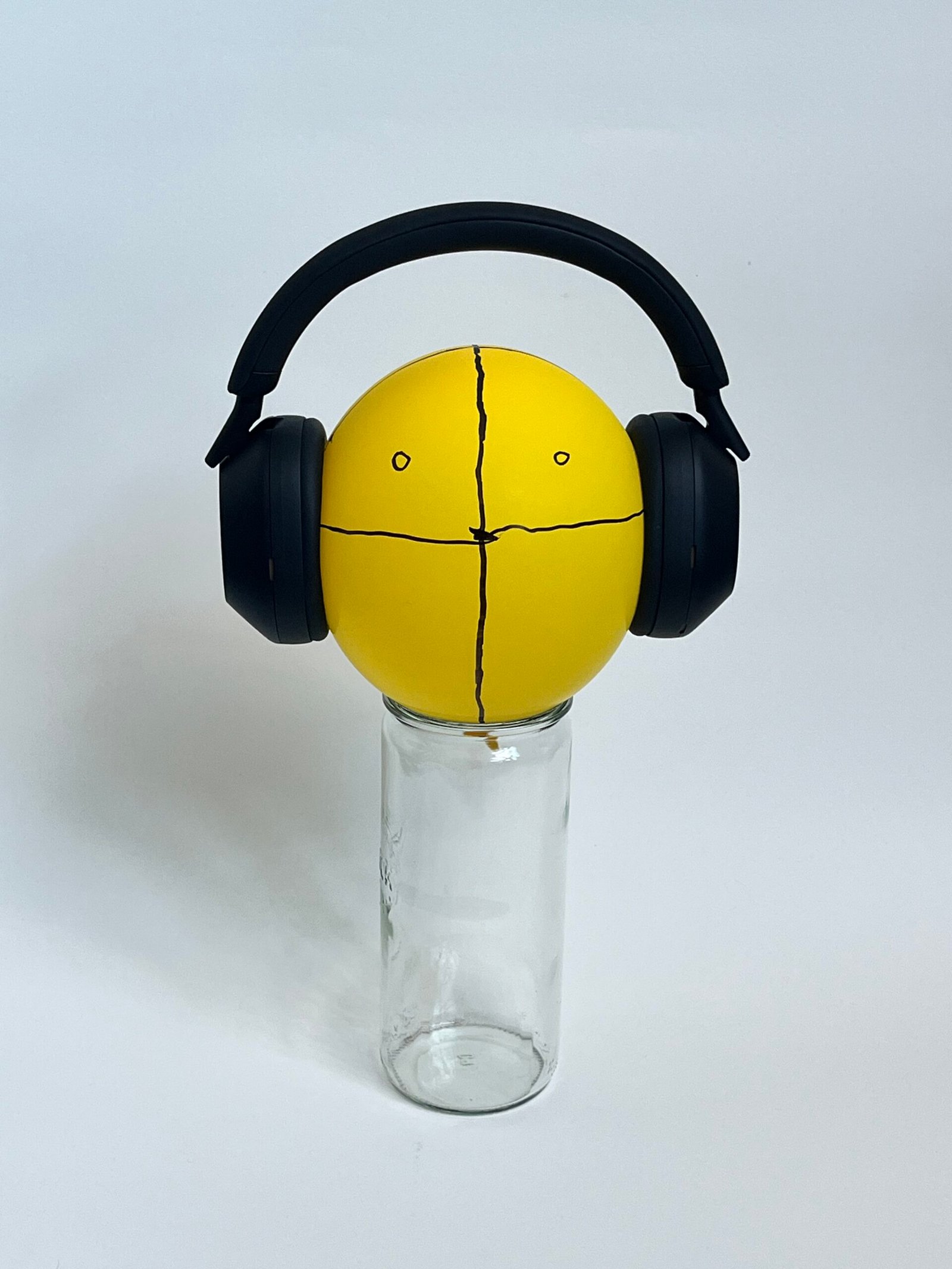
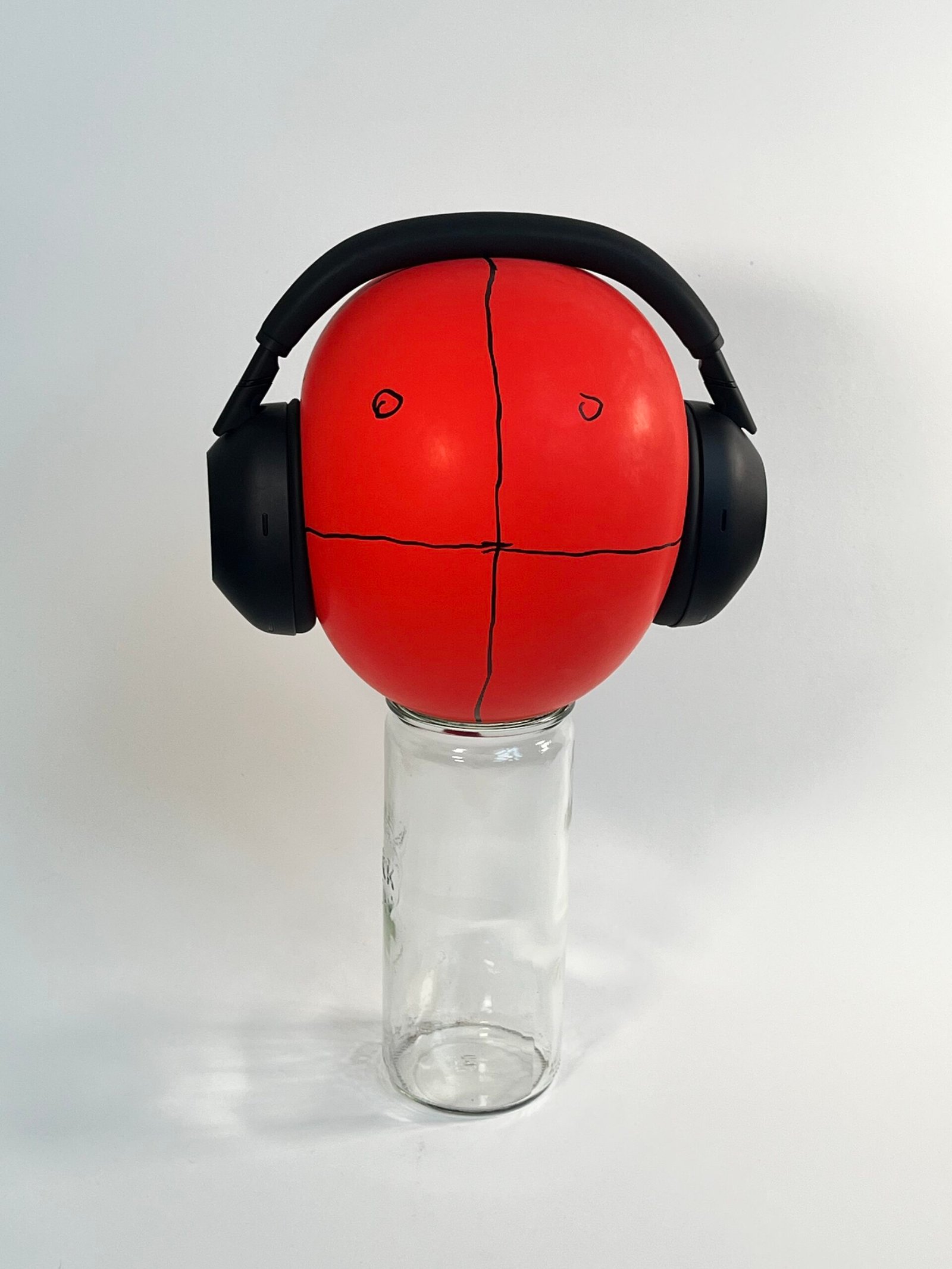
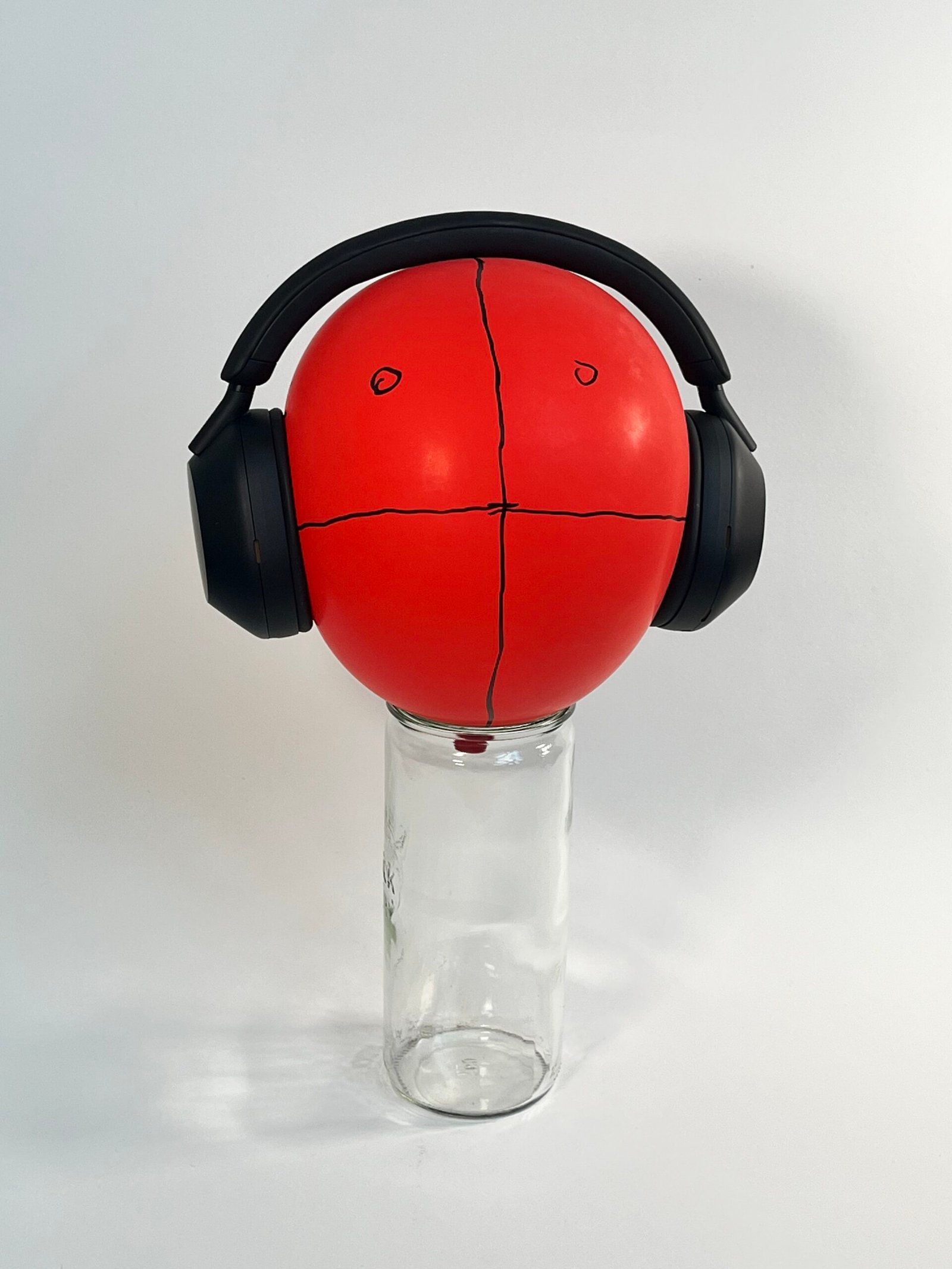
Same balloons, same marks, same session. XM6 on the left, XM5 to the right, small form in yellow and larger head simulator in red. The deformation is visible without the calipers.
On the small form the difference in clamp force are barely distinguishable. On the larger form they separate by a clear margin. The XM6 compressed it by 7.4 percent against the XM5’s 2.3, which is 3.2 times the squeeze. Its band is stiff, squeezing with more power as the head gets bigger. The principal investigator in this series has a larger head size and can attest the feeling is real. The XM5’s band is wider and more compliant, delivering identical compression at both sizes, and that flat line is the most unusual result in the clamp dataset.
There’s no single answer to which of these clamps harder. It depends on the size of your head. A small-headed reader will find them much the same; a larger-headed reader gets more than three times the grip from the XM6.
Worth knowing alongside that: once a seal is achieved, extra squeeze buys very little extra isolation. Comparing the passive figures against the clamp figures across all four flagships tested, the XM6’s grip does correlate with its isolation, but below it the relationship falls apart. Clamp beyond the point of sealing is discomfort without acoustic payoff.
With glasses on, neither headphone lost a detectable amount of seal in the 68 dB café test. The XM6 does press the arms into the side of the head noticeably, not painfully but persistently. On the XM5 an earlier supermarket wearing suggested the seal loosens above sixty to seventy decibels with glasses, so call it good rather than perfect.
Triggers: where the generation gap is real, and where it vanishes
Live trigger sounds at a kitchen table, scored with cancellation alone and again with pink noise playing at a third volume.
| Trigger, cancellation alone | XM6 | XM5 |
|---|---|---|
| Soft chewing | Cut by half | Cut by a quarter, still intrusive |
| Crunching | Cut by half, sharpest crack survives | Cut by a third |
| Lip smacking | Cut by three quarters | Unchanged |
| Slurping and swallowing | Cut by half | Cut by a third |
| Keyboards nearby | 80 to 90 percent gone | Two thirds gone |
| Pen clicking | Muffled patting, still audible | Cut by half, still present |
| All of the above, with pink noise | Full cut | Full cut |
Silent-mode trigger blocking is where the generational gain is genuine: the XM6 does to lip smacking what the XM5 simply cannot do. Then the last row flattens the whole table. A reader who always wears headphones with something playing gets identical trigger relief from either product, and the sixty pounds buys nothing at all.
One finding applies to both and appears in neither manufacturer’s copy: your own chewing gets louder, not quieter. Sealing the ear traps the sound your own jaw makes and conducts it through the skull, so crisp food becomes crisper inside your own head. If your triggers include your own eating, cancelling headphones make that specific problem worse. Wax and foam earplugs behave the same way, and the comparison sits in the occlusion effect explainer.
Anyone choosing primarily for chewing sounds should read the earplug data before spending three hundred pounds here: foam beat both of these in silent mode across the board. Start at best earplugs for misophonia. The rule the investigation keeps arriving at: silence favours the earplug, masking favours the headphone.
The XM6 case vs the XM5 case, and the hinges that decide long ownership
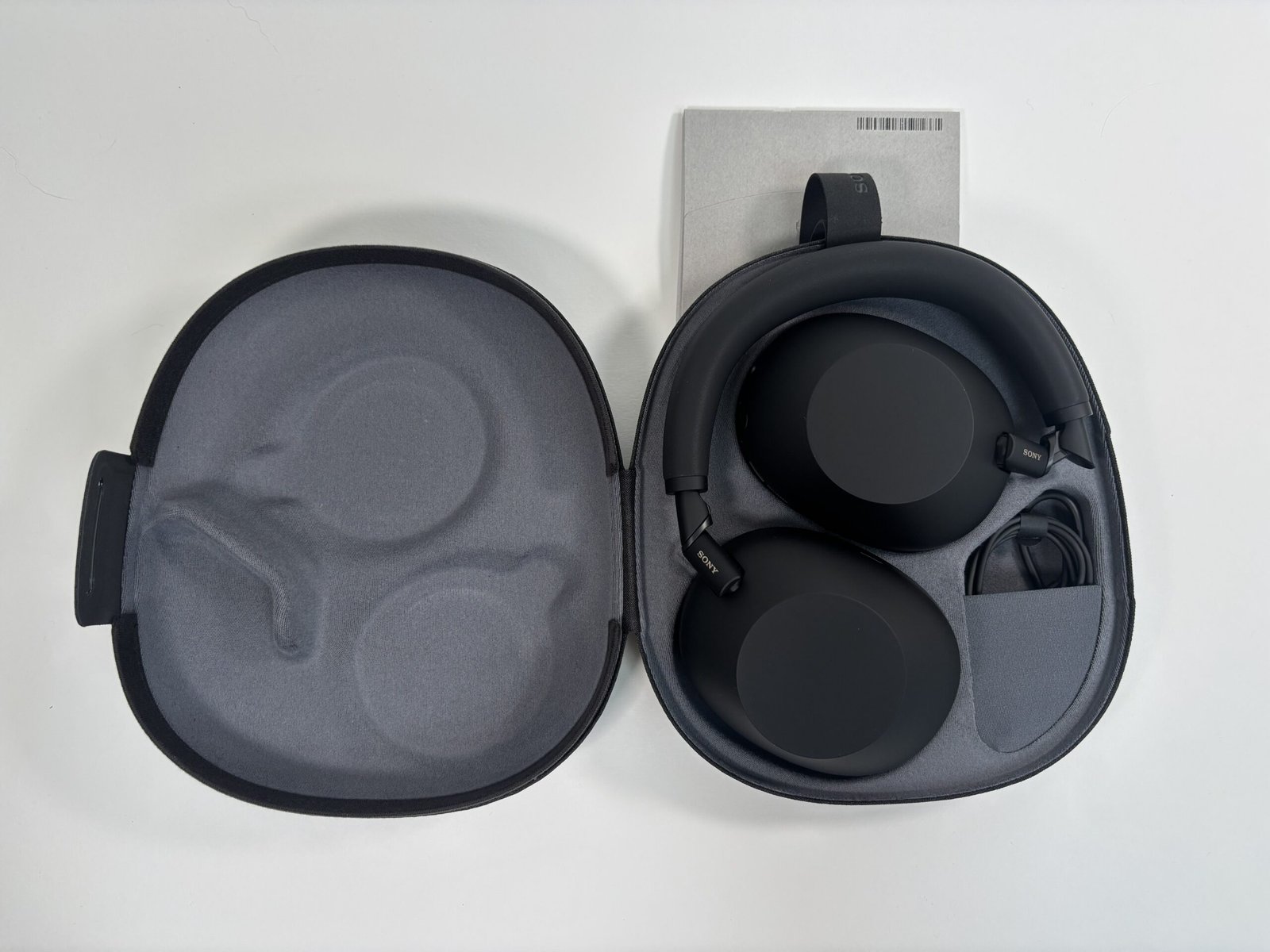
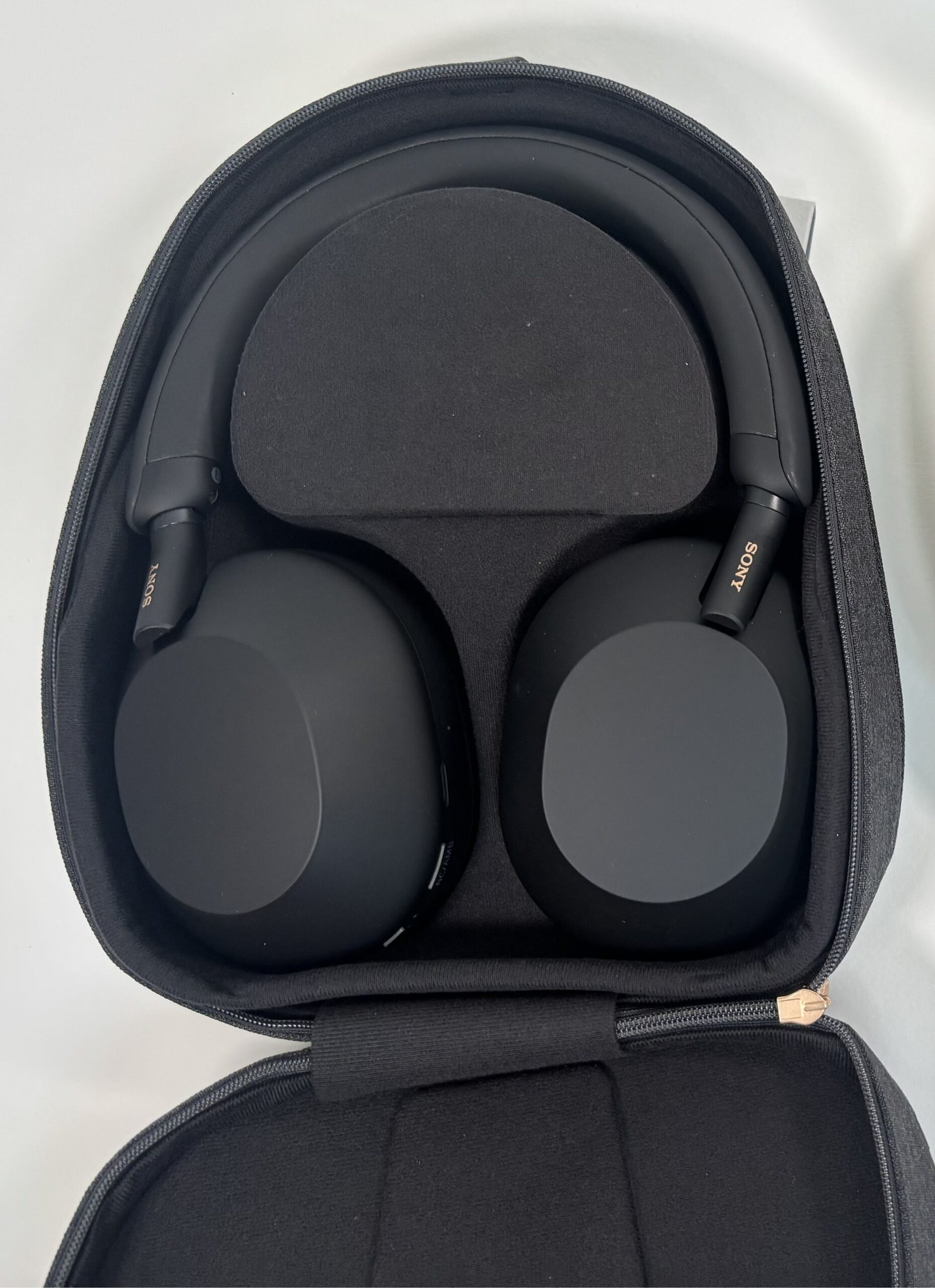
Cases open, XM6 left and XM5 right. The XM6 folds flat into a slimmer case; the XM5 doesn’t fold, so its case is bulkier for the same headphones. Both carry the same woven-look surface, which squeaks faintly under the fingers, a small shiver shared across the generation and unpleasant on both.
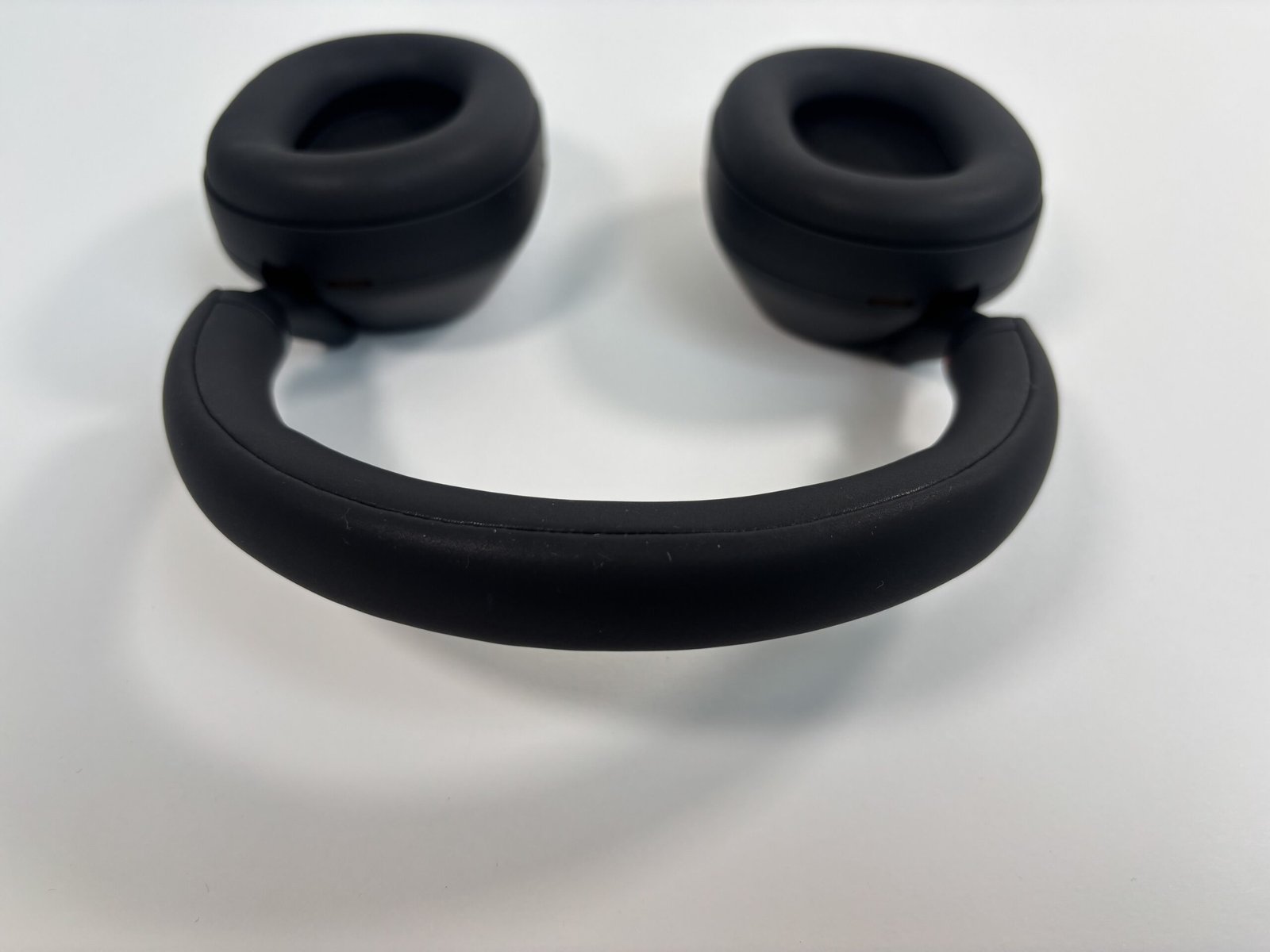
The XM5 cups carry a noticeable play where they meet the headband. On the tested unit this reads as looseness rather than damage, and it’s worth checking on any pair you buy. In one reviewer’s tested opinion this is a build quality difference between the two generations, though a single sample is all this investigation has seen.
Two more differences that matter over months rather than minutes. The XM5 arrived with the strongest chemical smell of any headphone in this investigation, on pads and case both, and a week of ownership hadn’t cleared it; in one reviewer’s tested opinion, that alone would end the purchase for a scent-sensitive buyer. The XM6’s smell had largely faded from the case by day seven and remained only on the pads. Against the XM6: tapping the cup produces an audible tone, so every accidental knock becomes an event, and its pads run just as hot as the XM5’s, with damp pads by ninety minutes on both.
Which one, for you
No hedging. Each profile gets one answer.
Buy the XM6 if quiet is the priority
The most cancellation this investigation has measured. Right if the open plan office or the supermarket is the battlefield, if lip smacking and chewing are the specific triggers and you’d rather not run a masking signal, or if glasses and bus bumps have betrayed other headphones. It earns its premium on cancellation alone, and charges for it in pressure, clamp, and heat.
READ THE FULL XM6 CASE FILE →Buy the XM5 if pressure is what ends your sessions
Right if eardrum pressure, clamp, or heat is the reason headphones come off, if the commute is long, if your head is on the larger side, or if two hundred and twenty nine pounds is the ceiling. It finished last of four on silence and first on wearability, and with pink noise playing it silences every trigger the XM6 does. Two cautions before buying: the chemical smell is the strongest in the investigation, and the cancellation is genuinely the weakest of the four flagships.
READ THE FULL XM5 CASE FILE →If eardrum pressure specifically is your limit
Before buying either of these: the standard Bose QuietComfort holds the lowest pressure curve recorded anywhere in this investigation, 2.5 of 5 at ninety minutes against the XM5’s 3, costs less than the XM5, and is lighter still. The XM5 wins this page on wearability against the XM6. It doesn’t win the site.
READ THE FULL QUIETCOMFORT CASE FILE →Still deciding between headphones and earplugs, or looking at the wider set? The noise cancelling headphones investigation covers all eight products under this protocol, and earplugs for sensory overload sorts the in-ear alternatives by the room that overwhelms you.
About this comparison. Both headphones were purchased, not gifted, and tested by one reviewer across the same six environments using the same protocol, the same tones, the same music and speech clips, and the same balloons. Results reflect a specific sensory profile and should be read accordingly. How the investigation tests ANC headphones.
Method: ninety-minute wear, scored every fifteen minutes, in a quiet room and under a controlled 75 dB noise floor. Clamp measured on balloon proxies at two head sizes as a percentage of unclamped width. Eight trigger sounds, three conditions each. How the investigation tests ANC headphones →