
Sony WH-1000XM5 Sensory Review
Best for: open plan offices, commuting
Mixed findings in: quiet rooms, kitchens, noisy supermarkets, noisy restaurants
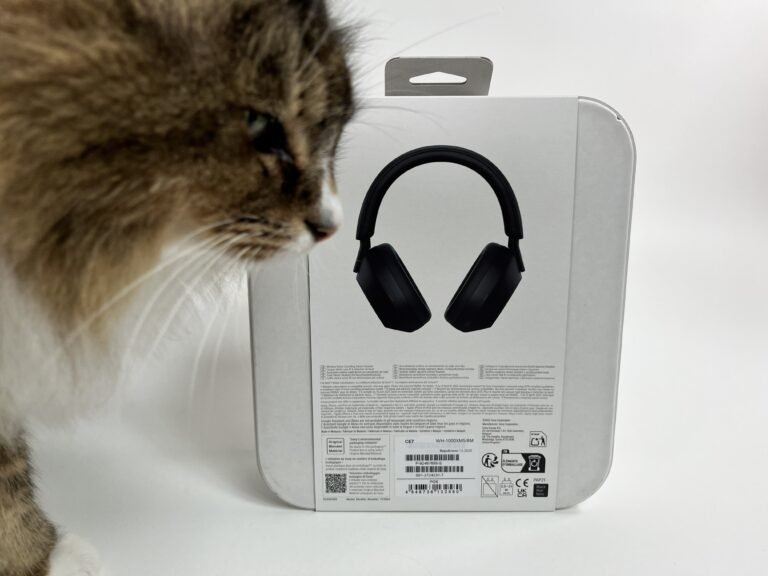
Exhibit B: Various assistants were called on for this investigation
Some people experience ‘eardrum suck’ from ANC headphone usage. Some of us hear a high pitched hiss in them. Manufacturers never discuss these traits leaving some of us to wonder if we’ve gone utterly mad. If the Sony WH-1000XM5 is the bargain you’ve been eyeing since its successor arrived and prices dropped, this case file will put things into perspective in a way no other review site will.
The weakest silencer of the four flagships tested and the kindest Sony to the eardrums by a distance; buy it if ANC pressure is what stops you wearing headphones, and buy the XM6 if maximum quiet is the goal.
Sensory Scorecard
What these eight axes mean
- Noise
- External sound, unpredictable or unfiltered, including misophonia triggers.
- Scent
- Smell that registers as invasive; unboxing odour and how long it lingers.
- Tactile
- Surface contact: pad materials, heat, sweat, textures under the fingers.
- Proprioceptive
- Clamp force, stability, and the sense of the headband’s grip.
- Interoception
- Internal signals the seal and ANC amplify: eardrum pressure, heartbeat, breathing.
- Visual
- Lights, app screens, and appearance factors.
- Hygiene
- Pad wear, residue, and cleaning over repeated use.
- Social
- How wearing them reads to other people, and conversation viability.
–NoiseReal help on keyboards, air-con, and engines, but the weakest of the four tested, and silent mode barely touches wet mouth sounds.open +close −
In practice this is a machine-hum reduction tool: engines, extractor fans, air-con, and keyboards all drop convincingly, while kettles, voices, and wet mouth sounds mostly survive silent mode. If triggers are the reason you’re shopping, plan around the fix that worked on every product tested: pink noise or a chosen muisc track at a third volume removed every trigger measured on this pair. For how the same tone method reads on in-ear products, see what frequencies earplugs block.
✗ScentThe strongest chemical smell of any headphone tested, on pads and case, still moderately strong at day 7.open +close −
In one reviewer’s tested opinion this unit carried the strongest chemical smell of any headphone examined, and a week of ownership hadn’t cleared it; for contrast, the Bose pairs’ unboxing smell had faded to nothing findable by the same day. If scent is a primary sensitivity, air the unit outside its case for at least a week before the first proper wear, and buy from a retailer with painless returns in case the smell outlasts your patience.
–Tactile Plush soft-fit pads with the gentlest first touch of the Sonys; hot ears from the hour mark, damp pads by ninety minutes.open +close −
Expect the gentlest first feel of the Sonys with ears heating up steadily: warm at 30 minutes, hot at 60, damp pads at 90, with a low-grade ache at the temples late in a long session. The cups aren’t cavernous: the top edge of the reviewer’s ear brushed the foam interior, very slight and not distracting on the tested pair, but worth knowing for larger ears. Plan a break at the hour in warm rooms and these stay wearable; push through and the heat, not the pressure, ends the session. The XM6 runs equally hot, so treat the heat as a Sony trait rather than an XM5 flaw.
✓HygienePads look new at ten uses; the cup exteriors pick up finger smears and want an occasional wipe, more than the Bose pairs.open +close −
Nothing here needs managing beyond the odd wipe down: the box opens with a single sticky tab and no triggering crinkle, the pads showed no wear or grime at ten uses, and the matte cups collect fingerprints faster than either Bose pair, so an eyeglasses wipe in the case pocket is worth considering. Damp pads after long wears dry quickly once the session ends.
✓Proprioceptive A light, even clamp that treats small and large heads almost identically and fades from awareness within the hour; stable, no slipping.open +close −
The balloon proxy compressed 0.3 cm on the small-head stand-in and 0.4 cm on the large: a near-constant pressure that gives everyone the same light grip, scoring a low on perceived squeeze where the XM6 scored a high, and the squeeze had faded from awareness within the hour. Stable in wear with no slipping, though the cups carry a little play and wiggle where they meet the band, a known fault with the plastic hinges observed.
–InteroceptionThe gentlest Sony by a distance and the lightest in the batch under a loud floor; the hiss from minute 5 and the bang-click are its own intrusions.open +close −
ICP (internal canal pressure) is where this pair shines, with one caution. In the quiet room pressure stayed low for a full hour and reached only moderate after 90 minutes, notably lower than XM6 at the hour. Both Bose pairs caused even less ICP in a quiet space. The XM5 advantage are noted when the electronics work hardest: in a loud lab test the XM5 produced the lightest pressure in the batch, and on the bus it was judged the better long-haul wear than either newer Bose or Sony model. Its own intrusions are a faint high squeal-like hiss, clear from minute 5 and shared with the XM6 but more prominent here, and a pressure click in both ears when a sharp bang catches the electronics. If ANC pressure in loud places is what ends your headphone sessions, this curve is the reason to consider this model.
✓VisualNothing of noteopen +close −
A pinpoint blue light that registers only if looked for, matte uniform surfaces, and nothing that flashes or pulses during use.
✓SocialPremium headphones – nothing to noteopen +close −
These read as premium headphones when worn in public. Short conversations work with the cups on, a brief word with staff worked in silent mode. Voices pass-through sounds slightly processed, like being on a call with yourself, so longer conversations require the cups coming off. The only social isse observed is the universal one: leaving them on mid-conversation reads as rude.
Case Summary

In the Bostlab the tone test, the XM5 had the weakest protection from outside voices and music of the four. Similarly, with ANC on (no music or pink noise masking) other noises like a kettle boiling and lip smacking were not well handled. So it is not the best ANC performer. However, when ICP (internal canal pressure) was factored in, the data complicates the ranking. In the quiet room its eardrum pressure held at 2 of 5 for a full hour and reached only 3 by minute ninety, a full point under the XM6 at the hour. In a lab test for strong noise, it produced the lightest pressure in the batch. The commuting field test confirm it’s the better long-commute choice than either XM6 or Bose Ultra 2. One caveat: in a quiet room the Bose Ultra 2nd Gen matches it point for point and the cheaper standard Bose QuietComfort goes lower still, so the XM5’s pressure advantage is a loud-room advantage, not a universal one. The trade off is a high squeal-like hiss clear from minute 5, hot ears from 60 minutes, a pressure click in both ears on sharp bangs, and, in one reviewer’s tested opinion, the strongest chemical smell of any headphone examined, still present at day 7. It’s worth noting that playing pink noise in them eliminates many external stressors such as every misophonia trigger tested. The XM6 extra cost buys silence, not sensitivity relief.
BOSTLab Results
Controlled tests, reported in two halves: what the seal blocks physically, and what the electronics cancel on top. Environment trials follow further down.
Two kinds of quiet
Every result below comes from one of two mechanisms, and separating them explains most of what these products do. The first is physical isolation: the cups seal against the head and simply block sound, the way an earplug does. The clamp measurement below is the cost side of that seal, and the passive rows of the tone testing are its benefit side, no electronics involved.
The second is the active layer: microphones sample the noise, the software inverts it, and the speakers cancel it inside the sealed cup. The tone measurements show how much that layer removes beyond the seal alone, and the field trials confirm where it holds up in real rooms. The active layer also has a cost, and the investigation names it ICP: in-canal pressure, the eardrum-suck sensation the cancellation itself produces. It is measured over time below.
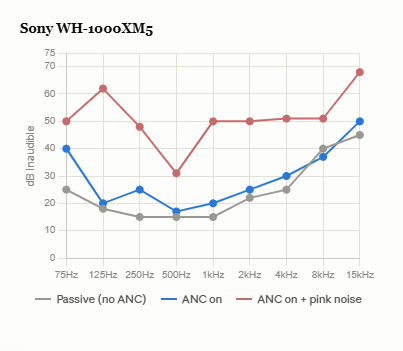
Nine test tones from 75 Hz to 15 kHz, three listening conditions. Higher on the chart means the tone stayed inaudible until played louder: more of it was blocked.
The XM5 ANC performed weakest in the voice frequency range (shown here 125 Hz to 2 kHz). It holds its own at the engine noises low end and performs well around the kettle-and-cutlery high end. The pink noise line cuts everything well – meaning this masking tone or some music will place you in that desired sonic bubble of calm.
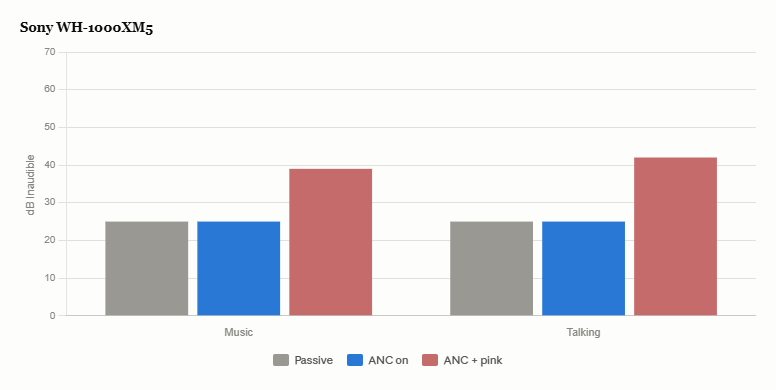
Continuous music and speech under the same three conditions. Taller bars mean the sound had to be played louder before it reached the ear: more blocking.
In lab tests, XM5 were worst performers for controlling external music and speech when using ANC alone. To help with triggering sounds you really need to play something over them.
How much noise gets past the ANC?
% = signal allowed through with ANC on and nothing playing. Lower = stronger attenuation. Same tone method as the earplug investigation. Subjective perception, not laboratory measurement.
Reading the table: blocking runs strongest at 15 kHz, the highest audible band, and weakest around 1 kHz, so speech clarity centre is where sound most survives the cancellation.
ICP (in-canal pressure): ANC pressure over time
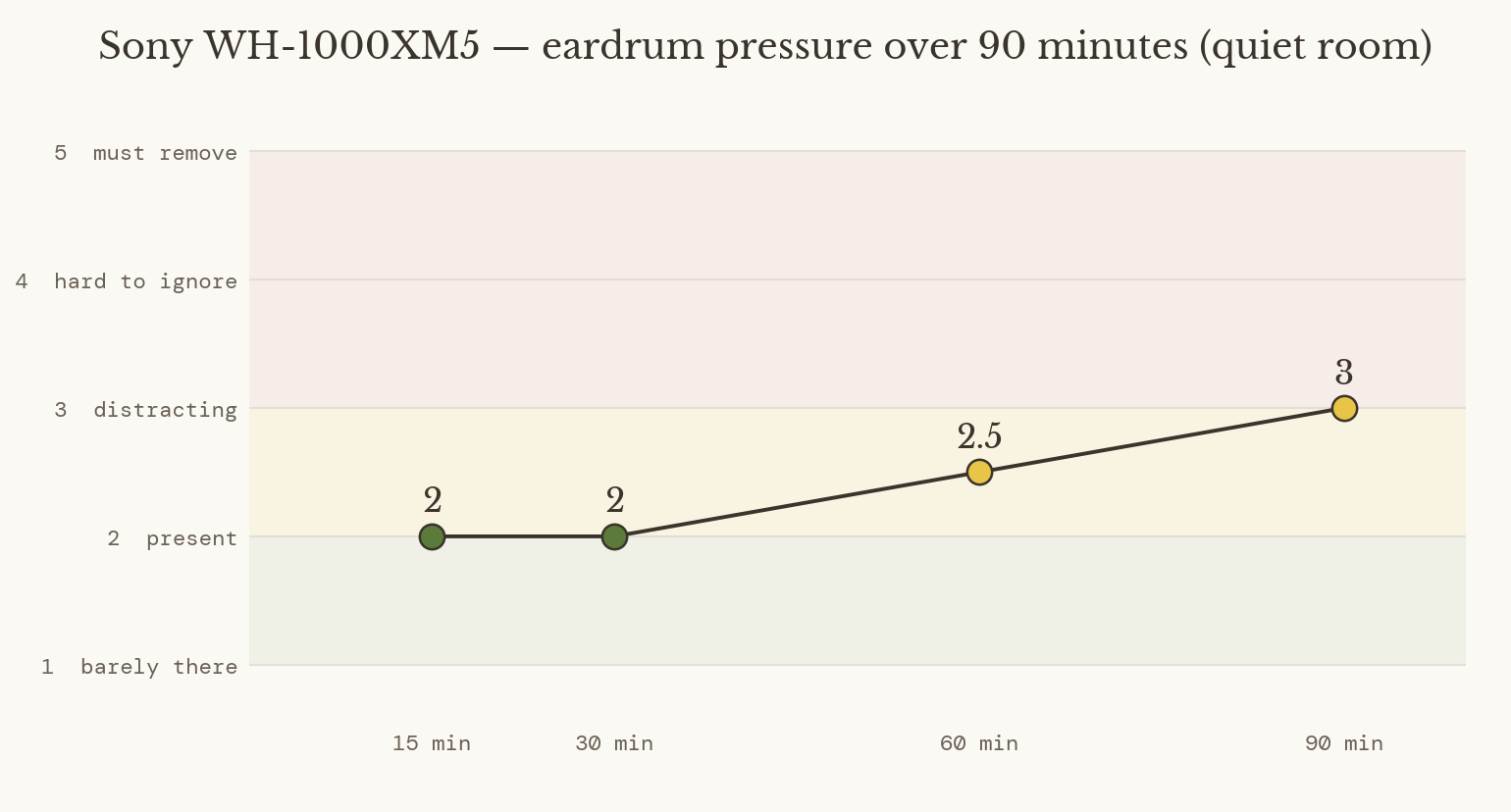
ICP over a 90-minute quiet-room wearing, scored 1 (barely there) to 5 (must remove). ICP rises faster in loud environments as the ANC works harder.
ICP held at a low pressure 2 of 5 for a full hour and reached only moderate pressure 3 by 90 min, notably gentler than the XM6 at the hour and the gentlest curve of the two Sonys by a distance. In a quiet room it performed about the same as the newer Bose model tested. Where it wins is when noise cancelling. Tested with a controlled 75dB background noise, this pair produced the lightest ICP at ten minutes. With more noise cancelling, you tend to get more ICP.
Clamp: physical pressure from the band
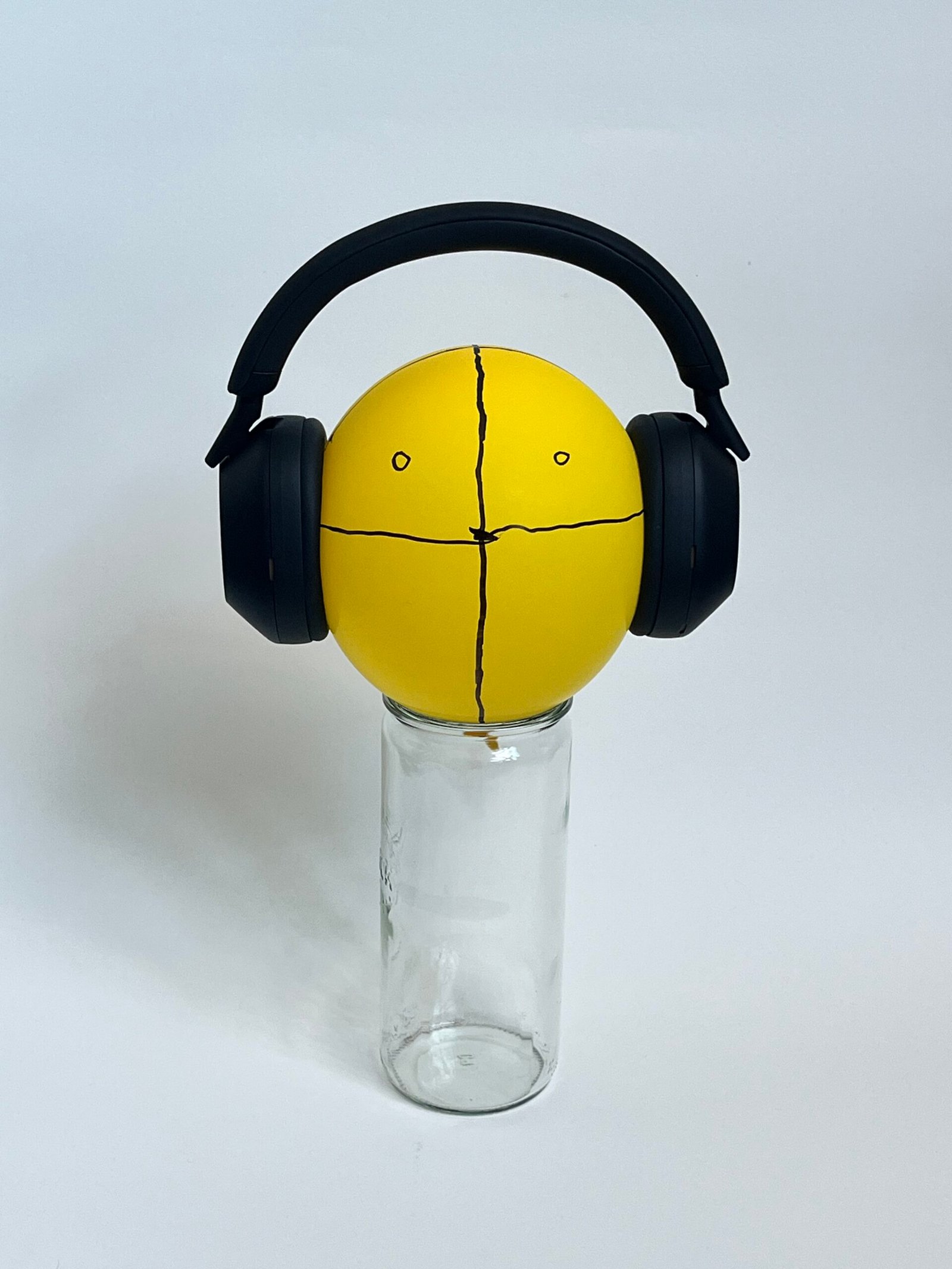
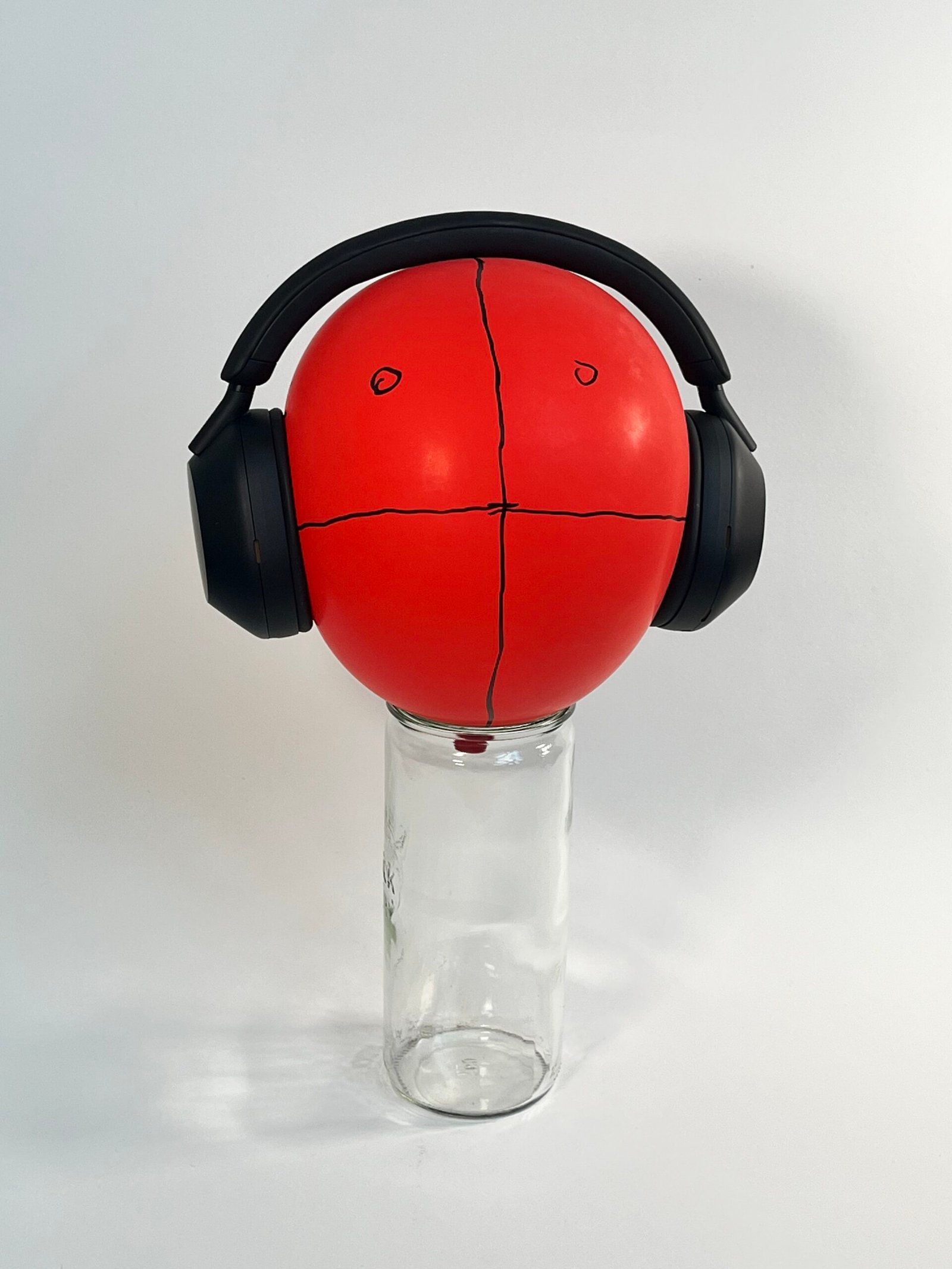
The balloon assistants (resist urge to call them Wilson) were measured when wearing XM5. Expresed as a percentage of the unclamped width, this band compressed both forms by 2.3 percent: identical compression regardless of head size, and the flattest ramp in the clamp dataset. The XM6 compressed the large-head form by 7.4 percent, which is 3.2 times the squeeze on a larger head. On the small form the two sit close enough that the difference falls within what calipers could detect, so nothing should be read into it. What the flat line means in practice: everyone gets the same light grip, it faded from awareness within the hour, and a larger head is not penalised the way it is by the newer model.
A comparative proxy across the tested set, not a force measurement. Method: how the investigation tests ANC headphones.
Misophonia triggers, tested live
ANC alone leaves lip smacking unchanged and cuts soft chewing by only a quarter; pink noise at a third volume removes every trigger tested.
Other tests
Specifications of Note
The physical facts that matter to sensory-sensitive wearers.
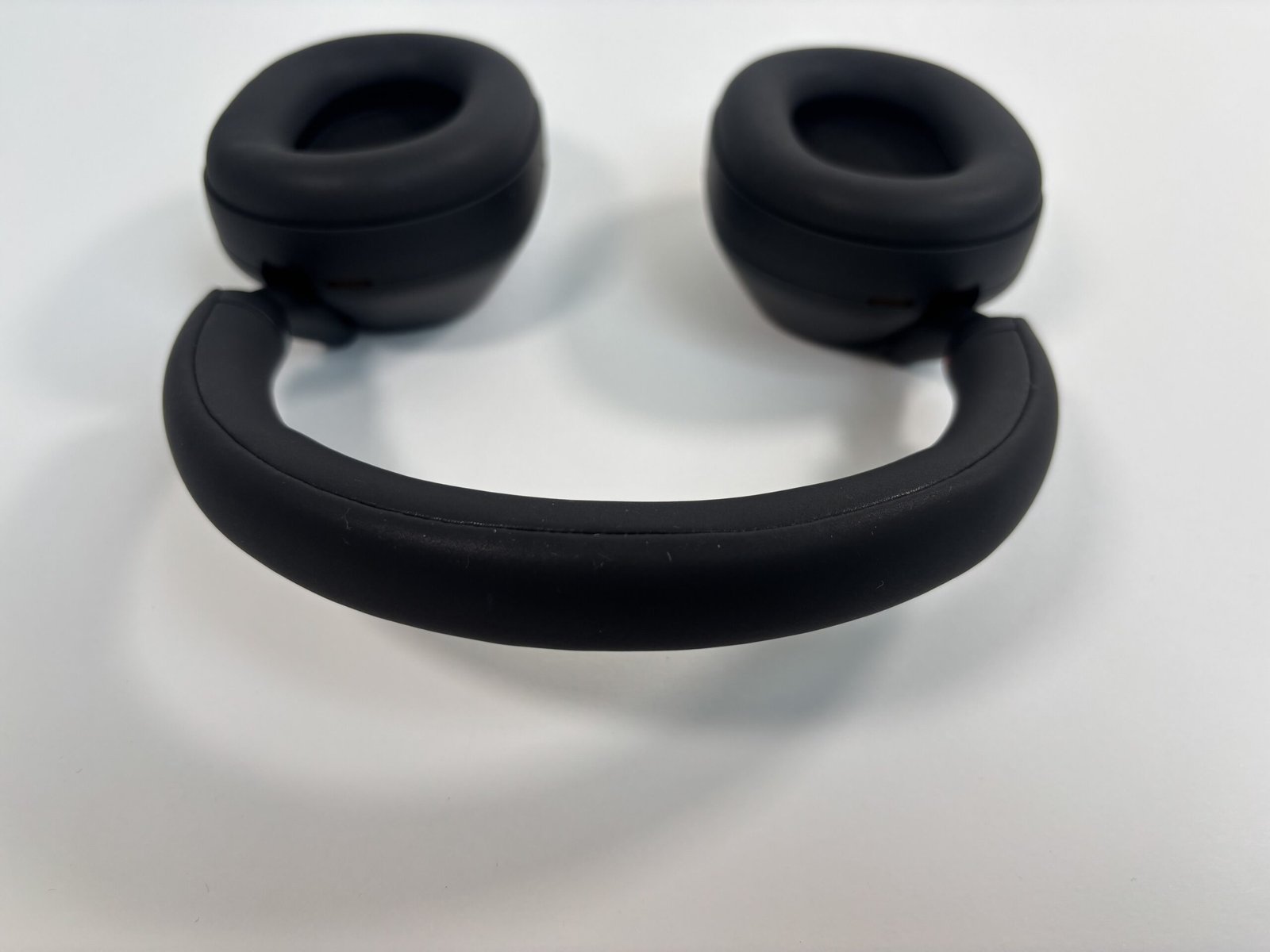
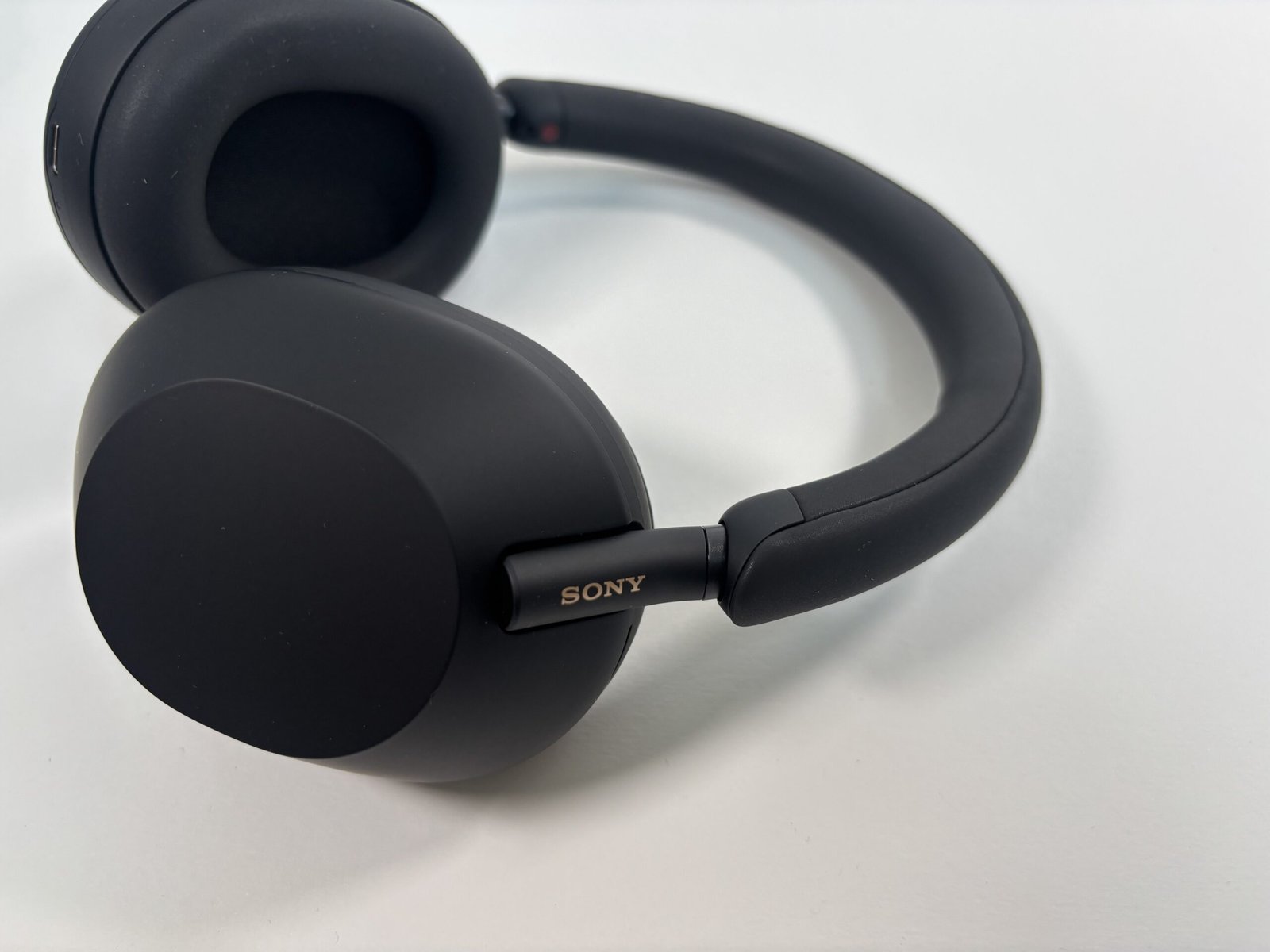
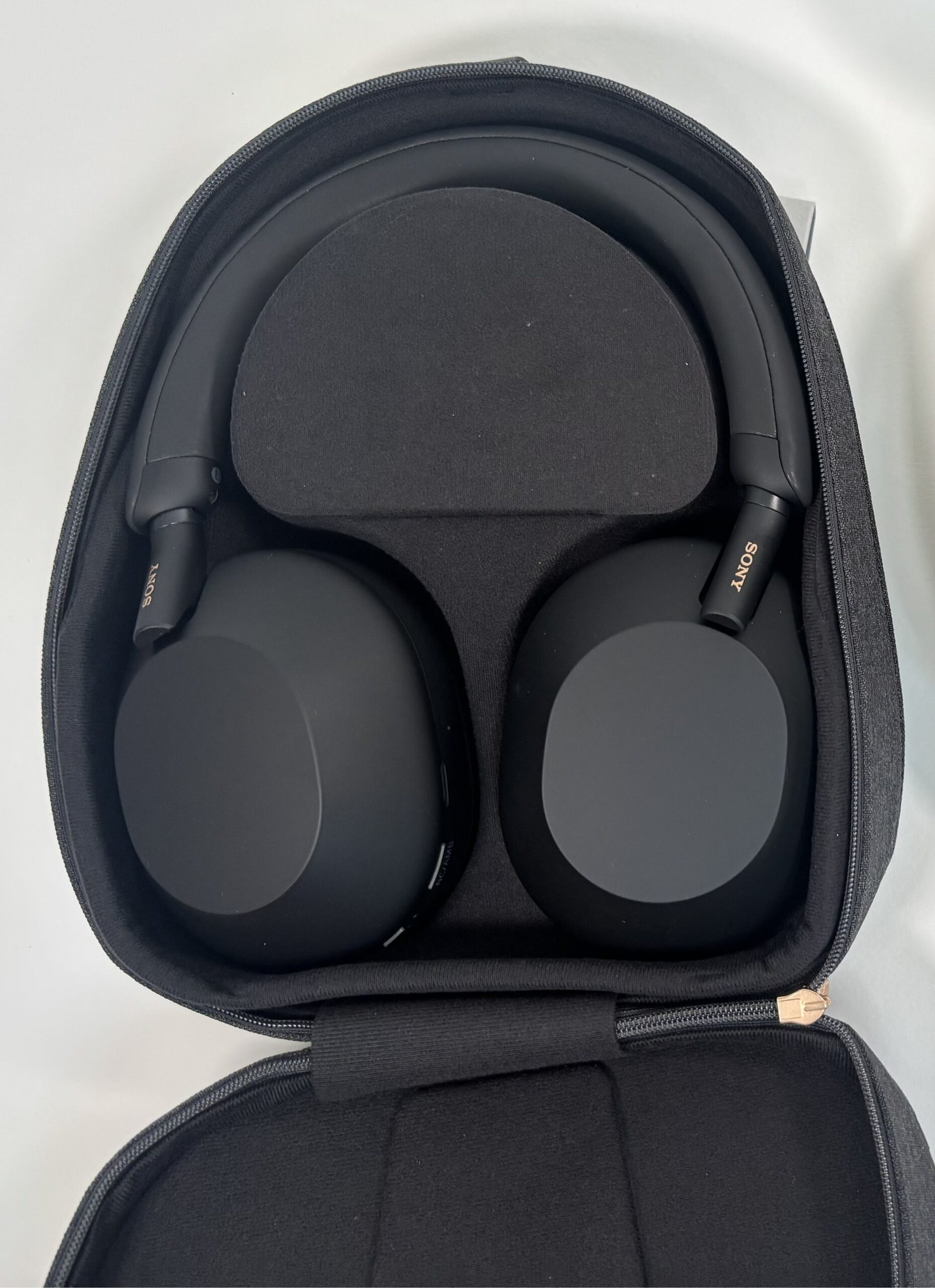
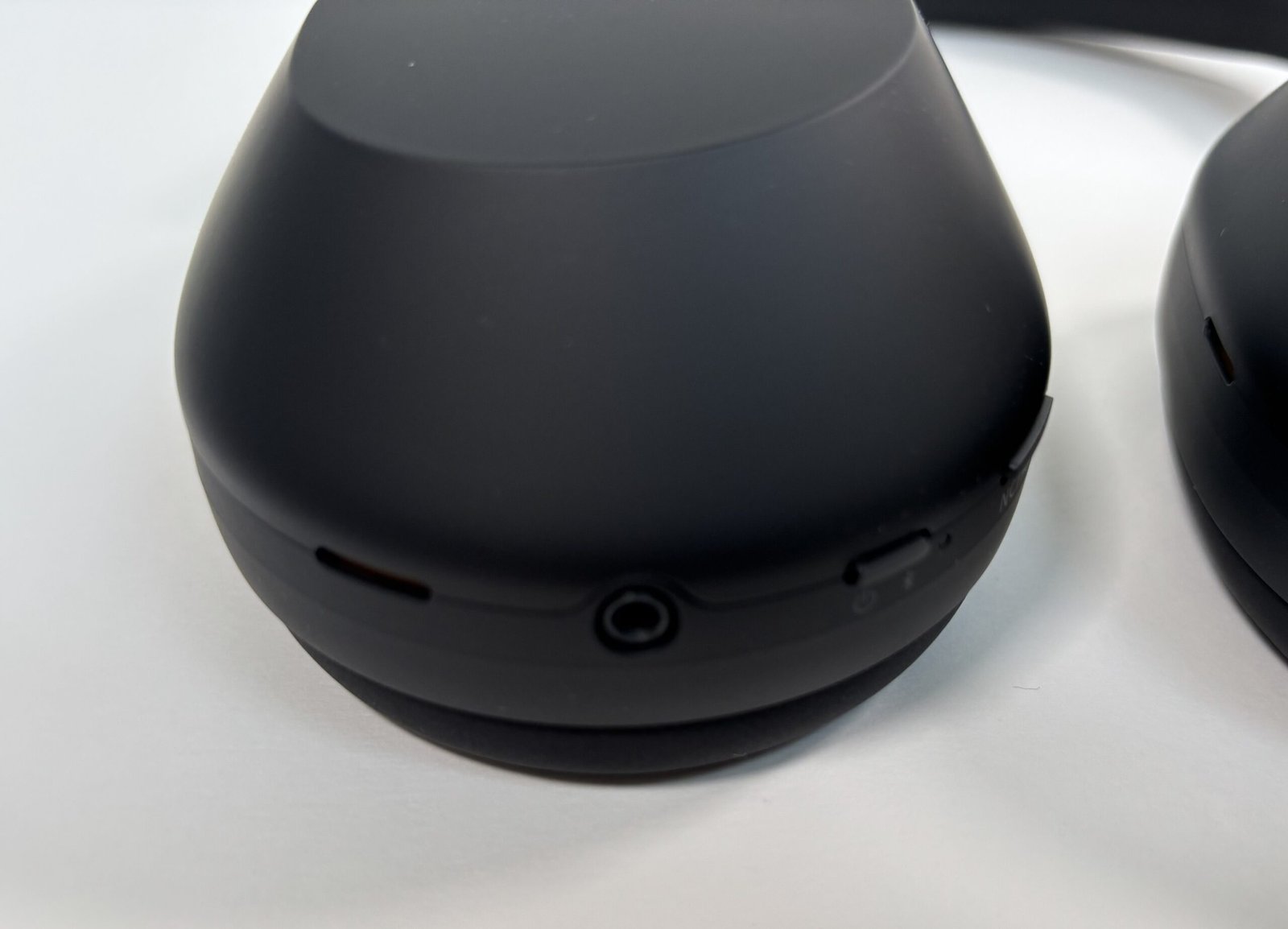
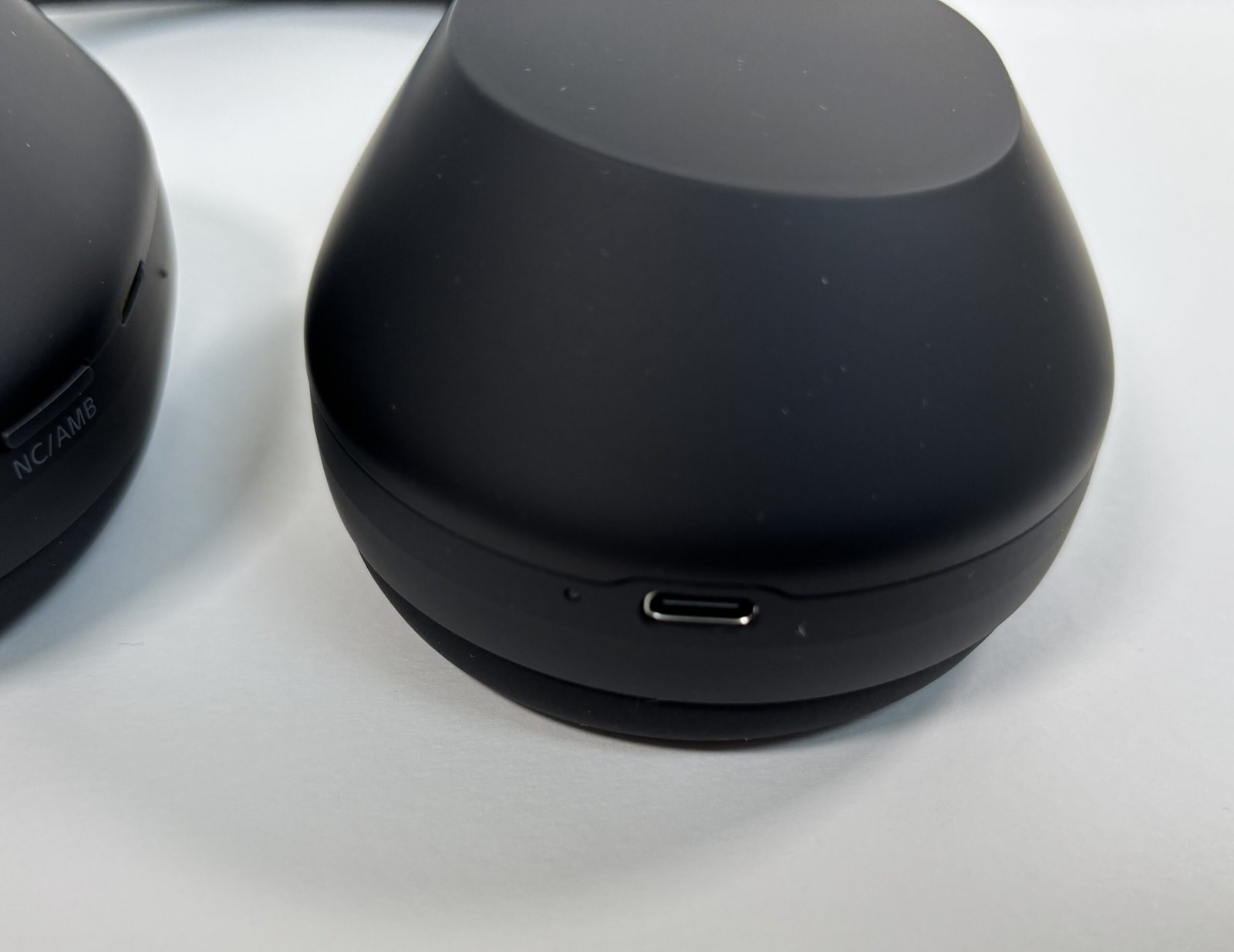
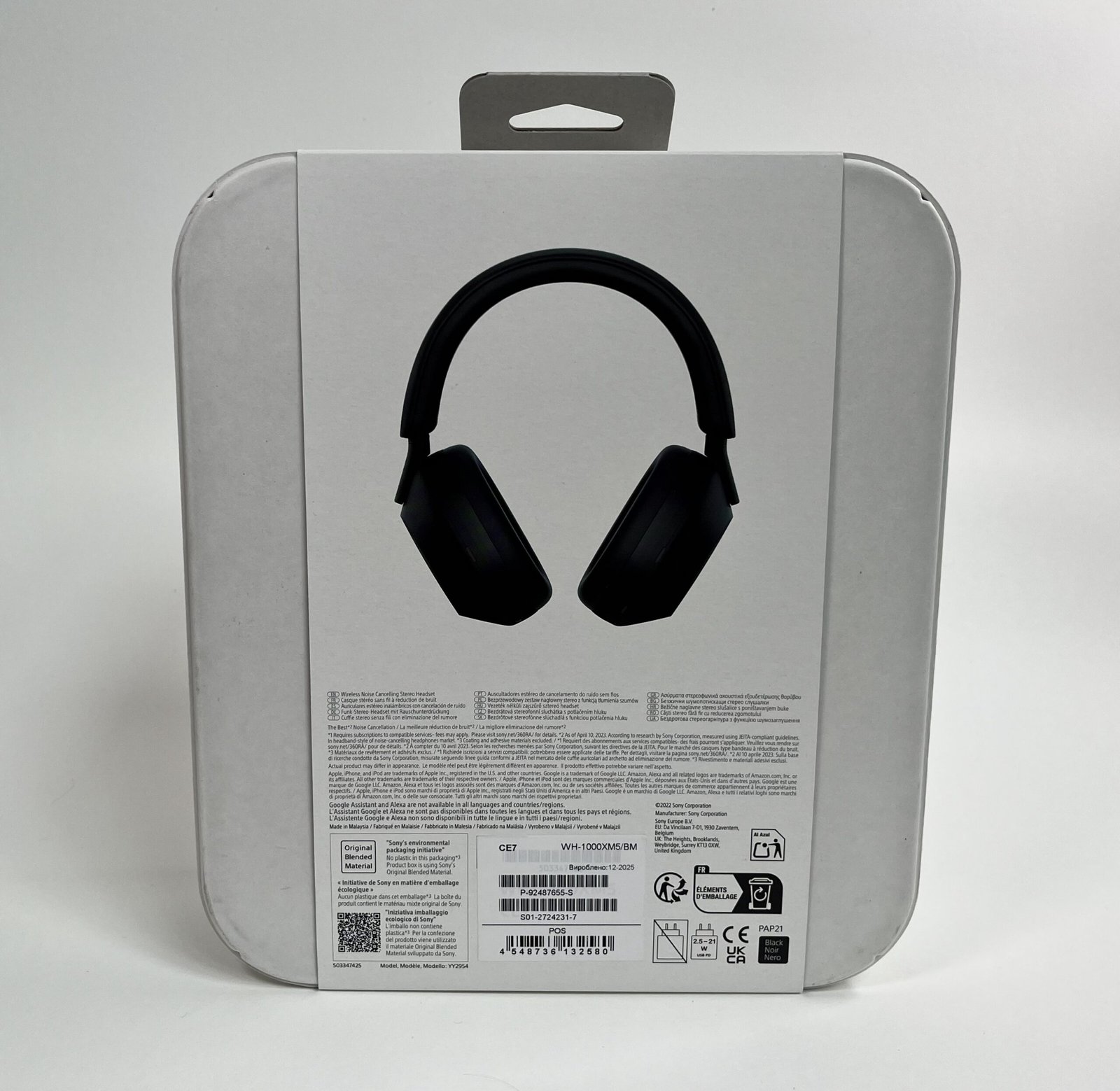
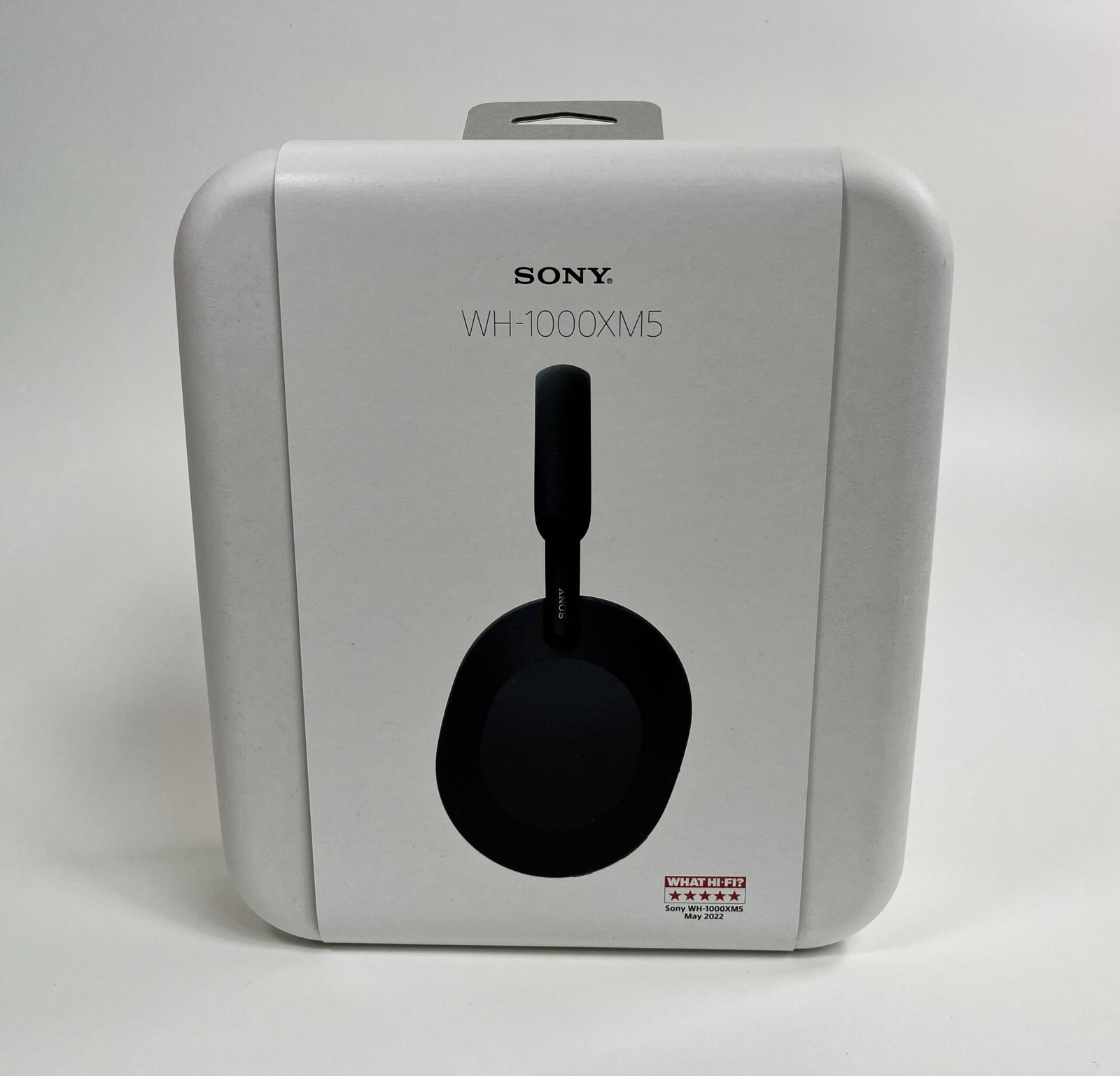
The unboxing
Field Trials
Real environments, real durations. The controlled results above are the evidence; this is how each product behaved in the rooms readers actually live in.
–Quiet RoomNot the best for taking off some extra noise in a quiet room: the hiss, heat, and a faintly lonely sealed-off feeling cost more than the little there is to cancel.open +close −
During the Covid lockdowns, spending long days as a laptop jockey, I found the ambient sounds of appliances and the outside world harder and harder to tune out on calls. I plumped for the Sony XM3 with high hopes, having owned cheaper ANC before. I lasted three days. The pressure and a high-pitched ringing halfway through hour-long meetings sent them back, returned with a heavy heart. So this test, two generations on, carried some anticipation: how much had Sony’s cancellation learned about ears like mine?
With ANC off the pressure is a warm, physical 2 of 5 from the seal alone. Switching on brings not pressure but a sound: a high 15 kHz hiss like a squeal turned down, unmistakable by minute five, located somewhere behind the head rather than in the ears. At five minutes an airplane-pressure sensation begins, settling to a background 2 by fifteen that holds for the hour and inches to 3 by ninety minutes, felt more inside the ear than against the head by then. Heat outruns pressure: warm at 30, hot at 60, damp pads at 90, and a low-grade ache at the temples late in the session. Removing the room’s hum has a side effect worth naming: a faint disconnection, slightly lonely, as if someone could approach unheard. As for wearing noise cancelling headphones all day: on this pair the heat sets the limit before the pressure does, and for a quiet home office a non-ANC pair without the clamp and the hiss would serve better.
Removal is a relief twice over: the heat and pressure end together, and the room’s ordinary noises return as something close to company. No dizziness and no rebound sensitivity after ninety minutes; the hiss leaves no trace once the electronics stop.
–Kitchen Extractor 95% gone, but the kettle kept 75% of its noise and lip smacking didn't reduce: a clear downgrade from the XM6 here.open +close −
Mixed, and honestly the XM5’s weakest showing. The extractor fan lost 95 percent of itself, nearly matching the XM6. The kettle kept three quarters of its noise, the worst result in the set. At the table, the room that answers whether noise cancelling headphones work for chewing: on this pair, ANC alone, barely. Soft chewing quartered and still intrusive, crunching cut by a third, lip smacking unchanged. Unchanged. A dropped spoon produced the set’s strangest glitch, a pressure click in both ears that enhanced the startle, and a firm door close brought a pressure spike without the click. Pink noise at a third volume removed every trigger completely.
✓Open Plan OfficeKeyboards to a faint flicker, air-con mostly gone, light enough to forget; hot ears after an hour are the only downside.open +close −
The XM5’s best room, tested twice: a hard 67 dB day and a calmer 45 dB one. Keyboards softened by two thirds into a gentle flicker, air-con cut 70 to 80 percent, general voices halved, and the clamp light enough to forget. A colleague’s one-sided call halved in volume but stayed irritating; pink noise made it unintelligible, leaving only a cadence. Short chats work with the cups on, though voice pass-through sounds slightly processed, like being on a call with yourself. After ninety minutes the pressure sat at 2 to 3, mild airplane territory, with the high whistle faintly present and hot ears from the hour.
✓CommuteHalf the rumble gone and less pressure than either Sony/Bose flagship model. On a long journey these are the star performers.open +close −
Half the engine rumble removed, the rest arriving through the bus frame rather than the air. The honest half of the ledger: the mid-high wash, fan whine, air whistle, and traffic noise, mostly survived silent mode, three quarters of it coming through, so the ride stays a noisy place with ANC alone. Bumps produce a brief interruption, a pressure bubble with a little distortion, milder than the full cutout that flagged a rival on the same route. Announcements stayed intelligible with ANC alone and awareness felt intact; with pink noise playing the tannoy vanished entirely, a disorienting trade on public transport, so silent mode is the awareness setting. Pressure climbed to 3 of 5 on the longer ride as the electronics worked against the noise, still the mildest reading of the flagships in that seat, and the investigation’s notes name these the better long-commute choice than the XM6 or the Bose Ultra. Direct wind at stops reached the mics as mild interference.
–SupermarketBetter than nothing in silent mode; with music or pink noise the shop mostly disappears.open +close −
The honest-limits room. Beeps softened by a quarter, fridge hum by two thirds, trolleys barely touched, and with the fridge gone the store’s music turned more intrusive, cut only 10 percent by ANC alone. Pink noise reversed it, music and talking down to a tenth, with a catch the notes record plainly: while moving around a shop the pink noise is harder to settle into and can become its own stressor. A chosen track won the day here, overriding the shop’s frequencies and restoring some control. A brief word with staff worked fine in silent mode.
–Restaurant / CafeStill a din with ANC alone and the background music actually gains presence; pink noise rescues the room, and foam earplugs beat both.open +close −
A hard 68 dB room. ANC alone didn’t move the needle much: still a din, chewing nearby halved, cutlery softened, and the background music actually gained presence once the hum beneath it vanished. Pink noise rescued the room: music gone, cutlery down 90 percent, crockery crashes cut to a fifth. Not a recovery tool here without something playing, and the heat becomes one more input to manage in a busy space, though arguably less of a physical distraction than foam in the ear canal. Foam and wax earplugs did the mid range better, offering stillness rather than another input to tune out; silence favours the earplug, masking favours the headphone.
Claims Checker
What the packaging says vs. what was found.
Sony markets the XM5 as particularly suitable for people who spend long hours commuting, working remotely, or on calls. Tested against three newer rivals, the claim holds, and for a reason the marketing never states: not because its cancellation is strongest, it finished last of the four, but because its eardrum pressure stays low enough to wear for the length of an actual commute. The claim survives on comfort, not on quiet.
| The claim | Finding | Note |
|---|---|---|
| “Particularly suitable for those who spend long hours commuting, working remotely, or on calls” | ✓ holds | Holds for a reason the packaging never states: not the cancellation, which finished last of the four, but a pressure and clamp ledger that makes it the better long-commute wear than either newer flagship |
| “Industry-leading noise cancellation” | ✗ overstated | Last or joint-last of the four through the voice band on the tone grid, and a kettle at one metre kept three quarters of its voice |
| “Keeps out more high and mid frequency sounds than ever” | – partial | Real gains at the kettle-and-cutlery highs; through the speech band it posted the weakest readings of the set, and wet mouth sounds passed straight through silent mode |
| “Soft fit leather with less pressure on the ears” | ✓ holds | The lightest clamp of the Sonys, near-identical across head sizes, and the lightest ANC pressure in the batch under a controlled 75 dB test |
How the Investigation Tests
Nine tones at three listening conditions, timed eardrum pressure scores, live trigger sounds, a balloon clamp proxy, and six real environments with logged noise levels. One tested unit, one pair of ears, methods disclosed in full: the ANC testing methodology.
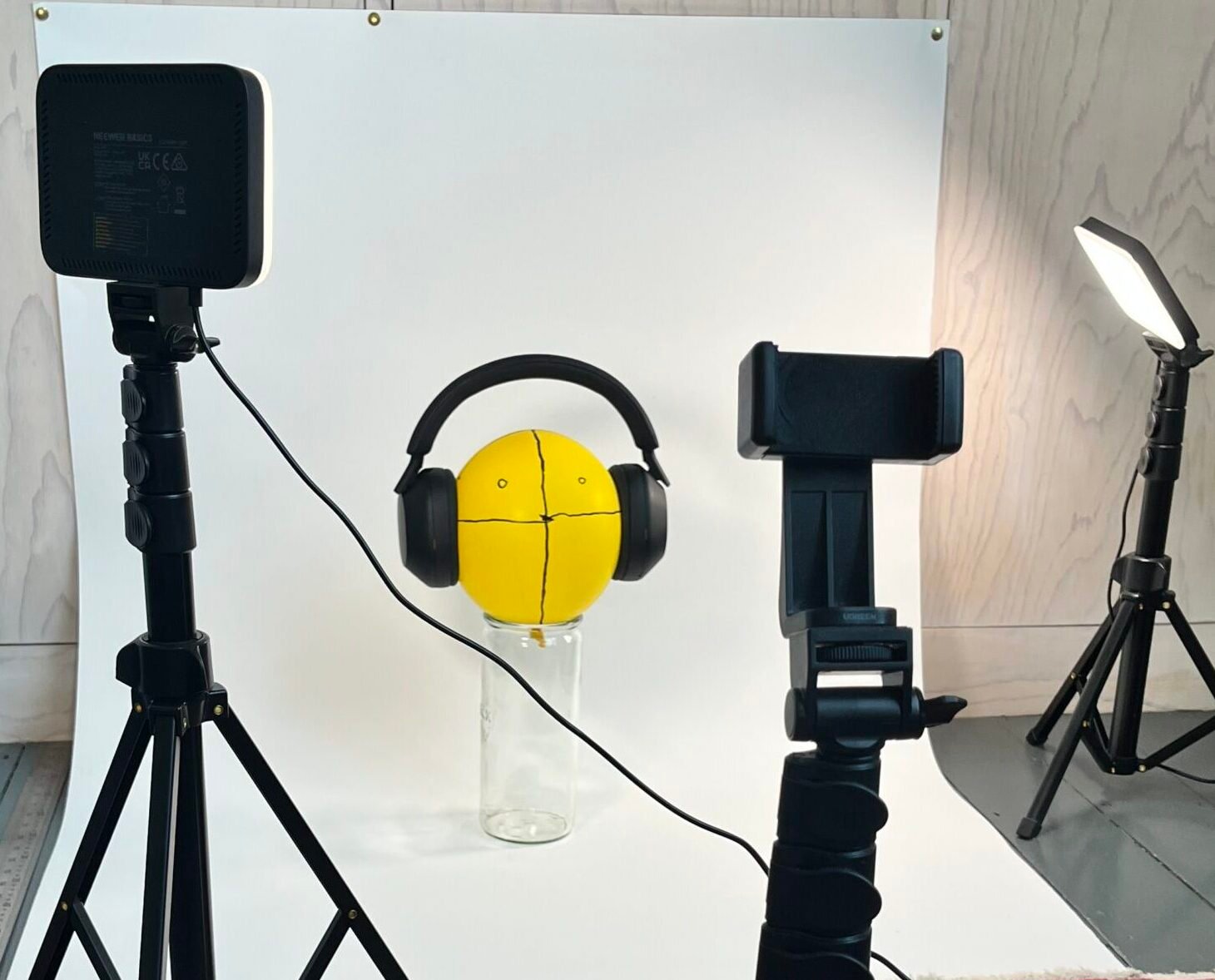
balloon test rig
Tested on firmware 2.5.1. Behavioural claims are version-stamped.
Case Conclusion
Who this suits, and who it doesn’t.
- The lightest ANC pressure even when working hard to cancel, the gentlest in the batch in louder places
- The long-commute pick: judged the better long-haul choice than the XM6 or Bose Ultra 2nd Gen due to low pressure
- Far kinder than its successor: a full point under the XM6’s pressure curve at the hour, in the same quiet room
- A light, even phyiscal clamp for all sized heads
- Cheaper than the XM6
- Glasses-friendly seal: no detectable loss in the 68 dB café test
- A high squeal-like hiss, clear from minute 5: shared with the XM6, more prominent here
- Hot ears from the hour: damp pads by ninety minutes, matching its successor
- The weakest ANC cancellation of the four tested to date
- A pressure click on sharp bangs and clatter: adds to the startle rather than catching it
- Misophonia – lip smacking unchanged: ANC alone barely touches wet mouth sounds
- The strongest chemical smell tested: still present at day 7, in one reviewer’s tested opinion
Caution overall. The XM5 was the weakest silencer of the four flagships tested and ANC alone did nothing for lip smacking, yet it produced the lightest ICP (ear canal pressure) in the batch under a loud test; held a light, even clamp across head sizes, and earned the investigation’s nod as the better long-commute choice over both newer flagships. A gentler little brother to the XM6: kinder to the skull and to the eardrums, at the price of a slightly less deserted island of sound. The hiss, the heat, and the strongest chemical smell of any headphone tested keep it at Caution. If pressure is what ends your headphone sessions, go with these; if maximum quiet is the goal, the Sony WH-1000XM6 case file is the page to read, and the side-by-side comparison puts both sets of data on one page.