
No sponsorship, no freebies. Links here earn a small commission at no extra cost to you, which keeps the investigations independent. More info
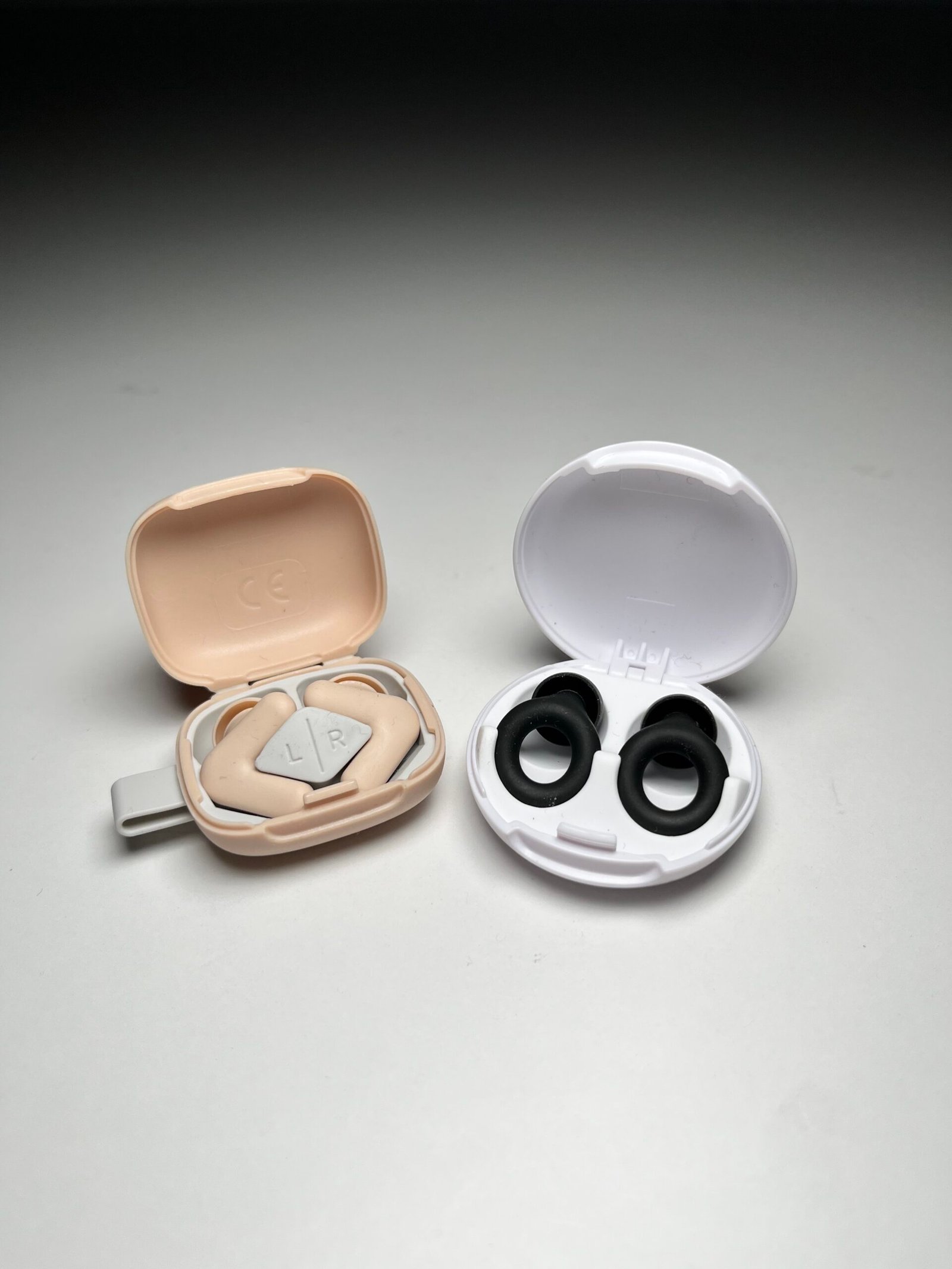
What Frequencies Do Earplugs Actually Block? Ten Tested, Tone by Tone
How much noise each earplug lets through, frequency by frequency. The numbers no packaging prints.
Perceptual tone test, one reviewer, one rig. Method below. Not laboratory attenuation figures.
Welcome to the heart of Investigation No. 2: earplugs. A week in spring spent sitting with these small things designed to shield our nervous systems from sounds that arrive without invitation. Some come at us unexpected. Some persist and won’t go away. But like all sensory input (light, smell, temperature) sound is three-dimensional, and packaging flattens it to one number. A single NRR or SNR figure, averaged across the whole range, tells you almost nothing about whether a plug will kill the specific sound driving you up the wall. A fridge hum and a checkout beep are different problems. This is the per-frequency breakdown that one rating hides.
A tone was played while wearing each earplug at a fixed volume. Each figure gives the percentage of that tone judged to come through. Lower is better: 10 means very little made it past the seal, 100 means the tone was heard as if nothing were in the ear. Ten products, nine tones each, from 75 Hz traffic rumble up to a 15 kHz whine.
An earplug that kills a low-end rumble can be useless against a 4 kHz kettle hiss. The single NRR or SNR rating hides that difference. The investigation found it’s better to match the plug to your trigger frequency than to chase the biggest number on the box.
Sensory-sensitive listeners aren’t imagining the sharpness. Decreased sound tolerance is one of the most common sensory features of autism: a meta-analysis in Ear and Hearing put its prevalence in the autistic population at roughly 86%, and a clinical review of hyperacusis in autism spectrum disorder describes the same pattern of everyday sounds landing as painful rather than merely loud (NCBI review). If a frequency that others shrug off is the one that hurts you, that is well documented, not unusual. Knowing which plug attacks which tone is the practical end of that fact.
The low end: traffic, engines, hum
This is where a neighbour’s bass beats, bus engines, and the fridge hum live. The two products that defended best down here happened to be the cheapest of the lot.
Speech, chewing, and the trigger range
Voices, your own chewing, checkout beeps, kettle hiss. This band carries most misophonia triggers and most human conversation. Here the foam is the front runner. If chewing and mouth sounds are your particular trouble, the misophonia field report maps this band against specific trigger patterns.
The high end: sibilance, whine, the dog-whistle range
Top of the range. Sibilant speech, electronic whine, the 15 kHz squeal that can be physically unpleasant. At 15 kHz the spread is enormous, and it’s where the data is most original. Sensory-sensitive people can often hear these tones when others can’t, which can be unnerving: that quiet feeling of being gaslit when someone says “no, I don’t hear anything.” Reduced ability to filter and tolerate sound is a recognised feature of autistic hearing, not a quirk (PubMed).
Every product, every frequency
The complete reading. Percentage of each tone judged to come through, lowest (most blocked) shaded green, highest (most open) shaded red. Read down a column to see how one plug behaves across the range, or across a row to compare plugs at the frequency that matters to you.
| Frequency | Loop Q2 | Loop Engage | Calmer | Calmer Pro | A. Party | A. Silence | Mack’s | Ohropax | 3M 1100 | EarPlanes |
|---|---|---|---|---|---|---|---|---|---|---|
| 75 Hz traffic, HVAC | 50 | 90 | 100 | 100 | 75 | 75 | 10 | 10 | 20 | 100 |
| 125 Hz low rumble | 50 | 90 | 100 | 100 | 65 | 75 | 10 | 10 | 10 | 95 |
| 250 Hz bus, fridge | 50 | 85 | 100 | 100 | 60 | 66 | 20 | 20 | 3 | 45 |
| 500 Hz voice, chewing | 50 | 75 | 100 | 100 | 60 | 50 | 30 | 30 | 25 | 70 |
| 1 kHz speech centre | 50 | 66 | 100 | 100 | 50 | 33 | 50 | 50 | 25 | 65 |
| 2 kHz checkout beep | 33 | 50 | 100 | 100 | 50 | 33 | 33 | 10 | 25 | 50 |
| 4 kHz kettle hiss | 20 | 50 | 75 | 75 | 40 | 25 | 25 | 10 | 25 | 40 |
| 8 kHz sibilance | 75 | 50 | 95 | 100 | 50 | 50 | 10 | 5 | 50 | 33 |
| 15 kHz whine, squeal | 1 | 33 | 100 | 100 | 50 | 0 | 10 | 0 | 1 | 33 |
Figures are perceived percentage through at a fixed playback level, judged by ear. Flare Calmer readings shown for the unfiltered setting. Both Flare products are designed to pass sound rather than block it; their high figures reflect that intent, anchored to the tone-test method.
Let the grid be your guide
Match the plug to the frequency that’s hurting you, not to the price. For low-end rumble, a moulded seal (wax, putty) or 3M foam wins outright. For the sharp high-mid and high-frequency triggers (checkout beeps, kettle hiss, electronic whine), the wax and flanged silicone (Alpine Silence, Loop Quiet 2) cut things out the best. The most expensive plugs in the test, the Flare Calmer and Calmer Pro, sit open across the whole range because passing sound is their stated design, so they’re the wrong choice if your goal is to make a specific sound quieter. The cheap foam and the humble wax did the heavy blocking.
Percentages are perceived noise allowed through at a fixed playback level, one tone at a time, judged by ear. Not lab NRR. Full methodology →