
No sponsorship, no freebies. Links here earn a small commission at no extra cost to you, which keeps the investigations independent. More info
Flare Calmer vs Loop: Which Actually Quiets a Noisy Room?
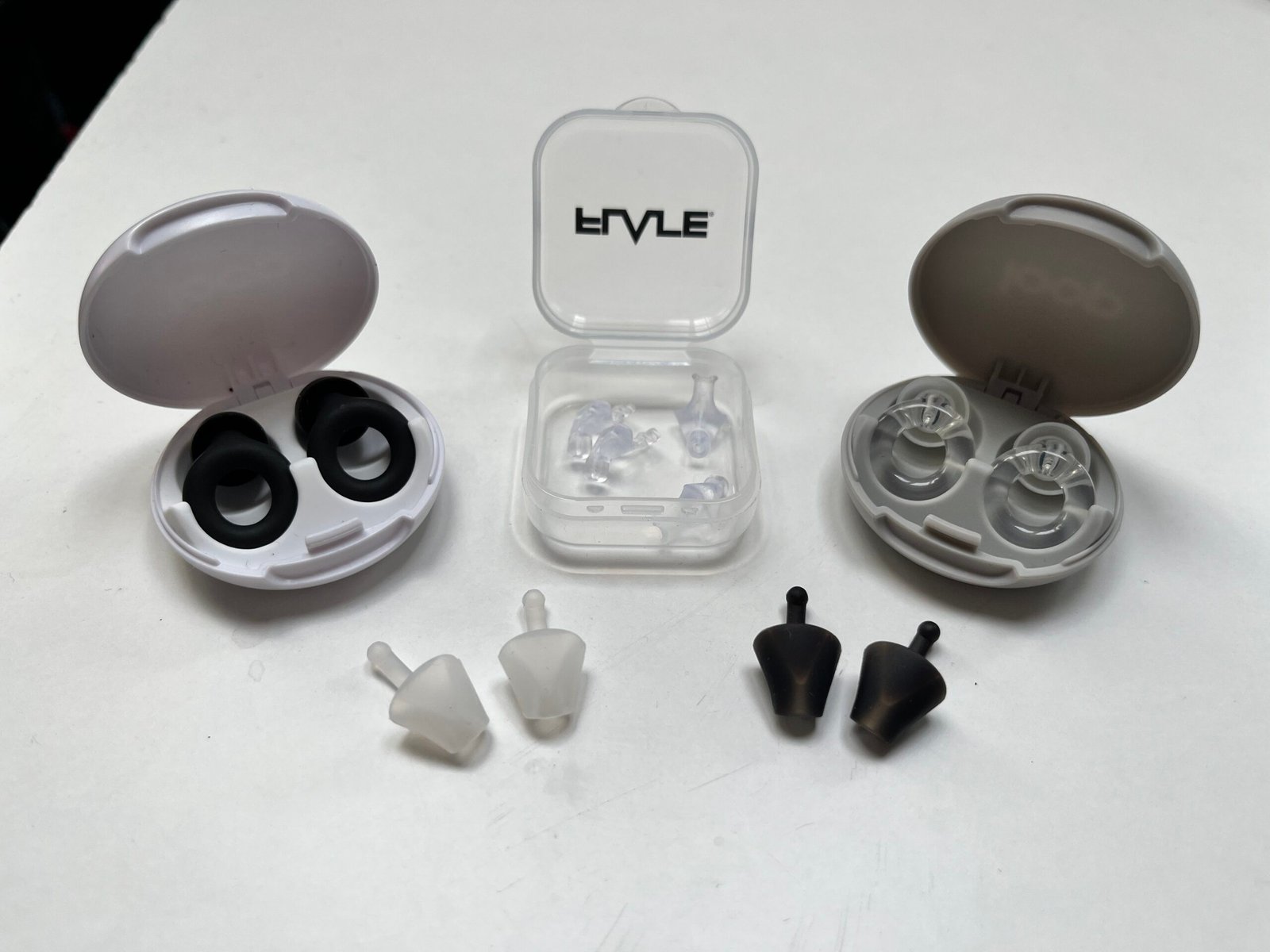
Four earplugs from two brands often suggested to noise sensitive people. Here are the facts and figures to cut through the hype.
Tested for daily noise intolerance, not for shooting, aviation, or jackhammering.
Buy a Loop for quiet, a Calmer for harshness
This site has tested these products extensively to save autistic, ADHD and noise sensitive people doing endless research. We think you should buy a Loop if quiet is what you’re after. Quiet 2 let 42% of sound through in our lab testing and Engage 65%, so even the leakier of the pair takes out a third of what reaches you. We struggled to find any compelling use for Flare Calmer products as both Flare Calmer models plugs let roughly 97% through (86% with the extra inserts). Trouble is, most people reaching for earplugs want a lot less sound. Read on if you want to dig around in the finer differences.
Flare and Loop are not competing products
Both brands sell small in-ear devices to people who find many environments too loud, and both get recommended on common ND forums. That’s where the similarity stops.
Loop makes noise attenuators. A silicone tip seals the canal and a some use a filter to let certain frequencies pass through. Quiet 2 is the blocking one; Engage keeps speech clearer and takes the edge off other noises.
Flare makes something else entirely. Calmer does not seal your ear canal closed, no volume reduction, no muffling, no occlusion. Their claim is that reshaping resonance in the ear canal makes sound less harsh without making it quieter.
Loop Quiet 2 and Loop Engage, measured
Lower is quieter.
| Frequency | What it represents | Loop Quiet 2 | Loop Engage |
|---|---|---|---|
| 75 Hz | Lowest engine noise, HVAC low end | 50% | 90% |
| 125 Hz | Traffic rumble | 50% | 90% |
| 250 Hz | Bus engine, fridge hum | 50% | 85% |
| 500 Hz | Chewing low end, voice fundamentals | 50% | 75% |
| 1 kHz | Human speech centre | 50% | 66% |
| 2 kHz | Digital beeps, a key ND irritant range | 33% | 50% |
| 4 kHz | Kettle hiss, cutlery, high beeps | 20% | 50% |
| 8 kHz | Sibilance, sharpness | 75% | 50% |
| 15 kHz † | Upper edge of hearing | 1% | 33% |
| Mean | All nine tones | 42% | 65% |
Quiet 2 cuts 50% out from 75 Hz to 1 kHz, even more in the upper ends (the beeps and hisses of the world) but lets sibilance back in at 8 kHz. Engage does the opposite: it leaves the bottom almost untouched at 90%, which is the point, because that’s what keeps a voice sounding like a voice.
Flare Calmer and Calmer Pro, measured
Same nine tones, same rig, same day.
| Frequency | What it represents | Flare Calmer | Calmer Pro |
|---|---|---|---|
| 75 Hz | Lowest engine noise, HVAC low end | 100% | 100% |
| 125 Hz | Traffic rumble | 100% | 100% |
| 250 Hz | Bus engine, fridge hum | 100% | 100% |
| 500 Hz | Chewing low end, voice fundamentals | 100% | 100% |
| 1 kHz | Human speech centre | 100% | 100% |
| 2 kHz | Digital beeps, a key ND irritant range | 100% | 100% |
| 4 kHz | Kettle hiss, cutlery, high beeps | 75% | 75% |
| 8 kHz | Sibilance, sharpness | 95% | 100% |
| 15 kHz | Upper edge of hearing | 100% | 100% |
| Mean | All nine tones | 97% | 97% |
At 4 kHz, the band that carries kettle hiss and silverware clatter, both Flare plugs took out a quarter of the signal. Everywhere else near 100% of all noise came through unaffected.
The Pro is worth a separate note. Its aluminium core is the reason it costs roughly twice the standard Calmer, and on this test it produced no gain anywhere. It also gave back the small 5% the standard Calmer managed at 8 kHz. I found no measurable advantage to the upgrade, in the lab or in the real world setting. The Calmer Pro case file has the full stage-by-stage findings.
Fitting a filter changes things, though not enough to close the gap. Calmer with a 10 dB filter let 93% through and with a 15 dB filter 86%.
The two ranges don’t overlap anywhere
Loop spans 42% to 65% mean pass-through. Flare spans 97% to 97%. Twenty-one points separate Loop from Flare.
Which makes the usual framing of this question wrong. It isn’t Flare against Loop. It’s whether you want the room quieter or the room reshaped.
For anyone who came here wanting deep quiet none of these models deliver this as well as Mack’s silicone putty.
Marketing claims examined
Taken from packaging and product pages, tested against the tone data above.
| Brand | The claim | Finding |
|---|---|---|
| Flare | “No volume reduction” |
Holds Mean pass-through of 97% across nine tones is what a product that doesn’t reduce volume should measure. Flare states this plainly on the packaging and the data agrees. |
| Flare | “Softens harsh sound” / “calmer sound” |
Partial At 4 kHz both plugs cut 25%, and the standard Calmer took a further 5% at 8 kHz. This is not what was expected as per their own tests noting it was one reviewer’s tested experience. |
| Flare | Calmer Pro: aluminium core as a premium upgrade |
Not supported on test No frequency showed an advantage over the standard Calmer, and 8 kHz was 5 points worse. At roughly twice the price, I found nothing in the tone data to justify the difference. Tested on one rig by one reviewer; other ears and other canals may hear it differently. |
| Loop | Quiet 2: “24dB SNR noise reduction” |
Holds Not instrument-verified here, but Quiet 2 placed among the strongest silicone attenuators in the investigation. After the HSE’s recommended 4 dB real-world derating that’s roughly 20 dB in practice. |
| Loop | [Insert Engage packaging claim] |
Partial Engage held 90% at 75 Hz and 66% at 1 kHz, so speech stays usable while the low end passes almost untouched. |
Verdict
For quiet: Loop Quiet 2
The strongest attenuator of the four, and the only one that halves the low end where traffic and air conditioning live. Expect a gradual altitude-like pressure by the fifteen-minute mark, and expect sibilance to survive at 8 kHz.
For conversation: Loop Engage
Keeps the bottom of the range almost intact so voices still sound like voices, while trimming half of the beep and hiss bands. The right tool for an office where you have to answer people, and the wrong one if traffic rumble is the problem.
For harshness rather than volume: Flare Calmer, not the Pro
If the 4 kHz band is what troubles you, cutlery, kettles, the sharp end of a room, the standard Calmer is the one to try. It leaves volume untouched as per Flare’s promises. The Pro costs roughly twice as much and showed no measurable gain on this test, so the cheaper one is the sensible starting point.
Still weighing the wider set? The earplug investigation holds all ten case files, and earplugs for sensory overload sorts them by the environment you’re trying to manage.
Nine-frequency tone test, percentage of each test tone still audible through the device. Tested in 6 different real world settings over weeks. Full earplug methodology →