
Ohropax Classic Wax — Sensory Review for Sensory-Sensitive Adults
The most effective attenuator at the entrance seal, no canal insertion and no entrapment, undone by a handling cost that follows you all day: wax on your fingers, wax on your ears, and a sink you can't always reach.
Case report within Investigation No. 2. Six test environments. One reviewer with a smaller-than-average ear canal. Subjective sensory impressions, not laboratory measurement.
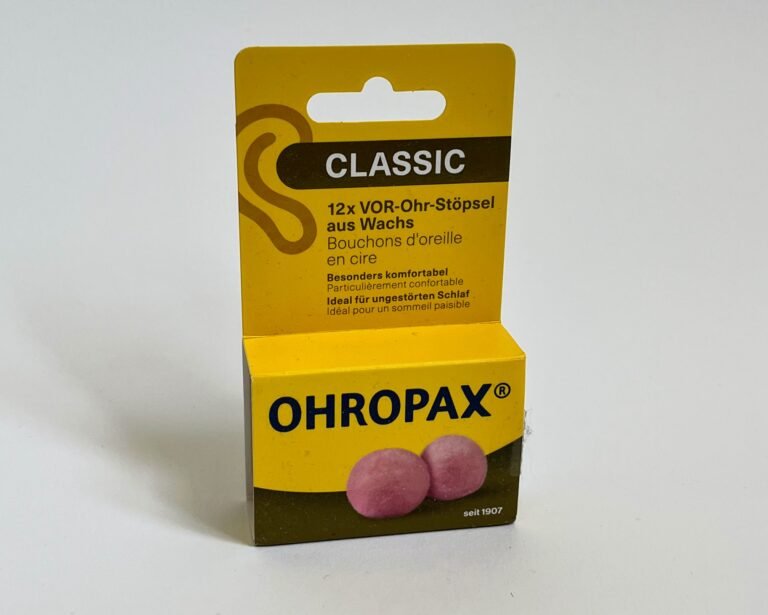
Fig. 1 – Exhibit A. Pink, unbothered, and effective. The handling is the whole story.
Halfway through a coffee, the noise around you finally manageable, you reach up to adjust the wax and your fingers come away coated in a greasy film. You go to wash it off. It takes a rinse, a scrub, a vigorous towelling, and it’s still not all gone, so a second wash, and then a hand to the ear to check, and of course there’s wax there too. You spend the rest of the afternoon half-worried about getting home to deal with it properly, and half-wondering whether the pink is visible from across the table. The plug worked perfectly. That was never the question.
Sensory Scorecard

What these eight axes mean
- Noise
- External sound, unpredictable or unfiltered. Includes misophonia triggers.
- Scent
- Smell that registers as invasive. Lingers and transfers.
- Tactile
- Surface contact on skin and in the ear: texture, friction, residue.
- Proprioceptive
- Physical pressure and the sense of something seated in the ear.
- Interoception
- Internal body signals the seal amplifies: heartbeat, breathing, pulse.
- Visual
- How the product looks; light, pattern, or appearance factors.
- Hygiene
- Contamination sensitivity: cleanliness, residue, the look of the product.
- Social
- Other people as a sensory source, plus the social cost of wearing it.
– Noise
Strong attenuation across the range, hardest at the extremes, undercut by significant speech loss.
This is the most thorough wax attenuator in the investigation, and the tone test shows why: it crushes the very low rumble and the very high sharpness almost completely, while letting a slice of the mid-range through, which is exactly the band where speech lives. So a bus engine drops away, a kettle’s hiss vanishes, and a colleague’s words become unparseable shapes. In a quiet room the silence has real weight. In a loud solo setting the resulting calm is immediate and substantial. The seal’s position at the ear entrance, rather than deep in the canal, keeps the occlusion effect lower than foam or flanged silicone, which is a genuine advantage for some. The mechanism behind even an entrance seal making your own body louder is set out in the occlusion effect explained. For a comparable entrance seal with far less handling, see Mack’s Pillow Soft.
– Scent
A faint petrochemical scent, present and consistent.
✗ Tactile
An effective seal carried on a greasy, fibre-clinging material that coats your fingers and ears at every use.
This is where the verdict is decided, and it’s a flat red. The seal itself is effective and, once warm and seated, anchored. Everything around it is greasy. Cotton fibre clings to the wax before it reaches your ear and resists picking off. Warming and seating take up to ten minutes, and your fingers are coated the whole time. Removal leaves residue on the fingers and around the ear that needs a proper wash, and after an hour’s wear the warmer wax spreads further still. For anyone with tactile sensitivity to greasy or sticky textures, this is a high-burden material in a way no spec sheet captures. The silicone-putty alternative, Mack’s Pillow Soft, carries far less of this.
✗ Hygiene
Not cleanable, degrades visibly within a handful of uses, and unpleasant to handle: the weakest hygiene in the set.
After five or more uses the wax discolours, picks up dust and debris from fingers and surroundings, and becomes steadily less pleasant to look at or handle. The cotton-and-wax composite can’t be washed, so cleaning isn’t an option, and reinserting after the first few uses means overriding a genuine disgust response. The tester wouldn’t hand it to anyone else to try. For anyone with pathogen-related disgust sensitivity, the degradation trajectory is a serious barrier to sustained use, and it’s the main reason this old favourite is hard to keep reaching for.
– Proprioceptive
An external seal that avoids the plugged-canal feeling, with an uncertain warmup and a vacuum that can spike.
Proprioceptively this sits in an unusual place. Because nothing enters the canal, the plugged-ear sensation of deep-insertion products is absent, and the seal is perceived as external, which many will find less intrusive. The catch is the warmup: early wear is proprioceptively uncertain, since you can’t be sure the seal is adequate until the wax has softened and settled. And the pressure vacuum behind the seal can spike sharply if you press the plug back to re-seal after it loosens.
✓ Interoception
The lowest internal-body intrusion of the strong attenuators: heartbeat absent, breathing only faint.
This is the quiet upside of the entrance seal. Because the wax sits at the opening rather than deep in the canal, the inward amplification that makes sealed plugs hard to bear is much gentler here: the heartbeat stays absent, breathing is only faintly raised, and footsteps register but don’t thud. Own chewing is the exception, doubling unpleasantly, which is why eating is the weak spot. For the body-noise comparison across products, the mechanism page covers it: the occlusion effect explained.
– Social
The pink blobs and the greasy hands together make this awkward in company, even when the quiet is welcome.
Socially this carries two costs at once. The pink mass at the ear is conspicuous up close, more medical device than earbud, which felt awkward in the office and at a restaurant table even though it didn’t register in a busy supermarket. And the greasy handling makes any removal-to-speak cycle unpleasant: you can’t take them out to answer someone without coating your fingers again. So the honest social verdict is that this is a solo tool. For company, the wax fights you twice over, on appearance and on handling.
Frequency Perception

% = signal allowed through. Lower = stronger attenuation. Tone generator (NAD C320 / B&W S601, 33% volume, 50cm). 15kHz via iPhone at 6 inches. Subjective perception, not laboratory measurement.
What the Testing Showed

The petroleum-based formula is arcane, and it’s effective. As the wax warms it forms a reliable entrance seal that blocks across the range, hardest at the very low and very high ends: the tone test shows about 10% through at the bottom, 5% at 8kHz, a full block at 15kHz, with a mid-range window where speech turns to shapes. Of the two wax options it sealed more strongly than Mack’s, and because nothing enters the canal the occlusion effect is lower than the silicone plugs. Heard purely as a noise tool, it’s the best in the set.
Heard as a thing you live with, it’s harder, and the handling is the whole complication. Greasy fingers at every insertion and removal, cotton fibre clinging before use, a multi-stage handwash that never quite finishes. Away from a sink the problem compounds. The wax degrades visibly within a handful of uses and can’t be cleaned, which makes it the weakest hygiene performer here, and conversation isn’t viable: own voice muffles, own chewing doubles.
So the caution is entirely about the material. If your hard hours are spent alone, the near-immediate calm is worth the gunk; if they’re spent in company, or sticky textures are themselves a trigger, the silicone-putty Mack’s Pillow Soft offers a similar idea with far less residue.
What this product is
- The wax disc — a single mouldable unit of paraffin wax and petroleum jelly; warms in the fingers to form an entrance seal, with no canal insertion and no separate tip
- Cotton wool core / wrapping — cotton is part of the composite and the wrapping; fibres cling to the wax surface and are hard to remove cleanly before use
- No filter, no tip, no case — nothing to replace or assemble; the trade is that nothing can be cleaned, and the unit degrades over a handful of uses
- One size — the wax moulds to any ear, which is why it suits canals too small or awkward for silicone tips
The Investigation

First Impressions
The packaging is sealed and presents no hygiene concern on opening. Each wax portion comes wrapped in pink cotton, and removing that cotton is the first problem: the fibres adhere to the wax and resist removal, and after a minute of picking a faint coating remains. The wax itself is cold, greasy, and leaves residue on the fingers before any ear contact at all. The petrochemical scent is there from the start, mild but present. As an object the pink portions look slightly odd, closer to a medical device or a child’s toy than to anything you’d expect to put in your ear.
✗ Quiet Room Overkill in a quiet room: more attenuation than the setting needs
No canal entry, so no fitting difficulty or entrapment, but the wax spreads greasily across the ear. Own voice came back muffled and altered, enough to make conversation difficult; heartbeat absent, breathing only faintly raised. In the quiet the silence had real weight. A pressure vacuum built behind the seal, manageable at 15 and 30 minutes, but pressing the plug back to re-seal spiked sharp eardrum pain. Removal carried suction and minor discomfort, and the removed wax looked, in the tester’s words, like little shiny pink organs.
– Home Office Superb noise isolation for a seated work session near a sink
The most complete attenuation of any stage. The kettle dropped about 85% to a smooth crackle and hum, the extractor fan to a single soft note, the washing machine to a low hum. Overall the background simply went: no hums, no buzz, nothing, which makes this an excellent tool for deep focus at home. The trade is speech, heavily muffled and hard to make out fully at a metre.
– Commute One of the best defenders here, but you can't wash wax off your hands on a bus
A good level of quiet, with the handling caveat front and centre: warming the wax on the bus leaves a sticky coating on the fingers and there’s no sink. Low and low-mid engine noise dropped well, with traffic woosh and higher squeaks still coming through. A PA announcement stayed clear enough to follow. Sudden events weren’t a problem. Conversation wasn’t viable, since own voice booms, and the pink blobs felt a touch uncomfortable to wear in public.
– Supermarket Excellent sound control for a solo shop; the re-seal leaves greasy fingers
One of its best settings. The refrigeration hum dropped about 80%, checkout beeps about 60% to a distant softer sound, trolley impacts about 70%. The PA stayed intelligible but much softer. Background music held on as a clear muffled melody, one of the few things still present. Speaking to a staff member meant removing one, hearing them and gauging your own booming voice both being hard. Significantly more manageable for a solo shop, with the wax-on-fingers re-sealing the only fiddle.
– Open Plan Office Very effective for focus, but socially awkward and unpleasant to handle often
Acoustically superb, practically awkward. Keyboard noise was eliminated entirely, and a neighbour’s phone call muffled to mere noise, which made staying focused far easier, a real win over the silicone plugs. The cost was threefold: own chewing doubled, a colleague speaking directly meant removing the plugs, and the greasy residue made that cycle unpleasant. Removing them after an hour made the room jump to loud and jarring. The pink wax felt unprofessional at close range until a mirror showed it was small and fairly discreet.
✗ Restaurant / Cafe Good on noise, but waxy hands and eating don't mix
Strong on other people’s noise, defeated by your own and by the handling. Other diners’ chewing and cutlery clatter softened a great deal, and the general hubbub came down by more than two thirds. But your own chewing doubled, and a companion across the table wasn’t really intelligible. The deciding problem was the wax on the fingers: the residue meant getting up to wash, repeatedly, during the meal. Workable for solo cafe work, not for a social meal.
Post-removal recovery
On removal after extended wear (60 minutes, Stage 6), the transition back to unprotected hearing was abrupt and pronounced. Environmental sounds appeared louder and more jarring than expected immediately after removal. The tester noted this as the strongest rebound effect experienced across any product in the test set so far. This effect is consistent with what Levy & Weisler (2026, Audiology Research) documented as measurable anxiety increase following extended earplug wear. Allow five to fifteen minutes before re-exposure to demanding sound environments. The over-attenuation and rebound question is examined across all products in the investigation. The Loop Quiet 2 review documents the same effect in a silicone product for direct comparison.
What the packaging says — what was found

What the packaging says — what was found

| The claim | Finding | Note |
|---|---|---|
| "NRR 23dB noise reduction" Holds | ✓ | It seriously attenuates across the range; the rating is credible against what was heard. |
| "Ideal for sleep, relaxation, travel, concentration, DIY" Partial | – | Effective wherever absolute attenuation is wanted, but possibly too much for travel where situational awareness matters, and the disconnect can itself be a stressor. |
| "No sensation of pressure in the ear" Partial | – | A pressure vacuum behind the seal is noticeable, and re-pressing to re-seal can spike sharp eardrum pain. |
| "Mouldable to fit every ear canal" Holds | ✓ | Yes, though slow: it needs one to ten minutes of warming and repositioning to seat. |
| "Hypoallergenic: vaseline, paraffin wax, cotton wool" Holds | ✓ | The listed ingredients are not common contact irritants for most skin; patch-test if you have a known petrolatum or paraffin sensitivity. |
| "Reusable, clean after use" Partial | – | Reusable for four or five uses with clean hands and ears, but it gradually accumulates dust and dirt and becomes unpleasant to keep using beyond that, and it can't truly be cleaned. |
Who this suits — and who it doesn’t

- The strongest attenuation in the set at the entrance seal, blocking hardest at the very low and very high frequencies
- No canal insertion, so no entrapment risk and no tip-separation worry: good for anyone who can't bear something inside the ear
- Lower occlusion effect than foam or flanged silicone, since the seal sits at the entrance
- Near-immediate calm in loud solo settings: supermarket, bus, focused desk work
- The seal isn't disrupted by talking, chewing, or swallowing once it's seated
- Cheap, and effective enough for deep-focus solo use where silence is the goal
- A real option for small canals that struggle to fit and hold silicone tips
- A relentless handling cost: greasy residue on fingers and ears at every insertion and removal
- Cotton fibre from the wrapping clings to the wax and is hard to remove before use
- Away from a sink (bus, office, restaurant) the residue problem compounds all day
- The wax degrades visually within a handful of uses and cannot be cleaned: a real barrier for disgust sensitivity
- Conversation isn't viable: own voice muffles, own chewing doubles
- A pressure vacuum builds behind the seal, and pressing it back to re-seal can spike sharp eardrum pain
- Slow to warm and seat (one to ten minutes), so not a plug you can reach for quickly
- The pink blobs read as a medical device up close, which can feel conspicuous in an office
Ohropax is the oldest product in this investigation and the strongest performer at what it’s for: an entrance seal that blocks across the frequency range, with particular force at the very low and very high ends, the traffic rumble and the sharp top. Because it seals at the ear’s entrance rather than inside the canal, it carries no entrapment risk and a lower occlusion effect than foam or flanged silicone, which for some anatomies is a genuine comfort. In a quiet room the silence has weight. In a loud solo setting, a supermarket, a bus, a focused hour at a desk, the calm is close to immediate.
The cost is the material, and it’s relentless. Warming the wax to a workable state takes one to ten minutes of handling, and every insertion and removal leaves a greasy film on the fingers and around the ear. Cotton fibre from the wrapping clings before the plug even reaches your head. Away from a sink, on a bus, in an office, at a restaurant table, the residue compounds and becomes its own all-day distraction.
So the verdict is flagged, and it’s about handling, not performance. Conversation isn’t viable with these in: your own voice muffles and your own chewing doubles. The wax degrades visually within a handful of uses and can’t be cleaned, which is a real barrier for anyone with disgust sensitivity. For a far lower handling burden with a similar entrance-seal idea, see Mack’s Pillow Soft (silicone putty, quicker to seal, no greasy residue). For the most-searched plug in this space, tested the same way, see Loop Quiet 2. For all ten products, see Earplugs for Sensory-Sensitive Adults.