
Mack's Pillow Soft Silicone Putty — Sensory Review
A pillow for the ear: the strongest attenuation of any non-foam plug tested, sealing at the entrance with nothing in the canal. Cleared for solo focus and sensory emergencies, not for talking, and not for the squeamish.
Case report within Investigation No. 2, run as a lateral test. Six test environments. One reviewer with a smaller-than-average ear canal. This product seals at the outer ear and does not enter the canal, so all seal notes relate to outer-ear pressure. Subjective sensory impressions, not laboratory measurement.
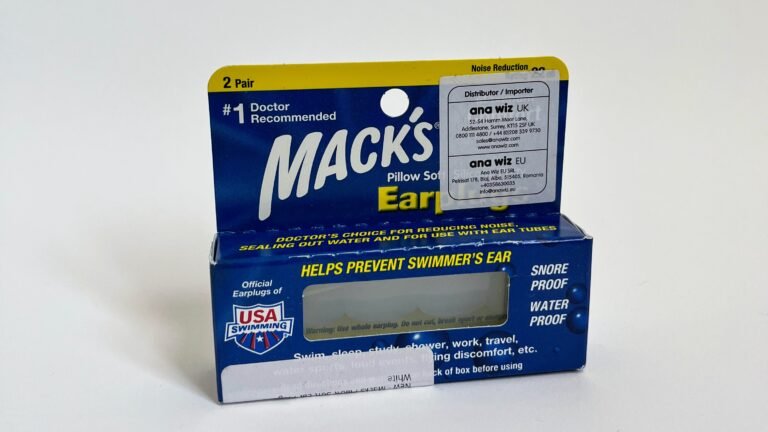
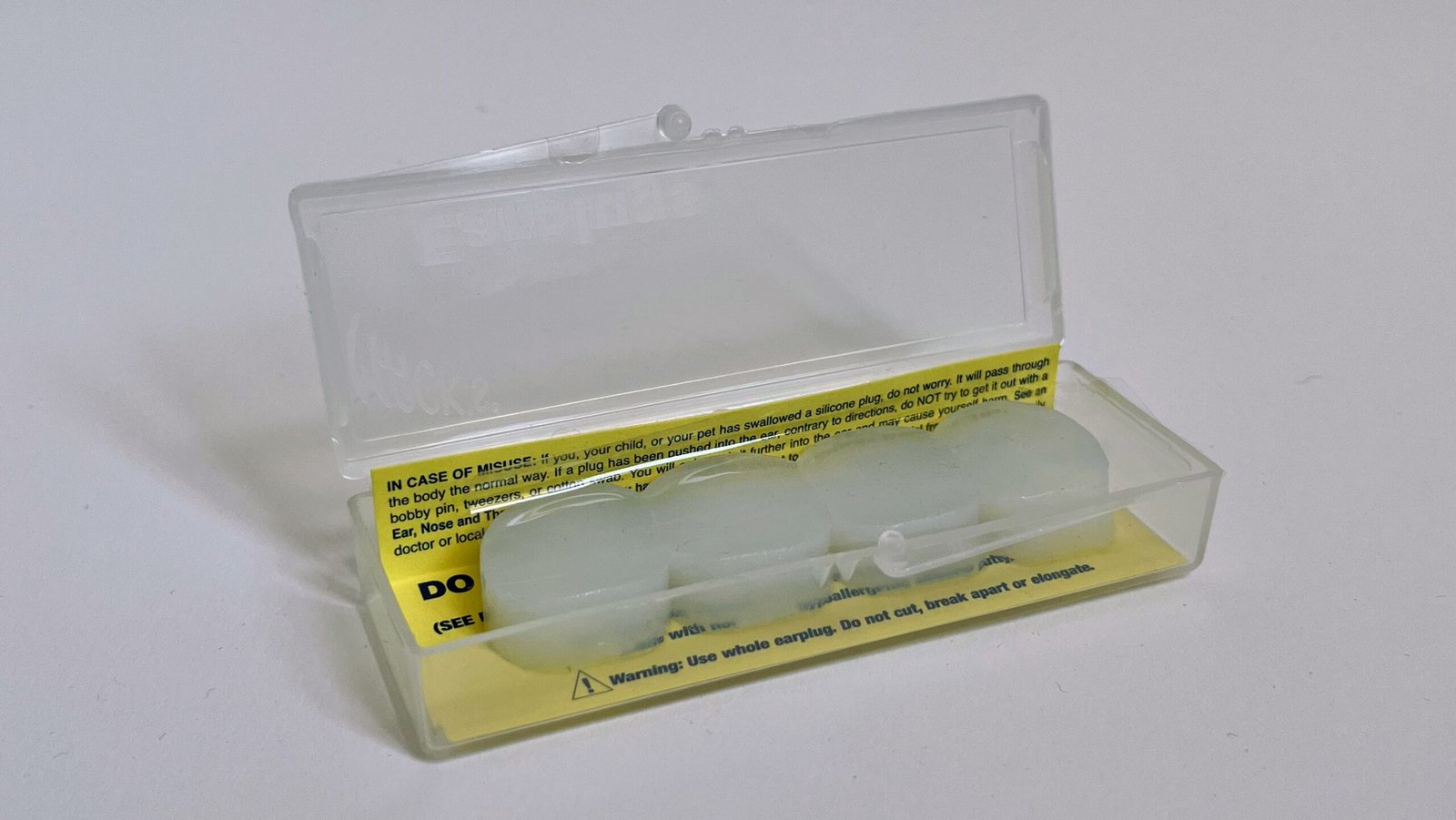
Fig. 1 — Exhibit A. Mack's Pillow Soft Silicone Putty Earplugs. 2-pair box. Under investigation.
Open the box and the first thing you notice isn’t the putty, it’s the faint oily ring it has left on the card behind it. You pause, the way anyone would, and wonder what exactly you’re about to press against your ear. Then you warm a disc between your fingers, mould it over the opening, and the room drops away like a pillow pulled over your head. Cheap, slightly grubby, and quietly more effective than plugs costing three times as much.
Sensory Scorecard

What these eight axes mean
- Noise
- External sound, unpredictable or unfiltered. Includes misophonia triggers.
- Scent
- Smell that registers as invasive. Lingers and transfers.
- Tactile
- Surface contact on skin and in the ear: texture, friction, residue.
- Proprioceptive
- Physical pressure and the sense of something seated in the ear.
- Interoception
- Internal body signals the seal amplifies: heartbeat, breathing, pulse.
- Visual
- How the product looks; light, pattern, or appearance factors.
- Hygiene
- Contamination sensitivity: cleanliness, residue, the look of the product.
- Social
- Other people as a sensory source, plus the social cost of wearing it.
✓ Noise
The strongest attenuation of any non-foam plug tested, across the whole range, by sealing the ear entrance.
Heard purely as a noise tool, this is one of the strongest in the investigation, and the strongest that isn’t foam. In the kitchen it took out about 95% of the appliance background, the fridge and fan hum gone, a dropped teaspoon reduced to a soft clink. On the bus the engine fell away and a nearby phone went inaudible; in a cafe the cutlery and others’ eating became manageable. The character is even rather than selective, so it doesn’t leave a sharp band poking through the way some silicone plugs do. The cost is a strong occlusion effect, since a deep seal turns the attention inward. The method behind the frequency figures is set out in how these earplugs were tested for sensory sensitivity, and the body-noise effect in the occlusion effect explained.
✓ Scent
Absent.
– Tactile
No canal insertion at all, which is the whole point, set against a sticky texture and an eardrum pressure that can spike on re-sealing.
The defining tactile fact is the absence: nothing goes into the canal. You warm the putty and mould it over the opening, so there’s none of the expansion pressure of foam or the lodged-deep feeling of silicone, which is the whole reason this suits people who can’t tolerate inserted plugs. The trade-offs are texture and pressure. It’s sticky by nature, picks up dust, and the warming-and-moulding ritual is slower and more visible than a quick plug. And while there’s no canal insertion, the outer seal still builds a trapped eardrum pressure, and pressing to re-seal as the wax softens can briefly spike a piston effect, the one real caution for a smaller, pressure-sensitive canal.
– Hygiene
Clean enough at first, but the sticky putty attracts dust and is good for only about six uses.
This is the real limit on living with the product. The putty starts clean and translucent, but being sticky it picks up an even layer of fine grey dust and finger-dirt, and by around six uses it’s lumpy and grubby enough to be unpleasant to look at, with no way to truly clean it. Past about ten uses it’s too discoloured to want near the ear. It can’t be washed, so it’s replace-when-grubby rather than wash-and-keep, and the oily stain it leaves on the packaging card sets the tone before you’ve even worn it. Not for anyone squeamish about dust or sticky textures, and never one to share.
– Proprioceptive
An outer seal that avoids the plugged-canal feeling, with a trapped eardrum pressure that can spike on re-sealing.
Proprioceptively this sits in an unusual and, for many, welcome place: because nothing enters the canal, the plugged-ear sensation of deep-insertion plugs is absent, and the seal reads as external. The complication is pressure rather than position. A real eardrum pressure builds behind the seal, occasionally stronger in one ear, and re-pressing the warmed wax to re-seal can spike it briefly. For anyone whose ears are pressure-sensitive, that’s the thing to weigh against the comfort of nothing being inserted.
– Interoception
The deep seal brings the body forward: the heartbeat is faintly audible and footsteps thud.
The strength of the seal is what brings the body forward. The heartbeat is faintly there in full stillness, which few plugs here manage, breathing is noticeable, and footsteps produce a dull thudding that resonates in the head, stronger than most products when walking in a quiet space. Own chewing is amplified, so eating with them in is unpleasant. For some this inward turn is grounding; for others it’s the reason a strong seal is hard to bear. The mechanism is on the occlusion effect explained.
– Social
A solo tool: the white putty is visible and a touch odd, and the deep seal rules out conversation.
Socially this is firmly a solo device, on two counts. The white putty is visible and reads as unusual rather than purposeful, so while it draws no stares among city strangers, it’s not something you’d want to fit in front of people you care about. And the deep seal makes conversation impractical, with your own voice muffled and others hard to make out, so any exchange means taking them out and then the fiddly business of warming and re-moulding to replace them. The honest use is focus blocks, transit, and sensory emergencies entered alone, or acoustic isolation within a group rather than engagement with it.
Frequency Perception
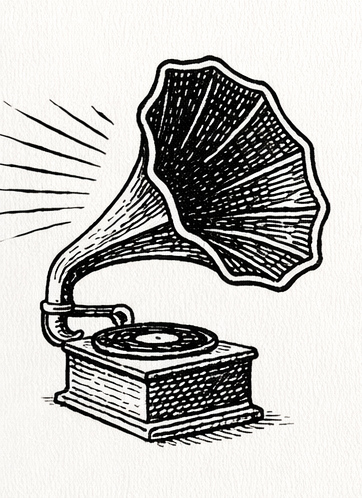
% = signal allowed through. Lower = stronger attenuation. Tone generator (NAD C320 / B&W S601, 33% volume, 50cm). 15kHz via iPhone at 6 inches. Subjective perception, not laboratory measurement.
What the Testing Showed

The mechanism is the whole story, and it’s what sets this apart from everything else tested. The wax disc doesn’t enter the ear canal; it’s moulded against the entrance, forming a seal at the surface. That removes the canal-insertion dynamics, the expansion pressure, the lodged-in-the-head feeling, the entrapment risk, that make foam and silicone plugs intolerable for some sensory-sensitive people. For the adult who genuinely can’t bear anything inside the ear, this is the relevant product in the investigation, almost regardless of how it scores elsewhere.
On the numbers it’s the strongest attenuator that isn’t foam: about 10% of signal through at the low end and again at 8kHz, easing to 50% only at the 1kHz speech centre, which on test meant a kitchen stripped of its hum, a bus engine removed, a cafe’s clatter made manageable. The result is less silence than a managed quiet you can work through, a pillow over the head rather than a sealed vault. The trade-offs are honest and specific: conversation isn’t viable, the seal builds an eardrum pressure that can spike when you re-press the warming wax, the occlusion brings the body forward enough that the heartbeat is faintly audible, and the sticky putty attracts dust and lasts only about six uses.
So it earns a clearance, scoped to what it’s for. This is a solo instrument for focus, transit, and sensory emergencies entered alone, not a social plug, and a poor pick for anyone squeamish about sticky textures or dust, or with a pressure-sensitive canal. The closest relative is Ohropax Classic Wax, which seals a little more firmly but with a far greasier, more relentless handling burden; if you can tolerate something in the canal and want conversation back, Loop Quiet 2 is the canal-insertion comparison.
What this product is
- The putty disc — – a single translucent piece of silicone-wax putty; warms in the fingers and moulds against the ear entrance to form a surface seal, with no canal insertion, no expansion, and no tip that can separate
- No body, no filter, one size — – a single-component disc that moulds to any ear, which is why a smaller or awkward canal is a non-issue
- Entrance-seal mechanism — – attenuation by physical occlusion at the surface, not absorption or resonance; the reason there's no in-canal piston effect, only the re-seal pressure
- Reusable, with a travel case — – a roomy plastic case for storage; the putty can't be cleaned and lasts about six uses, so the case protects it rather than extending it much
The Investigation

Some stages are pending. Findings added as testing continues.
First Impressions
The box is well sealed and clinical, each pair mounted on card in a roomy plastic travel case. The first problem shows at once: the putty has left a faint oily ring on the card beneath it, which raises a mild question about what you’re about to press to your ear. The stain is cosmetic, not a hygiene fault, but it reads poorly to anyone paying attention. First touch is sticky wax that softens fast in the fingers, with no real residue, and no scent at all, a clean note for the olfactory-sensitive.
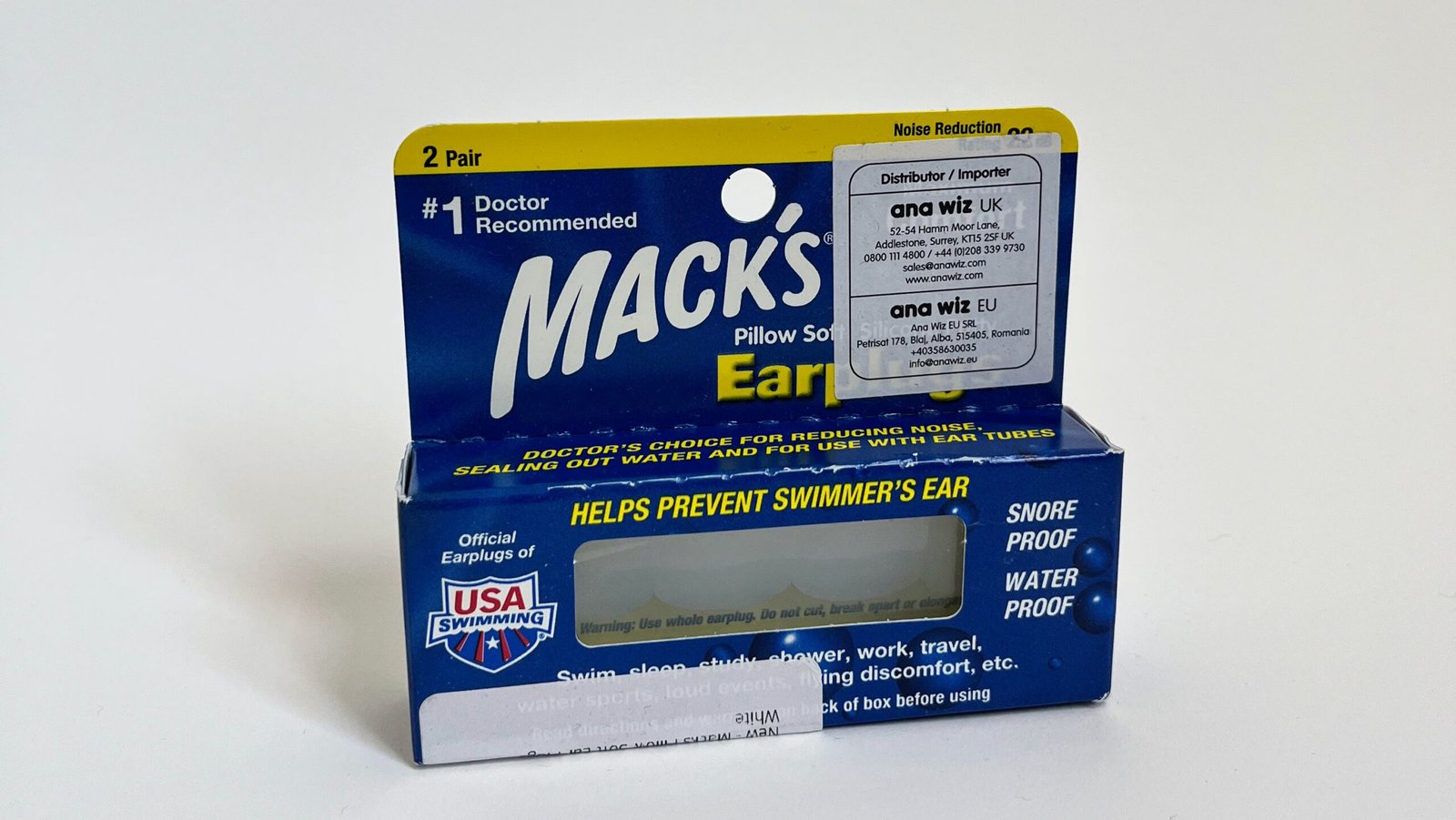
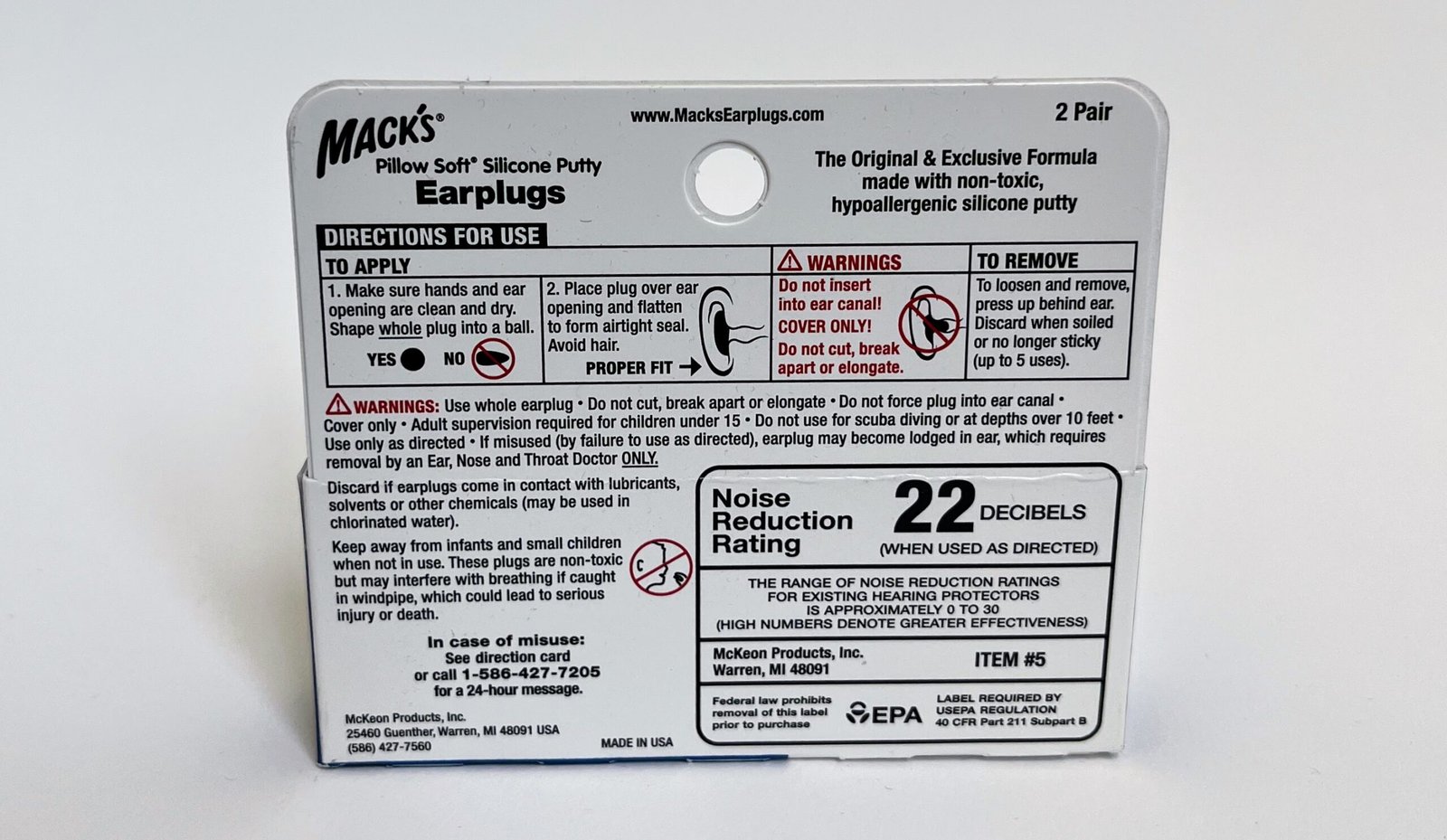
✓ Quiet Room A strong, pillow-like quiet with no canal insertion, just some eardrum pressure
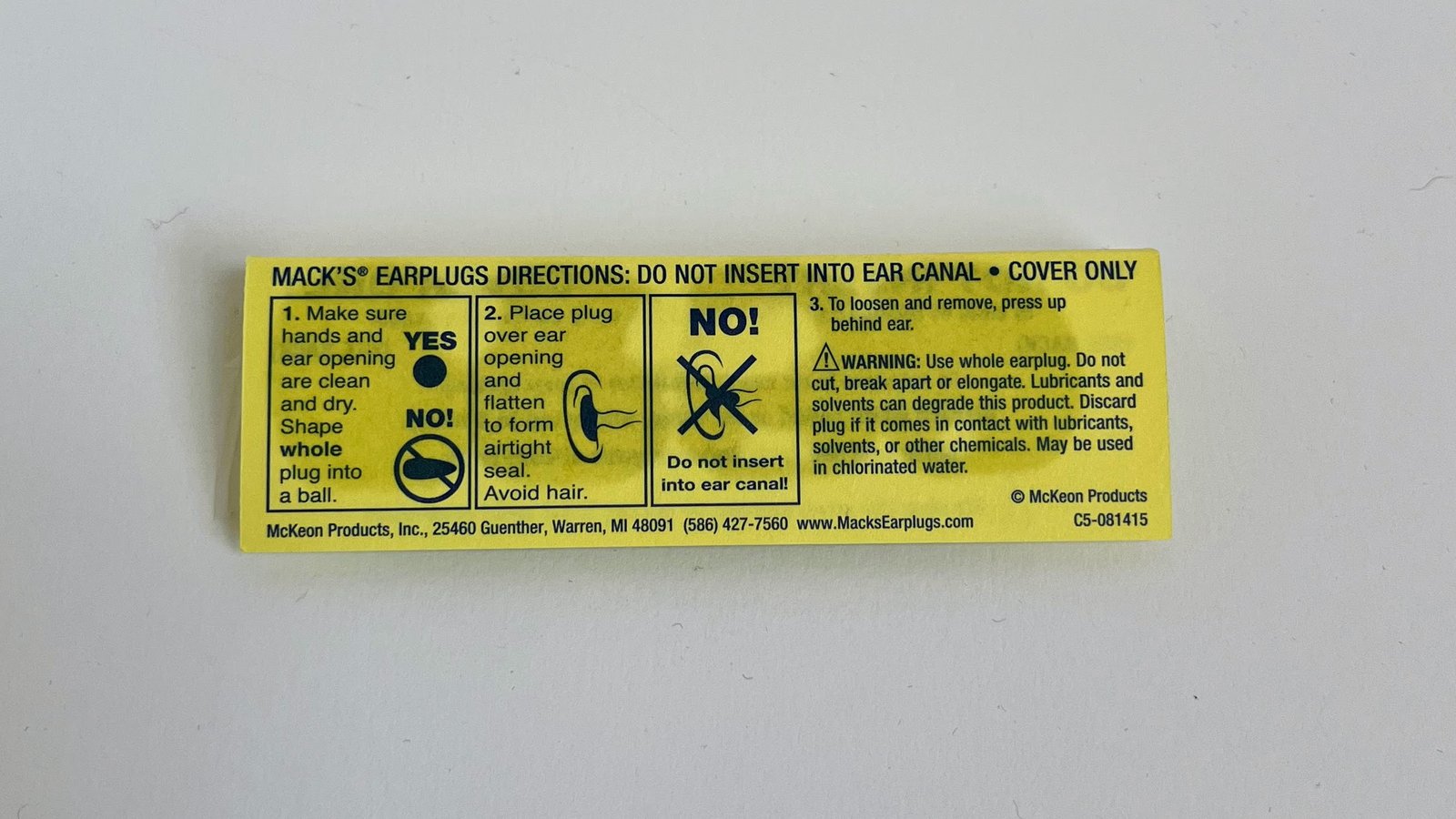
Nothing is inserted: you warm the disc and massage it against the outer ear. The result is a clear, strong silence, stronger than the other entrance options, but not disorienting since the canal stays open and distant peaks still register. Own voice is muffled, mid-to-upper weighted rather than boomy. The body comes forward: heartbeat faintly audible sitting still, breathing noticeable, footsteps a dull thud. A trapped eardrum pressure sits there from the first seal and builds, with some moderate pressure pain on removal. Peeling from the outside avoids any piston tug.
✓ Home Office Strips almost all appliance noise: a genuinely calm space to focus
A strong domestic performer. About 95% of the appliance background went, the fridge and fan hum eliminated, the kettle reduced to a soft smooth roar at about 20% volume, a dropped teaspoon cut by three quarters to a dulled clink. Speech at a metre was muffled by about 40% but still intelligible in the quiet. The result is a genuinely calm space to concentrate in, the noises that pull at attention simply removed. Pressure held steady across the session, no change at thirty minutes.
✓ Commute Removes the bus engine and silences a nearby phone; re-seal pressure is the cost
A quiet sense of peace, with the occlusion pressure as the cost. The engine and lower frequencies dropped further than the foam plug managed, leaving a muffled mid-range whir; a nearby phone’s audio went inaudible, passenger voices reduced to muffled presence unless someone was loud. A PA announcement stayed fairly clear. Sudden events lost their startle. Conversation wasn’t viable. The piston pressure from re-pressing to re-seal as the wax warmed was the one unpleasant note of the ride.
✓ Supermarket Turns a hard shop into a tolerable wash of sound, once the wax warms in
Useful protection in a hard environment, with the seal improving as the wax warms over fifteen to twenty minutes. The PA softened, checkout beeps kept their top edge but lost the sting, the fridge hum became a gentle woosh, and the general murmur of many conversations turned into a tolerable water-like wash. Louder background noises still cut through. Speaking to staff reliably meant removal, and inserting with shopping-dirty hands is what grubbies the putty fastest. A solid sensory-defence tool for getting the shop done.
✓ Open Plan Office Near-removes keyboard noise for deep focus; talk means taking them out
A strong focus tool, short of a social one. Keyboard noise was almost entirely removed, a neighbour’s phone call dropped to a murmur whose words didn’t jump out, the HVAC hum reduced to a soft higher note with the buzz gone. Distant office hubbub fell to a general faint sense of noise. Comfortable at sixty minutes. The limits are social: a colleague speaking directly meant removal, your own speaking volume is hard to judge, and the warm-and-remould cycle is too fiddly to want to repeat under observation.
✓ Restaurant / Cafe Excellent on others' eating, but no good to talk or eat with on
Strong on other people’s noise, defeated by your own and by talking. Others’ chewing and drinking were reduced to a non-issue, cutlery down by half and softened, background music reduced almost to a soft din, the room’s chatter turned to sonorous water. Sudden sounds lost their startle. The catches are familiar: a companion across the table wasn’t really intelligible, and your own chewing and slurping are amplified by the occlusion, so it’s no good to eat with on. Fine for a solo cafe session, isolating in a group.
What the packaging says — what was found

What the packaging says — what was found

| The claim | Finding | Note |
|---|---|---|
| "A better, more comfortable fit and seal than custom earplugs" Partial | – | Comfortable in that nothing enters the canal, but it builds a real eardrum pressure and the seal needs re-pressing as the wax warms. |
| "Mouldable to fit any ear" Holds | ✓ | Moulds easily, and a smaller-than-average ear canal is simply not a fitting problem here. |
| "Reusable" Partial | – | Reusable for roughly six sessions before dust and stickiness make it too grubby; it can't be cleaned, so it's replace-when-grubby. |
| "NRR 22 dB" Holds | ✓ | Laboratory rating confirmed on packaging. Real-world performance under standard estimation assumptions is lower – subjective and measured attenuation across test frequencies was nonetheless substantial. |
Who this suits — and who it doesn’t

- The strongest attenuation of any non-foam plug tested: a little behind foam, well ahead of the silicone plugs
- No canal insertion at all: no expansion pressure, no lodged-in-the-head feeling, no entrapment risk
- The answer for anyone who genuinely can't tolerate anything inside the ear canal
- Moulds to any ear, so a smaller canal is simply not a fitting problem
- Cheap, reusable, and effective enough to be a real sensory-emergency tool
- Cuts misophonia triggers well: others' chewing, cutlery, and phone audio drop right back
- Unscented, a clean characteristic for anyone scent-sensitive
- Removal is effortless if you peel from the outside rather than pull straight off
- Conversation isn't viable: your own voice is muffled and others are hard to make out, so it means removal to talk
- A real eardrum pressure that builds, and pressing to re-seal as the wax warms can briefly spike a piston effect
- A genuine caution for a smaller, pressure-sensitive canal, despite nothing entering it
- Strong occlusion: the heartbeat is faintly audible, footsteps thud, own chewing is amplified
- The putty is sticky and attracts dust, good for about six uses before it looks too grubby to reuse
- Cannot really be cleaned; it's replace-when-grubby, not wash-and-keep
- Fiddly and slow to warm and seat, and visible as a wax lump, so not discreet to fit in company
- An oily stain on the packaging card that makes you hesitate before pressing it to your ear
Mack’s Pillow Soft is the cheap option that quietly outperforms most of its price, and the one product here that solves a problem the others can’t. It’s a disc of silicone-wax putty moulded against the entrance of the ear rather than pushed into the canal, and that single mechanical difference is the whole appeal: no expansion pressure, no sense of something lodged in the head, no entrapment risk. For the sensory-sensitive adult who genuinely can’t tolerate anything inside the ear, that’s the finding that matters.
On sound it’s the strongest attenuator of any non-foam plug tested, a little behind foam, well ahead of the silicone plugs. In a home office it all but removed keyboard noise and dropped a neighbour’s phone call to a murmur; on the bus it took out the engine and silenced a nearby phone; in a cafe it made others’ eating and cutlery manageable. The effect is less silence than a managed, pillow-over-the-head quiet you can concentrate through.
So it earns a clearance, with conditions worth stating plainly. Conversation isn’t viable with these on, so it’s a tool for solo focus, transit, and sensory emergencies entered alone, not for social settings. The seal builds a real eardrum pressure, and pressing to re-seal as the wax warms can briefly spike a piston effect, which is the one caution for a smaller, pressure-sensitive canal. And the putty is sticky, attracts dust, and is good for about six uses before it looks too grubby to want near your ear. For the other entrance-seal option, with stronger sealing but a far greasier handling burden, see Ohropax Classic Wax. For the leading canal-insertion alternative, see Loop Quiet 2. For all ten products, see Earplugs for Sensory-Sensitive Adults.