
reviews for those who notice more
No sponsorship, no freebies. Links here earn a small commission at no extra cost to you, which keeps the investigations independent. More info
Vanicream Free & Clear Shampoo — Sensory Review
The most tightly controlled formula in the test — avoids more irritant categories than any competitor. Cleans very hard. Best treated as a troubleshooting shampoo rather than a daily comfort wash.
Tested in hard water (South Downs chalk). Single-blind. No conditioner used in shower test.
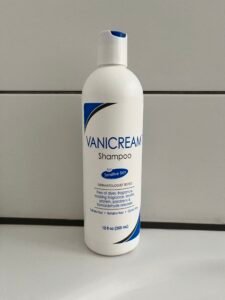
Fig. II — Exhibit A. 355ml bottle.
Sensory scorecard
Smell and texture: the findings
This review examines two dimensions: smell and texture & behaviour.


What this means in practice: not the loudest smell in the batch, but the hardest to categorise. Cold it is a moderate chemical odour, easy to detect. In hot water it became stronger and changed character in a way that resisted precise description — and the product also turned cloudy, a finding recorded with some interest as it occurred in no other product in the batch. The smell was present and distracting throughout the shower. Nothing lingered after rinsing. Where the in-shower experience can be accommodated, the aftermath is clean.

What this means in practice: the gel is clean and easy — non-stringy, non-sticky, controlled pour, a pleasure to handle. The lather is where this product becomes genuinely unusual: the glucoside surfactant system without oils or foam-breaking ingredients produces a thick, cloudy, mountainous foam that looks like a car wash and behaves like one too. It's striking if you're not expecting it. The rinse left pronounced squeak on both hands and hair. Hair dried on the dry side and needed moisture added back. The packaging is the best in the batch — the snap-cap mechanism in particular. It's a good bottle containing a demanding formula.
Case notes
What was found

Vanicream is a US pharmaceutical skincare brand — the kind that makes products for dermatology clinics rather than wellness consumers. Free & Clear Shampoo is their answer to the question of what happens when everything commonly implicated in scalp reactions is removed and the formula is built from what remains. The exclusion list is longer and more specific than anything else in this test: no sulfates, no betaines, no botanical extracts, no fragrance, no proteins, no lanolin, no dyes. By the measure of what it leaves out, this is the most controlled shampoo in the batch.
The formulation is a notable piece of work. What it produces in practice is also worth recording.
The glucoside-based surfactant system — without the moderating effect of oils, conditioners, or foam-breaking ingredients — produces a lather that looks and behaves like nothing else in this test set. Thick, cloudy, mountainous. A car-wash foam. Visually unlike a shampoo. In heat, the product also went cloudy — the only instance of this across eight products. The clean is thorough to the point of severity: very pronounced squeak on both hands and hair, hair noticeably drier later in the day. The smell that emerges in heat is moderate and hard to categorise — chemical, unusual, unlike the other products in the batch.
The jar test produced what can only be described as cloud formation. The investigation noted this as unexpected and proceeded with appropriate caution.
Vanicream is not a comfort shampoo. It is a reference-point product — designed for users who have reacted to multiple other options and require a controlled baseline from which to work. For that purpose it is a serious and useful tool. The absence of CAPB, which appears in most of the other products in this batch, removes a variable that is significant for a specific and underserved group. Where a gentler clean is the priority alongside ingredient control, Faith In Nature is less controlled but considerably more comfortable for daily use. For a full comparison of squeak behaviour across the batch, see the squeak-free shampoo guide or the full investigation index. The squeak testing protocol is documented in the methodology page.
What was tested
The tests
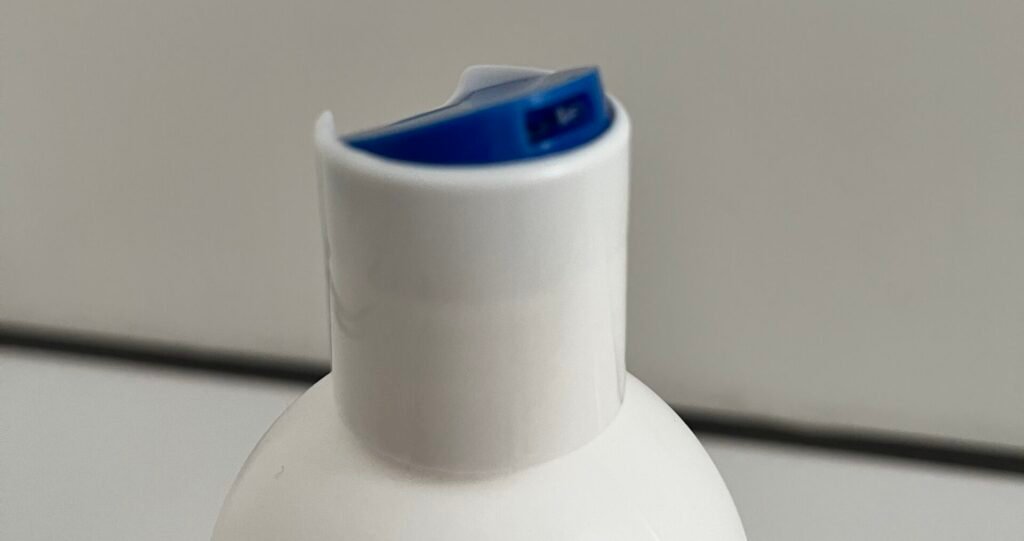
12 fl oz (355ml) bottle — good size and shape, comfortable grip, matte label, light enough for one-handed use. The snap-cap is the most satisfying mechanism in the test set. One note: the test unit had a slightly stiff lid — worth flagging for users with limited finger strength.
Thin, clear gel — non-stringy, clean and controlled pour. In the hand: smooth and light, non-sticky, easy to handle. One of the tidier dispensing experiences in the batch.
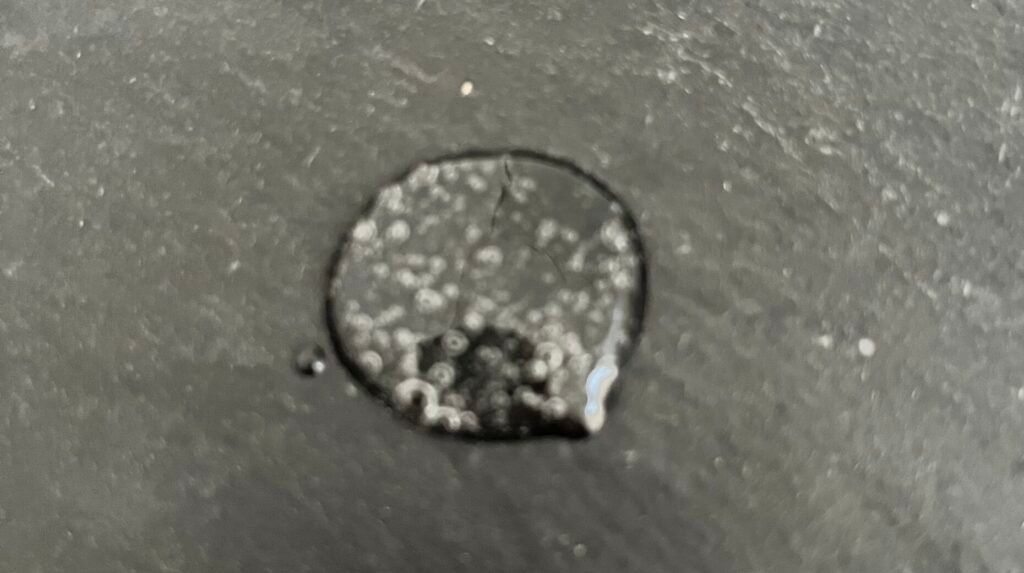
A moderate chemical odour — present without concentrating, and unusual. Hard to place, but clearly there. A concern registered at this stage.
Fixed amount added to a jar of warm water, shaken fifteen times. The result was unlike anything else in the batch: thick, cloudy, car-wash-style foam — dense, mountainous, active. The glucoside surfactant system without foam-breaking agents produces something visually striking. The foam rinsed from hands cleanly, which was a positive finding.
Product applied to wet hands. The car-wash foam behaviour continued in the hand — thick, slightly shaving-cream in quality. Hands felt squeaky after. Despite the unusual lather, the product rinsed from hands cleanly without residue.
A double dose was required — one application covered only the top of the head. The chemical smell was present in steam and strengthened from its cold-bottle baseline. Uniquely in this batch, the product had also turned cloudy in the hot water test — a visual change that continued in the shower. The thick foam spread in a shaving-cream manner across the scalp. Post-rinse: very pronounced squeak on both hair and hands. Conditioner was applied immediately.
After drying: hair extremely clean and smooth. Later in the day noticeably drier — a hair tonic was used to restore moisture. No scalp irritation, itching, or burning at any point — a meaningful positive given the cleaning intensity. No lingering smell. Over several days of use, the dryness persisted.
Claims checker
What the label says vs. what the test found
| The claim | Finding | Note |
|---|---|---|
| "Fragrance and dye free" | | No parfum, essential oils, or fragrance allergens. No colourants. Confirmed. A chemical base smell is present from the formula itself, but no fragrance has been added. |
| "Sulfate-free" | | Confirmed. No SLS, SLES, ALES, or other sulfate surfactants. Cleansing relies on glucoside-based non-ionic surfactants. |
| "Betaine-free" | | Confirmed. No Cocamidopropyl Betaine. Notably absent when CAPB appears in several competitors — a meaningful exclusion for CAPB-sensitive users. |
| "Protein-free / gluten-free / botanical extract-free" | | Confirmed across all claimed exclusions. No plant extracts, hydrolysed proteins, or grain derivatives. |
| "Vegan / paraben-free / lanolin-free / formaldehyde-free" | | Confirmed across all claimed exclusions. |
| "For sensitive skin / sensitive scalp" | | The formula is the most controlled in the batch — fewer common irritants than any competitor. However the glucoside system cleans firmly, producing pronounced squeak and dryness. Suitable for users with multi-ingredient sensitivities; less suitable for those primarily sensitive to cleansing intensity. |
| "pH balanced" | | Measured at approximately pH 7 — chemically neutral, not scalp-neutral. The scalp's natural pH is closer to 4.5–5.5. The claim is technically defensible but potentially misleading for users who expect "pH balanced" to mean scalp-friendly. |
| "Removes build-up and flaking" | | The clarifying cleaning action and multiple glucoside surfactants are consistent with a build-up-removing function. Plausible and likely effective for this purpose. |
Ingredient analysis
Key points
- Key points — not a full INCI breakdown. Only what bears on the sensory outcome.
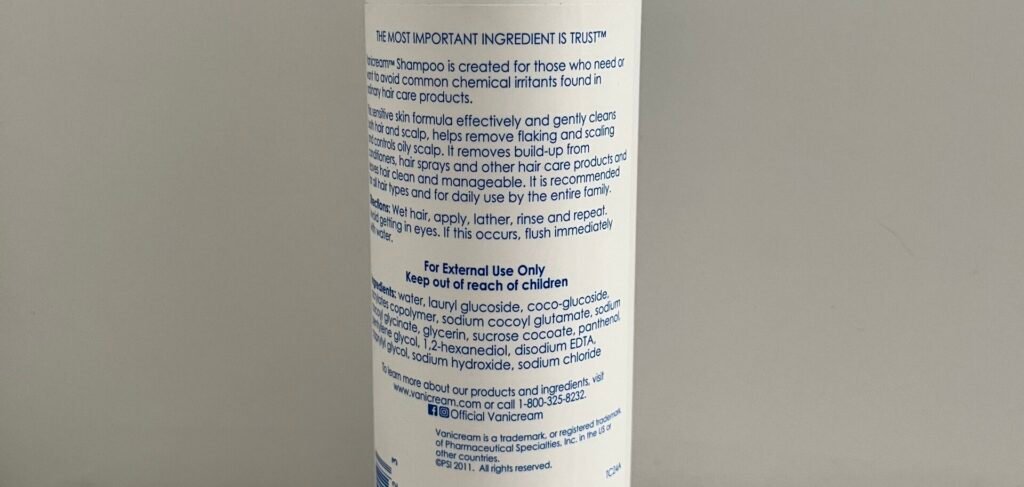
- Decyl Glucoside: Primary non-ionic glucoside surfactant. Derived from plant sugars. Low irritation potential — widely used in sensitive-skin formulations. Without moderating oils or conditioners, still cleans firmly.
- Sodium Cocoyl Glycinate: Amino-acid-based surfactant. Low irritation; adds gentleness to the glucoside system.
- Cocamide DEA: Foam booster and viscosity modifier. Likely a factor in the unusual car-wash foam behaviour — adds density to the glucoside lather.
- Glycerin: Humectant. Aids moisture retention; insufficient to prevent the dry post-wash result at this cleansing intensity.
- Acrylates Copolymer: Synthetic polymer for texture stabilisation and product feel. Not a sensitiser for most users.
- Disodium EDTA: Chelating agent. Helps maintain formula stability in hard water — relevant for South Downs chalk water testing conditions.
- Sodium Hydroxide / pH adjusters: Despite their presence, the formula measured at pH 7 — chemically neutral. The glucoside system may explain the higher measured pH relative to any acidifiers present.
Verdict
Who this suits and who it doesn’t
 Works well if avoiding
- Avoids more common irritant categories simultaneously than any other product in the test set — no sulfates, no betaines, no botanical extracts, no fragrance, no proteins, no lanolin
- Glucoside-based surfactant system — widely regarded as low irritation
- Clean, tidy gel — non-stringy, non-sticky, easy to handle
- Best snap-cap mechanism in the test set — satisfying and reliable
- No scalp irritation, itching, or burning during or after use
- Foam rinses from hands cleanly despite unusual lather behaviour
Not right if you need- Noticeable chemical smell — faint cold, stronger and unusual in heat; product uniquely turned cloudy in the hot water test
- Very pronounced squeak on both hair and hands — conditioner urgently required after use
- Strong clarifying clean — too drying for daily use on this hair type
- Unusual car-wash-style foam — visually and tactilely unlike any other product in the batch
- Requires a double dose — may get through a bottle faster than expected
- Higher price than most competitors; cheapest as a multipack
Vanicream was designed to answer a particular question: what happens when one removes every commonly implicated irritant and builds from what remains? No sulfates. No betaines — which is to say, no CAPB, the ingredient present in most of the other products in this batch. No botanical extracts, no proteins, no fragrance, no lanolin, no dyes. For users who have proceeded through several “gentle” or “fragrance-free” shampoos and reacted to multiple of them, this represents the most controlled starting point the investigation encountered.
What it does in practice is also worth recording plainly.
The cleaning action is severe. Hair squeaked on both hands and head. Conditioner was applied immediately upon exit from the shower, the alternative having been considered and rejected. Hair remained on the dry side for the remainder of the day. The lather produced in the jar test — and again in the shower — was a thick, cloudy, car-wash-style foam unlike anything else in the batch; visually striking in a manner that requires some preparation if one is to avoid surprise. The smell, moderate cold, became a chemical note of uncertain character in heat. The product also turned cloudy in the hot water test. Nothing else in the batch did this. The investigation noted it with interest.
This is not a comfort shampoo. It is a reference-point product — useful precisely for those who need to establish a baseline. For daily comfort use, Faith In Nature is a more appropriate point of departure.
For a full sensitivity cross-reference across all eight products, see the ingredient sensitivity guide.